Authentic Solo African Experiences Zimbabwe: The ElitTrip Honest Guide for Travelers Going Alone in 2026
Some countries perform Africa for you. They give you the brochure version — the controlled game drive, the sanitized cultural visit, the sunset cocktail on a manicured deck that could be anywhere.
Zimbabwe does something different. It gives you Africa unmediated. Unpolished. Occasionally uncomfortable. Deeply, lastingly real.
This guide is for the solo traveler who knows the difference between those two things and has chosen, deliberately, the second one.
Table of Contents
The Country That the Best Solo Travelers Keep Quietly to Themselves – Authentic Solo African Experiences Zimbabwe
Zimbabwe in 2026 is a destination that rewards the curious. While neighboring South Africa and Botswana often capture the headlines, Zimbabwe offers a more raw and intimate connection with nature. The country has seen a significant revitalization of its tourism infrastructure, with new eco-lodges opening in Hwange and upgraded facilities at major airports. What sets Zimbabwe apart is the quality of its professional guides — widely considered the best in Africa. Their deep knowledge transforms a standard game drive into an immersive masterclass in ecology. Furthermore, the 2026 travel landscape in Zimbabwe is defined by a shift toward sustainable, community-led tourism — travelers are increasingly seeking out authentic African experiences that give back, such as visiting local villages near Kariba or participating in rhino conservation efforts in Matobo.
That combination — the best guides in Africa, the least commercial safari landscape on the continent, a community tourism culture that was sustainable before sustainability became a marketing term — is the reason Zimbabwe appears consistently at the top of experienced solo travelers’ private lists and rarely at the top of first-timer booking statistics. The travelers who have been here know something that the ones who haven’t are still waiting to discover.
Zimbabwe is a land of vibrant cities, breathtaking landscapes, and ancient wonders. Many first-time solo travelers to Africa might opt for more commonly visited countries. However, Zimbabwe offers a unique blend of off-the-beaten-path experiences and well-trodden tourist routes. The local people — often called “Zimbos” — have a reputation for hospitality that can quickly transform a trip from mere sightseeing into an immersive cultural experience.
This is the foundation of authentic solo African experiences Zimbabwe offers that no other destination in the region quite replicates: the hospitality is not performed for the tourism economy. It is simply how Zimbabweans relate to visitors. It is cultural, deep, and entirely real.
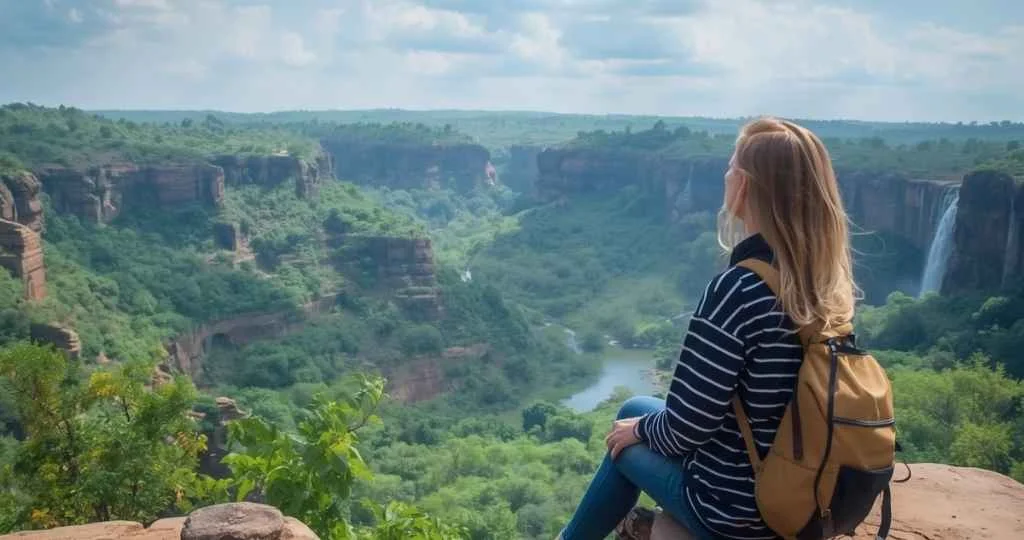
The Honest Safety Picture for Solo Travelers in Zimbabwe in 2026 solo elite trip
Most safety guides about Zimbabwe wave their hands at “generally safe” and move on. You deserve more precision than that.
Zimbabwe has gone through various political transitions over the years, and while tensions have flared at times, the country has maintained relative stability for tourists. The tourist circuit — Victoria Falls, Hwange, Mana Pools, Matobo Hills, Great Zimbabwe — operates with professional security oversight and has not been significantly disrupted by political instability for many years.
The U.S. State Department gives Zimbabwe a Level 2 advisory — Exercise Increased Caution — citing crime and civil unrest in specific urban areas. The practical geography: this advisory is concentrated in central Harare, particularly around the Central Business District, and in some areas of Bulawayo. It does not describe Victoria Falls town, Hwange National Park, Mana Pools, Matobo Hills, or the Eastern Highlands — which together constitute virtually the entire solo traveler’s Zimbabwe itinerary.
Verbal harassment can be an occasional issue, especially for women traveling alone, but it is generally more of a nuisance than a threat. In busy tourist hubs like Victoria Falls, touts may approach you to sell tours, souvenirs, or currency. A polite but firm “no, thank you” usually suffices. Trust your gut — if something feels off, find a safe place or call for help.
In the safari environment specifically — which is where you will spend the majority of your Zimbabwe solo trip — the safety picture is entirely different from urban concerns. Hwange and Mana Pools boast a real wealth of wildlife to excite even the most seasoned safarist, and the lodges and camps in these areas are designed around guest safety — guided game drives and walking safaris ensure every wildlife encounter is managed by professionals who have spent decades reading this landscape.
The honest summary: Zimbabwe rewards the solo traveler who books with reputable operators, stays in verified accommodation, uses arranged transfers between destinations, and exercises standard urban awareness in city contexts. In the parks and at the falls, the experience is as safe as any premium safari destination on the continent.
What Authentic Solo African Experiences Zimbabwe Actually Feels Like
Zimbabweans place great value on politeness and respectful communication. Simple gestures such as greeting people with a smile and a handshake go a long way. If someone greets you in Shona — “Makadii?” (How are you?) — respond with “Ndiripo, kana imi?” (I’m well, and you?) or simply reciprocate with a big smile and a nod.
Learning those two phrases before you land changes every interaction from the first morning. It signals something that Zimbabwe responds to with immediate, genuine warmth: that you came to be here, not just to photograph here.
Activities like game drives, village homestead tours, and camping in national parks are spectacular once-in-a-lifetime experiences. The accommodation is really good — especially in Victoria Falls, where the resort facilities are genuinely impressive. In short: book the trip because you won’t regret anything except when it’s time to come home.
This is the arc that almost every solo traveler describes after Zimbabwe. Not frictionless — the logistics require more advance organization than Kenya or South Africa. Not easy — the distances are real and the infrastructure between destinations requires planning. But the experience on the other side of that planning is something that travelers who have been to twenty African countries describe as unlike anything else available on the continent.
Mana Pools National Park remains the gold standard for walking safaris, where the lack of fences provides a truly wild experience. Whether you’re watching the sunset over Lake Kariba or tracking rhinos in Matobo, Zimbabwe’s experiences are deeply visceral and stay with you long after you’ve returned home.
That word — visceral — is the one that defines authentic solo African experiences Zimbabwe delivers. Not curated. Not predictable. Visceral. The kind that lands directly in the body rather than the camera.
The Best Authentic solo African experiences Zimbabwe Offers: A Solo Traveler’s Destination Guide
🇿🇼 Victoria Falls — Where Zimbabwe Introduces Itself at Full Volume
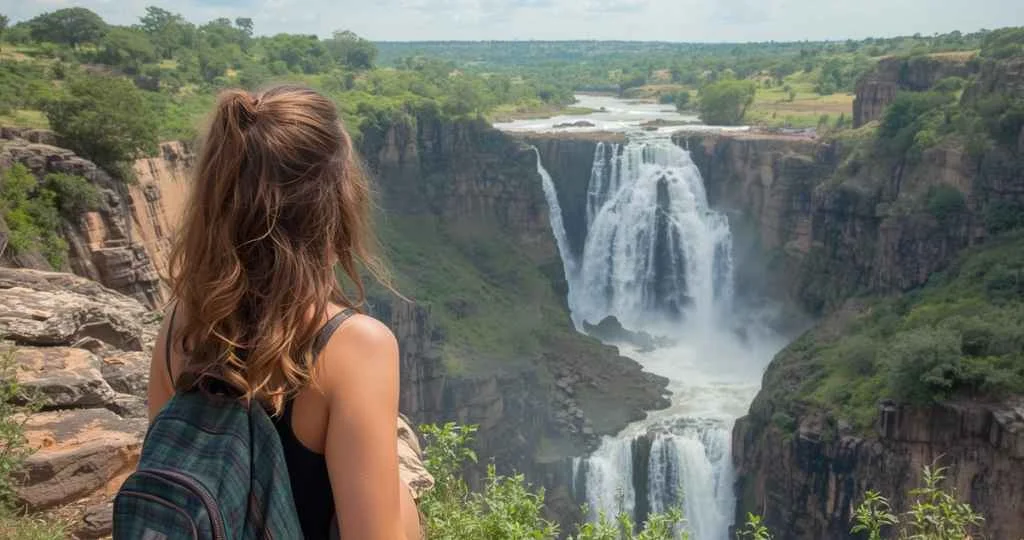
Victoria Falls — known locally as “Mosi-oa-Tunya” (The Smoke That Thunders) — is one of the Seven Natural Wonders of the World. The sheer power and scale of the cascading water is breathtaking. For solo travelers, Victoria Falls offers easy navigation, numerous tour operators, and a variety of activities.
The falls themselves — 1.7 kilometers wide, 108 meters high, generating a spray column visible from 50 kilometers — are a physical experience that no photograph or description communicates accurately. You walk the rainforest path along the Zimbabwe side of the gorge, moving from viewpoint to viewpoint through a perpetual rainbow-filled mist, the sound building from a distant rumble to something that fills your entire chest cavity, and at the main viewpoint — Danger Point — you look directly down into the boiling white water at the base of the gorge and understand, physically rather than intellectually, why the local Kololo people who named this place called it The Smoke That Thunders.
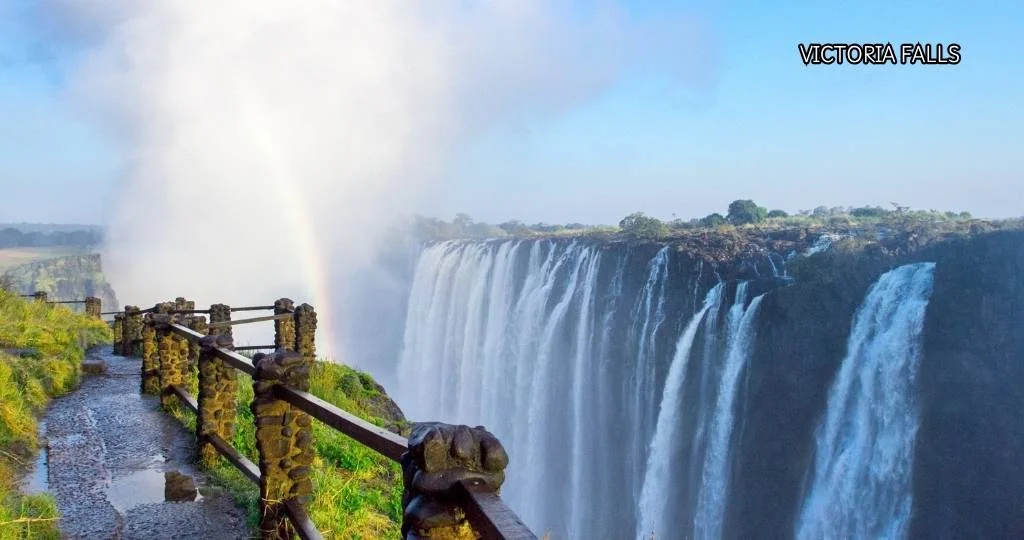
The Zimbabwean side is home to the most iconic views of Victoria Falls, with over 75% of the waterfall visible from the viewpoints inside Victoria Falls National Park. It is also where you’ll find Victoria Falls town — the main tourism hub with easy access to restaurants, banks, and activity operators. Google
For the solo traveler, Victoria Falls town is the most naturally social destination in Zimbabwe — small enough to feel safe and navigable, large enough to offer genuine activity choice, and structured around a tourism ecosystem that accommodates solo visitors better than almost anywhere else in Southern Africa.
Victoria Falls is a perfect destination for solo travelers. Both Livingstone and Victoria Falls town are well-set up for tourism and easy to travel. There are plenty of opportunities to meet other travelers in guesthouses, hotels, and bars. Many activities — white-water rafting, sunset river cruises — are done in groups, so you’ll be joining up with other people for adventurous fun.
The bungee jump from the Victoria Falls Bridge — 111 meters above the Zambezi River, with Zimbabwe on one side and Zambia on the other — is the most iconic single activity in the region and one of the most memorable things a solo traveler can do anywhere in Africa. Not because it is particularly dangerous — it is rigorously operated — but because the combination of the gorge, the water below, the bridge between two countries, and the particular clarity of mind that comes from standing on the edge of something genuinely frightening creates a memory that is entirely, irreducibly personal.
Highlights for solo travelers include watching the sunrise over Victoria Falls, catching the lunar rainbow on full moon nights, flying above the falls in a helicopter or microlight, and bungee jumping more than 100 meters down into the Batoka Gorge.
The Zambezi sunset cruise is the perfect solo evening — two hours on the river, sundowners in hand, with hippos surfacing alongside the boat and elephants coming to the bank to drink as the light turns everything amber. Expect to see elephants crossing the river, hippos demonstrating their territorial yawns, African fish eagles, vervet monkeys, baboons, water monitors, and massive crocodiles. You share the boat with other travelers, the atmosphere is social without being demanding, and the Zambezi at golden hour is one of the finest settings for a solo drink anywhere on earth.
Average daily budget: $80–200 USD Solo-Friendly Rating: 9.5/10
“I stood at Danger Point at 7am before the other tourists arrived and the spray came up from the gorge and soaked me completely in thirty seconds and the sound was so enormous I couldn’t hear my own thoughts and I understood immediately why nobody who comes here ever describes it adequately. It is not a waterfall. It is a force of nature that happens to have a name.”
🇿🇼 Hwange National Park — The Heart of Wildlife in Zimbabwe
Hwange is the largest national park in Zimbabwe, with almost 15,000 square kilometers of wetlands, woodlands, and desert sands. Wildlife numbers had fallen significantly due to hunting, but following the park’s achievement of game reserve status in 1928 and national park status in 1961, populations began to increase dramatically. Today there are 108 species of mammal and over 400 types of bird.
In 2028, Hwange National Park will be 100 years old, making it a remarkable conservation success story. It is home to one of Africa’s largest remaining wild dog populations, alongside each and every one of Zimbabwe’s protected species — lions, elephants, cheetahs, leopards, and buffalo.
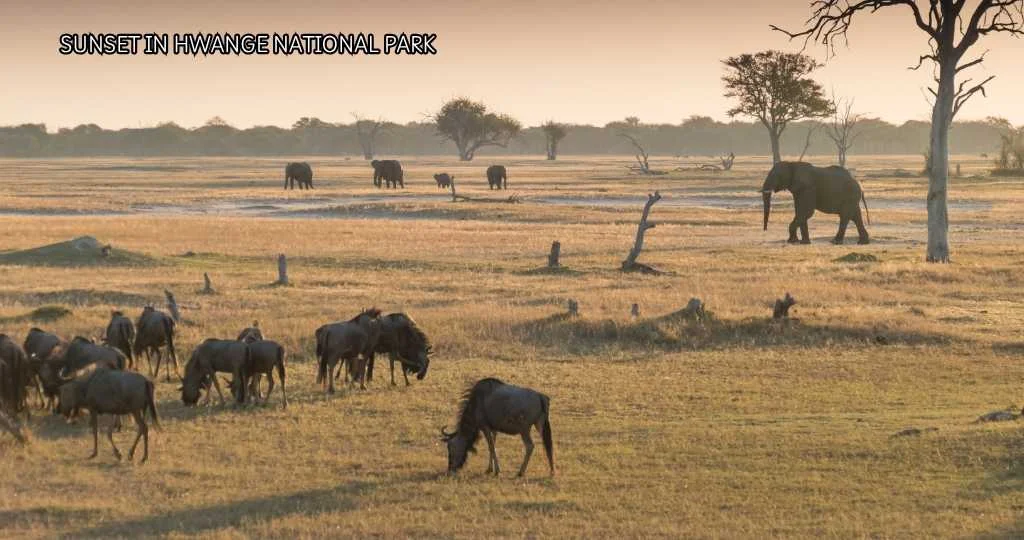
The elephant population is Hwange’s defining characteristic and its most overwhelming experience. The park contains one of the largest elephant concentrations in the world — estimates suggest over 45,000 animals use the park’s ecosystem across the year — and during the dry season, when the natural waterholes have dried and the park’s artificially pumped waterholes become the only water source for hundreds of kilometers, the elephant gatherings are extraordinary. Hundreds of animals at a single waterhole, arranged in family groups, the matriarchs drinking first, the calves pressing between adult legs, the bulls standing at the periphery — it is the most concentrated mega-fauna viewing available outside East Africa’s Great Migration, and it happens in a park that receives a fraction of Serengeti-level visitor numbers.
For solo travelers specifically, Hwange’s lodge landscape offers some of the finest single-supplement friendly properties in Zimbabwe. The Hide, located within a private concession on the park’s southeast border, has just ten classic safari tents with private verandas overlooking a waterhole. During green season and mid-season, there is no single supplement — during high season there is a 25% surcharge on the per-person sharing rate. Activities focus on game drives and walking safaris, with multiple hides for close wildlife viewing including Dove’s Nest, a treehouse hide with direct waterhole views.
Bomani Tented Lodge, within a private concession in Hwange’s eastern region, offers nine canvas and metal tents with private verandas across the plains. Activities include day and night game drives and daytime walking Zimbabwe safari solo travel. A unique activity here is joining the “Pump Runs” — heading out with a guide to visit the park’s eight waterholes to drop off fuel and supplies, giving you an extraordinary back-of-operations perspective on how Hwange’s wildlife is sustained. Village excursions are also possible, providing the authentic community contact that defines Zimbabwe’s best experiences.
The walking Zimbabwe safari solo travel in Hwange — moving through the bush on foot with an armed professional guide, tracking animals by their spoor, learning to read the landscape through smell, sound, and the stories written in the soil — is the most direct authentic African experience Zimbabwe offers a solo traveler. You are not observing Africa from a vehicle. You are inside it. Your guide reads the wind, positions you correctly, and communicates what you are seeing in a way that transforms the experience from wildlife watching into ecological understanding. This is the experience that Zimbabwe’s guides are the best in the world at delivering.
Average daily budget: $150–400 USD (camp inclusive) Solo-Friendly Rating: 9.5/10
🇿🇼 Mana Pools National Park — The Most Authentic Wild Experience in Africa
Mana Pools National Park remains the gold standard for walking safaris, where the lack of fences provides a truly wild experience.
Each year, when the rain takes its leave, immense numbers of wildlife congregate around the oxbow lakes of Mana Pools National Park, just a short distance from the Zambezi River. Here, African wild dogs vie for survival with ruthless lion prides, while unconventional elephants stand on their hind legs to reach the freshest leaves from the albida trees that line the floodplain.
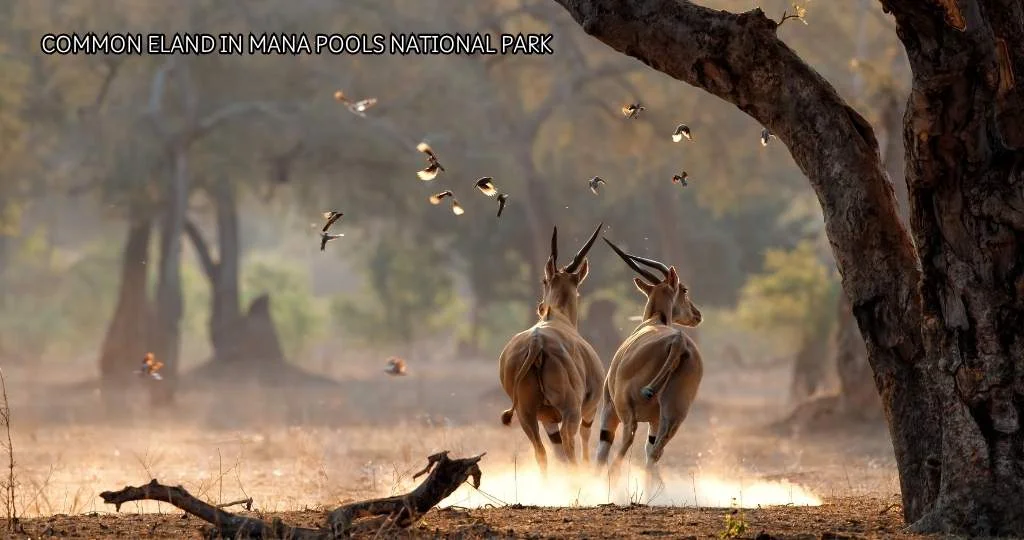
Mana Pools is for the solo traveler who is ready for Zimbabwe at its most uncompromising. This is not a comfortable, curated experience. Camps here are small — some with just four or five tents — the wildlife walks freely through them, and the boundary between your human world and the natural one is as thin as the canvas wall of your tent. Elephants graze outside the dining area. Lions have right of way on the path between your tent and the bathroom at night. Your guide escorts you after dark not as a formality but because this is genuinely necessary.
This is also the destination that produces the most powerful authentic solo African experiences Zimbabwe generates. The canoe safari along the Zambezi — paddling downstream with a guide, hippos surfacing around you, elephants coming to the bank ahead, fish eagles overhead — is the most intimate wildlife encounter available in Southern Africa. You are at water level, moving quietly, entirely within the ecosystem rather than observing it. It is extraordinary and it is available to the solo traveler who chooses Mana Pools over a more comfortable option.
Average daily budget: $200–450 USD Solo-Friendly Rating: 8.5/10 (expert-level, maximum reward)
“My guide at Mana Pools told me that the elephants here have learned to stand on their hind legs because the best food — the pods from the albida trees — is eight meters above the ground. They developed this behavior over generations. Standing watching a five-ton elephant balance on its back legs in the afternoon light, reaching for food with an intelligence and physical capability that evolution did not design for this specific purpose but that desire found anyway — that is what authentic African experiences are actually made of.”
🇿🇼 Matobo Hills — The Place Where Zimbabwe Reveals Its Soul
Delve into the spiritual heartland of Zimbabwe at the Matobo Hills — this UNESCO World Heritage site is dotted with distinctive balancing rock formations and ancient rock art. Venturing solo, the place allows for introspection and connection with the rich narratives of the local Ndebele culture. Engage in a guided tour to fully appreciate the spiritual resonance embedded in these age-old paintings.
Tracking rhinos in Matobo is one of Zimbabwe’s most visceral experiences — staying with you long after you’ve returned home.
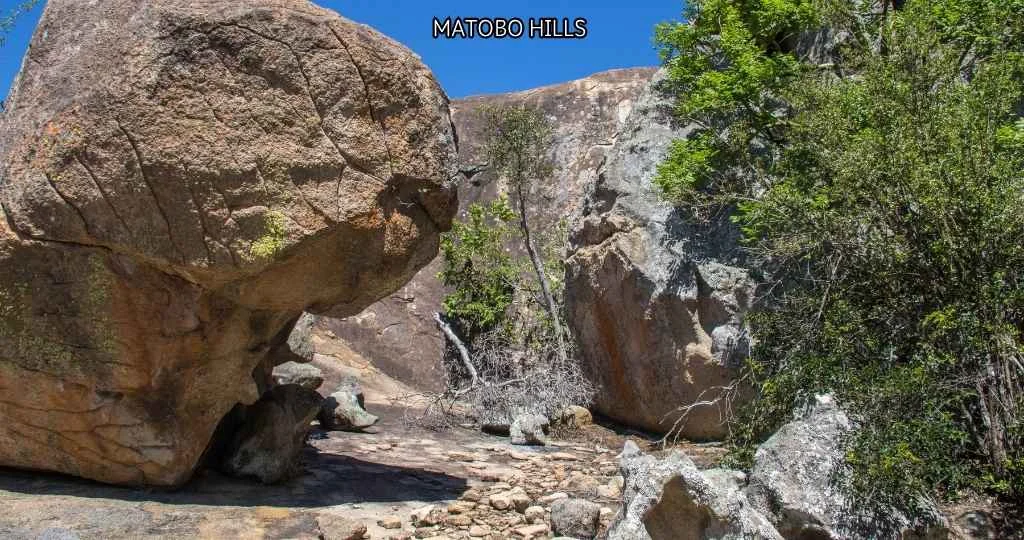
The Matobo Hills are what happens when 2,000 million years of geological history produces a landscape so specific and so strange that no other place on earth looks quite like it. Enormous granite boulders — some the size of houses, some the size of apartment buildings — balanced on each other in configurations that should not be physically possible, smoothed by time into rounded forms that feel almost organic. Between them, valleys of miombo woodland shelter the largest concentration of leopards in Zimbabwe, the only population of white and black rhino that can be tracked on foot, and a San rock art tradition spanning more than 13,000 years.
The rhino tracking experience at Matobo — moving on foot through the hills with a ranger and a tracker, following fresh prints and broken vegetation, the tension building as the distance closes until the animal is in sight, enormous and prehistoric and entirely real at thirty meters — is the finest ground-level wildlife encounter available in Zimbabwe. It requires fitness and patience. It rewards both with an experience that no vehicle-based safari can replicate.
Cecil John Rhodes — British colonial administrator, founder of Rhodesia — chose to be buried on the highest kopje in Matobo, a site he called “World’s View,” overlooking a landscape he described as one of the finest on earth. Whatever your view of Rhodes’s colonial legacy — and the complexity is real and worth sitting with — World’s View at sunset delivers exactly what the name promises.
Average daily budget: $80–160 USD Solo-Friendly Rating: 9/10
🇿🇼 Great Zimbabwe Ruins — The Ancient City That Changes the African Narrative
Step back in time by visiting the Great Zimbabwe Ruins — an ancient city that was once the capital of the Kingdom of Zimbabwe. Wander through the stone-walled enclosures and let your imagination run wild, picturing what life might have been like centuries ago.
Great Zimbabwe is the largest ancient stone structure in Africa south of the Sahara — a city of 18,000 people at its 14th-century peak, built entirely without mortar using a dry-stone walling technique of extraordinary precision, serving as the capital of a trading empire that connected interior Africa to the gold and ivory routes of the Indian Ocean. The stone walls — some of them eleven meters high and five meters thick — are built in the same way that the genetic and linguistic heritage of the Shona people has been built: carefully, layer by layer, with materials sourced from the specific landscape in which they stand.
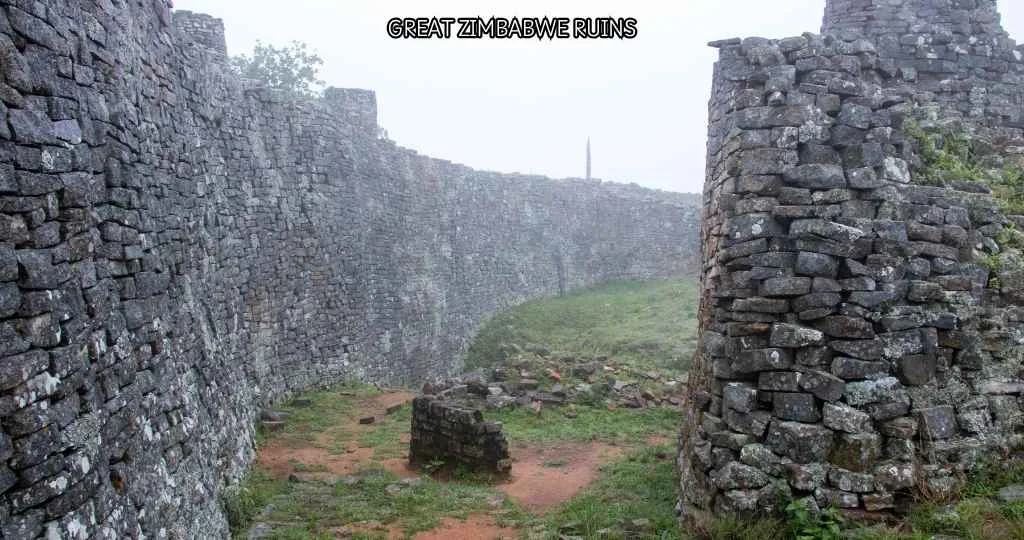
For the solo traveler who travel to Zimbabwe for authentic African experiences rather than just wildlife, the Great Zimbabwe Ruins are the destination that most directly challenges the narrative that African civilizations were less sophisticated, less architecturally ambitious, less historically significant than their contemporaries in Europe or Asia. Standing inside the Great Enclosure — the largest single ancient structure in sub-Saharan Africa — and understanding that this was built by Zimbabweans, governed by Zimbabweans, and traded with the Arabian Peninsula and China from a hilltop in the interior of southern Africa in the 11th century reorganizes something in a visitor’s understanding of this continent’s history.
A local guide who connects the ruins to the living Shona culture — the traditions, the family structures, the spiritual practices — that continue in the communities surrounding the site transforms the ruins from an archaeological destination into a living cultural experience. That guide is available. That experience is what Zimbabwe’s tourism philosophy is built around.
Average daily budget: $60–100 USD Solo-Friendly Rating: 9/10
🇿🇼 Eastern Highlands — The Zimbabwe Nobody Expects
For those seeking something off the beaten path, the Eastern Highlands offer misty mountains and tea plantations that feel more like Scotland than Africa.
The Eastern Highlands — the Nyanga, Vumba, and Chimanimani mountain ranges running along Zimbabwe’s border with Mozambique — are the country’s best-kept secret and the destination that solo travelers who have been to Zimbabwe consistently name as the place they most want to return to. Misty mountains. Tea plantations established in the colonial era and still operating. Waterfalls descending into forested gorges. Trout streams running through valleys that look structurally similar to the Scottish Highlands except for the birdlife — the Chirinda Forest in the Chimanimani foothills contains trees over a thousand years old and bird species found nowhere else in Zimbabwe.
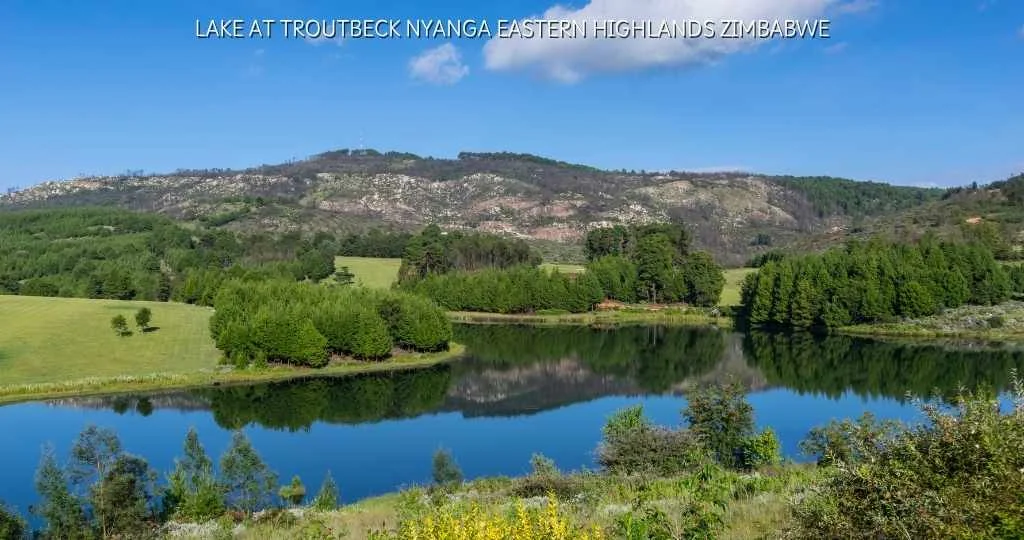
For the solo traveler who finds the intensity of Victoria Falls and the remoteness of Mana Pools both demanding in their own ways, the Eastern Highlands is where Zimbabwe offers something different: slow travel, mountain air, long walks with no agenda, and small guesthouses run by families who cook the food and tell the stories and make the visit feel like staying somewhere rather than passing through somewhere. The authentic African experience here is not wildlife. It is the specific, unhurried warmth of a mountain community that doesn’t receive many visitors and treats the ones who arrive with a genuine and entirely unselfconscious generosity.
Average daily budget: $50–100 USD Solo-Friendly Rating: 9.5/10
The ElitTrip Zimbabwe Solo Traveler Overview
| Destination | Best For | Avg Daily Budget | Solo-Friendly Rating |
|---|---|---|---|
| Victoria Falls | Adventure, waterfall, social base | $80–200 | 9.5/10 |
| Hwange National Park | Elephants, walking safari, Big Five | $150–400 | 9.5/10 |
| Mana Pools | Wild walking safari, canoe, raw Africa | $200–450 | 8.5/10 |
| Matobo Hills | Rhino tracking, rock art, culture | $80–160 | 9/10 |
| Great Zimbabwe Ruins | Ancient history, authentic culture | $60–100 | 9/10 |
| Eastern Highlands | Slow travel, mountains, community | $50–100 | 9.5/10 |
Getting Around Zimbabwe Alone: What Actually Works
Transport in Zimbabwe in 2026 is a mix of high-end convenience and local grit. For those with limited time, domestic flights between Harare, Victoria Falls, and Kariba are the preferred method.
Domestic flights connect Zimbabwe’s main tourist nodes efficiently. The Victoria Falls to Harare route is the most frequently operated. Charter flights connect with Hwange, Mana Pools, and Kariba — ideal for multi-destination safari itineraries where overland times would otherwise consume travel days. Victoria Falls International Airport receives daily regional flights and charter connections to Hwange, Mana Pools, and Chobe — making fly-in safari access both practical and elegant for solo travelers who want to maximize time at each destination rather than spending it on roads.
Road transfers between Victoria Falls and Hwange (two hours) are manageable and scenic. Transfers between Hwange and Mana Pools require significantly more time and advance arrangement — plan these through your accommodation rather than independently. The roads between major tourist destinations are generally maintained, but night driving between remote areas is not advisable due to wildlife on roads and limited lighting.
Within Victoria Falls town, everything is walkable in daylight — the falls, the craft market, the town’s activity operators, and the main accommodation strip are all within a compact, navigable area. Use arranged transfers or lodge vehicles for anything after dark.
Practical Solo Travel Tips for Zimbabwe in 2026
When to go
The best times to visit Zimbabwe are May to October, offering dry weather, excellent wildlife viewing, comfortable temperatures, and peak visibility at major parks. This is when Hwange’s waterholes concentrate wildlife most dramatically and when walking safaris in Mana Pools are at their most productive. If your primary goal is to see Victoria Falls at maximum flow and drama, aim for March and April — just after the summer rains when the volume is at its peak. By October, the Zambian side becomes a trickle, though the Zimbabwean side flows year-round.
Currency and cash
Zimbabwe uses the US dollar as its primary tourism currency. Coverage for mobile data is excellent in Victoria Falls, Bulawayo, and Harare, and surprisingly robust in parts of Hwange National Park. Get a local SIM card on arrival for reliable navigation and communication throughout the trip. Credit cards are accepted at major lodges. In craft markets, local restaurants, and tip situations, small US dollar notes are the practical currency of daily transactions — carry a supply of $1 and $5 bills that you can use without requiring change.
Tipping culture
Zimbabwe has a strong tipping culture in the safari environment and it matters meaningfully to the people who make your experience possible. The standard for a safari guide is $15–20 USD per day, for a tracker $10–15 per day, for camp staff $5–10 per person per day. These amounts are not suggestions — they are the primary income supplement for professionals whose base salaries do not reflect the quality of their work. Bring enough small dollar bills to tip generously across your entire trip.
Language
English is Zimbabwe’s official language and is widely spoken across the tourist circuit. Learning a few Shona phrases — Makadii (how are you), Ndiripo (I’m well), Tatenda (thank you) — signals genuine respect and generates immediate warmth in every context where you use them. While urban areas are relatively liberal, in smaller towns and rural zones, dressing modestly is more culturally respectful.
Health
Zimbabwe is a malaria zone, particularly in the Zambezi Valley areas including Mana Pools and the Victoria Falls region during the rainy season. Consult a travel medicine clinic before departure for appropriate prophylaxis. Carry DEET-based insect repellent and sleep under mosquito nets where provided. Drink only bottled water throughout your trip.
The Cultural Layer: What Makes Authentic Solo African Experiences Zimbabwe Genuinely Different
Travelers should experience a traditional Mbira music performance — showcasing Zimbabwe’s spiritual rhythms, storytelling, and deep cultural heritage through captivating live music.
The Mbira — a thumb piano of metal tines mounted on a wooden board, played in ceremonial contexts to communicate with ancestral spirits — is the sonic signature of Zimbabwean culture. Hearing it performed in its actual ceremonial context, rather than as a tourist performance, requires either a local guide who knows the right community and the right timing, or the patient willingness to follow an invitation when one appears. It sounds like nothing else in African music. It operates in a different frequency from anything the Western ear expects, and the effect is immediately, physically calming in a way that is very difficult to explain to someone who hasn’t heard it.
Food in Zimbabwe is a delightful adventure — from maize-based staples like sadza to mouth-watering dishes like biltong and mopane worms. Culinary tours and hands-on cooking classes offer a chance to taste authentic Zimbabwean cuisine while learning about the customs and history behind each dish from local culinary experts.
Sadza — the stiff maize porridge that is Zimbabwe’s national staple, eaten at every meal in every community throughout the country — is the cultural food that tells you most about how Zimbabweans actually live. Eating it correctly — rolled into a ball with the right hand, dipped into a shared relish of greens or stew, eaten communally at a family table — is one of the most direct authentic African experiences Zimbabwe offers a solo traveler. Any guesthouse in a rural community will involve sadza at some point. Accept it. Eat it properly. The conversation it generates is worth every awkward attempt at the technique.
Mopane worms — the caterpillars of the Emperor moth, harvested from mopane trees, dried, and eaten either as a snack or cooked in tomato and onion sauce — are Zimbabwe’s most notorious culinary test for international visitors. Mopane worms are a legitimate and genuinely nutritious part of the Zimbabwean diet, high in protein and significant in cultural terms. SoFe Travel The solo traveler who tries them — particularly in the company of Zimbabweans who find the international reaction to something they eat casually both amusing and slightly baffling — earns a level of social rapport that no amount of polite declining could produce.
For Solo Female Travelers: The Honest Reality of Zimbabwe
Verbal harassment in Zimbabwe can be an occasional issue, especially for women traveling alone, but it is generally more of a nuisance than a threat. In busy tourist hubs like Victoria Falls, touts may approach you to sell tours, souvenirs, or currency. A polite but firm “no, thank you” usually suffices. Trust your instincts.
The safari environment — which constitutes the majority of any Zimbabwe solo trip — is genuinely one of the safest travel contexts available to a solo female traveler anywhere in the world. Guided, professional, and structured, the wildlife experience removes the urban vulnerabilities that make solo female travel demanding in other contexts. Zimbabwe is a paradise for wildlife enthusiasts, and solo female travelers seeking authentic African experiences find that the guided safari environment is both empowering and exceptionally safe.
Victoria Falls town is comfortable for women traveling alone during daylight hours. Use lodge transfers rather than walking after dark. The craft markets require the same firm-but-polite boundary-setting that any market anywhere in Africa requires — not because the vendors are threatening, but because their commercial persistence is significant and benefits from clear, early communication.
The cultural Zimbabwe — the community visits, the cooking classes, the Mbira performances, the village homestays near Kariba — is where solo female travelers consistently report the warmest and most genuinely memorable interactions of their Zimbabwe trip. Zimbabwean women specifically extend a cross-cultural solidarity and welcoming generosity to female solo travelers that reveals itself in small gestures: the extra food placed on your plate, the explanation of the correct way to eat sadza, the conversation about family and life that happens over a shared kitchen table and that no tour package can manufacture.
FAQ: What Solo Travelers Ask Before Booking Zimbabwe
Is Zimbabwe suitable for a first solo safari in Africa?
Zimbabwe offers a unique blend of off-the-beaten-path experiences and well-trodden tourist routes. Many first-time solo travelers opt for more commonly visited countries — but those who choose Zimbabwe discover something that Kenya and South Africa, for all their excellence, cannot replicate: authentic African experiences without filters, crowds, or the sense that the wildlife encounter has been optimized for the mass market. If you have some solo travel experience and are willing to organize the logistics in advance, Zimbabwe is one of the finest first safari choices available.
What is the best combination for a ten-day Zimbabwe solo trip?
Victoria Falls (three nights) combined with Hwange National Park (three nights) and Matobo Hills (two nights) covers Zimbabwe’s essential range — the natural wonder, the Big Five wildlife, and the cultural and historical depth — in a circuit that flows logically, uses manageable transfers, and delivers the full spectrum of authentic African experiences Zimbabwe offers. Add Great Zimbabwe Ruins as a day trip from Masvingo if your routing allows.
How do I find solo-friendly lodges in Zimbabwe that don’t charge punishing single supplements?
Several Hwange lodges — including The Hide and Bomani Tented Lodge — offer no single supplement or reduced surcharges in green and mid-season. Book early in peak season to secure single-occupancy rooms before they are released as shared accommodation. Always ask your operator specifically about single supplement policies before confirming — the range between properties is significant and negotiable.
What is the single thing that makes Zimbabwe’s authentic African experiences different from everywhere else?
The guides. What sets Zimbabwe apart is the quality of its professional guides — widely considered the best in Africa. Their deep knowledge transforms a standard game drive into an immersive masterclass in ecology. A Zimbabwe guide who has spent twenty years walking the same landscape — who knows the individual elephant matriarchs by name and personality, who can identify a bird from its silhouette at 200 meters, who explains the relationship between albida tree phenology and elephant behavior in the dry season — is not a service provider. He is the medium through which Zimbabwe’s authentic African experiences become accessible and meaningful rather than merely spectacular.
Final Thought: What Zimbabwe Gives the Solo Traveler Who Goes
There is a quality to authentic solo African experiences Zimbabwe delivers that is genuinely difficult to articulate to someone who hasn’t been — not because it is ineffable, but because the gap between the expectation and the reality is so large that language struggles to bridge it.
You expect wildlife. You get it. But you also get the walking safari guide who crouches in the bush and whispers the scientific name of a plant, then its Shona name, then what the plant means to the community that has been living alongside it for five generations. You get the sunset over Victoria Falls at the precise moment the light turns the spray amber and the rainbow appears in the mist and you realize that this exact scene has been happening every evening, unobserved and uncommented on, since long before anyone thought to call it a wonder.
You get the Mbira at night in a village that didn’t know you were coming until you arrived and welcomed you in anyway. You get the sadza eaten correctly, with your right hand, in a kitchen where three generations of one family are cooking simultaneously and someone’s grandmother is explaining something to you in Shona that you cannot understand but completely follow.
Book the trip. Because you won’t regret anything except when it’s time to come home.
A solo elite trip to Zimbabwe does not promise you comfortable. It promises you real. And for the solo traveler who has been moving through Africa’s more polished destinations looking for something that feels genuinely unmediated — that still contains the specific friction and warmth and surprise that travel used to reliably produce before it became an industry — Zimbabwe is where you find it.
Go. Go with your operator chosen carefully and your Shona phrases memorized and your single supplement negotiated in advance. Come back knowing something about Africa, and about yourself, that you could not have learned anywhere else.
ElitTrip is built for travelers who go alone. Read our complete Africa solo travel series — Morocco, Tunisia, Egypt, Algeria, South Africa, Kenya, Tanzania, and Zimbabwe — written for the independent traveler who goes without a safety net and finds one inside themselves.
Want to Share Your Experience?
Have you traveled using one of our guides or found inspiration here?
👉 Share your experience in the comments or send us your story
Your insights help other travelers plan more thoughtful, rewarding journeys.
Latest Reviews
There are no reviews yet. Be the first one to write one.