Algeria Solo Travel Guide: The ElitTrip Honest Guide for Travelers Who Go Alone in 2026
Algeria is the country that solo travelers talk about in a specific way — quietly, almost reluctantly, like they’re not sure they want the secret getting out.
Not because it’s particularly dangerous. Not because it’s impossibly difficult.
But because it offers something that has become genuinely rare in modern travel: the feeling of being somewhere that hasn’t been smoothed down and packaged for consumption.
A country that still asks something real of the traveler who comes alone. This guide is for the one who is ready to answer that ask.
Table of Contents
The Most Important Thing to Understand Before You Book (Algeria Solo Travel Guide)
Algeria offers a scale of travel that is rare in the modern world. You can begin your morning by strolling along the French-colonial boulevards of Algiers, spend your afternoon discovering Roman ruins that compete with those found in Italy, and conclude your evening beneath the tranquil expanse of a Saharan sky. Because the country does not cater to mass tourism, solo travelers often find a level of hospitality that feels remarkably sincere.
That sentence contains the entire case for Algeria as a solo travel destination — and the entire challenge of it. The sincerity is real. So is the lack of traditional tourist trail. Algeria in 2026 is not a country where you land, activate your guidebook, and follow a well-worn path from monument to monument with a hostel full of like-minded travelers at each end. It is a country where you need to arrive with a plan, a local SIM card, a functional level of French, and a specific kind of patience that rewards itself generously once you stop expecting the infrastructure to resemble anywhere you’ve been before.
Algeria is the largest country in Africa, stretching from the Mediterranean coast deep into the Sahara. Its history runs deep — Berber roots, Roman cities, Ottoman influence, and a long French occupation have all shaped the culture you’ll see today. In 2024, more than 2.3 million international visitors came to see what this massive, under-the-radar country has to offer. From Roman ruins to red Saharan sand, it’s a place with serious range if you know where to go.
The solo traveler who goes to Algeria in 2026 is ahead of a curve that will eventually catch up. The question is whether you’re the kind of traveler who wants to be there before the trail gets worn smooth — or after. Everything in this guide is built for the one who goes before.
Is Algeria Safe for Solo Travelers? The Honest, Unfiltered Answer
Algeria Solo Travel Guide
Let’s address this directly and without the softening that makes most safety guides useless.
Algeria is a zero-tolerance country for violence. It has a large number of local police officers and security forces. Visitors and foreign nationals, particularly Westerners, are treated with great care.
Algeria’s safety landscape has transformed significantly in recent years, with concrete improvements backed by verifiable data and international recognition. Algeria has maintained relative political stability, with the government actively working to develop its tourism sector and investing significantly in infrastructure improvements and security measures specifically designed to support international visitors. Yahoo!
Major cities including Algiers, Oran, and Constantine are considered safe for tourists. Tourism infrastructure in UNESCO sites and Sahara Desert Algeria destinations operates with government security oversight. Professional tour operators maintain excellent safety records with proper local arrangements. Solo Female Travelers
Now the parts most guides minimize. The FCDO travel advice recommends avoiding all travel within 30 kilometers of Algeria’s borders with Libya and Mali. The Algerian government has designated certain areas as no-go zones due to their security situation, and there have been reports of terrorist activity in some remote Saharan regions. Kidnapping is a potential risk in these areas.
Here is what that means practically for a solo traveler following a standard Algeria itinerary: the no-go zones and the tourist circuit do not overlap. Algiers, Oran, Constantine, Ghardaïa, Timgad, Djemila, Tassili n’Ajjer accessed from Djanet, and the M’Zab Valley — none of these intersect with the genuinely restricted border areas. We recommend focusing your first solo trip on the northern coastal strip and one specific region of the Sahara. Trying to see the entire country in ten days is a recipe for exhaustion.
The practical framework: travel the north confidently and independently, arrange any Sahara excursions through a registered local operator who knows the current conditions and holds the required permits, and stay away from the Libyan and Malian border zones that no sensible itinerary would include anyway.
Crime is low because most people belong to the Islamic faith and are strict about its principles. The people are all hospitable and greet tourists in an exceptionally friendly manner.
Algerians are very nice and helpful, and also very honest about prices. Speaking French really helps since most people don’t speak English. Algeria is a very affordable country — hotels, food, entry tickets — similar to Morocco in pricing.
That is the honest picture. Not frictionless. Not dangerous. A country that rewards the solo traveler who arrives prepared with genuine warmth, extraordinary history, and an authenticity that has become almost impossible to find in North Africa’s more touristed destinations.
The First and Most Important Practical Hurdle: The Algeria Visa
Algeria Solo Travel Guide
Algeria is not the destination you book impulsively on a Wednesday and fly to on Friday. The visa process is the first test of whether you actually want to go — and it filters out the travelers who say they want to go but aren’t quite serious enough to do what it takes.
Most nationalities require a visa in advance, and the process is famously bureaucratic. You should start this process at least six months before your intended departure date. The embassy will typically require a passport valid for six months, a completed application, and a formal invitation. This invitation can be a hotel reservation or a certificate of accommodation from a host, but for solo travelers, it is often easier to obtain an invitation letter through a local tour agency. Even if you plan to wander independently, having a local agency sponsor your visa provides a safety net that the Algerian authorities prefer. Ensure you have physical printouts of all your documents, including your travel insurance and return flight details, as digital copies are not always accepted at border control.
In 2026, there is now a streamlined visa-on-arrival system for organized tours visiting the southern provinces. If your itinerary includes spots like Djanet, Tamanrasset, or Ghardaïa and you are working with an authorized local travel agency, you can often obtain a 30-day visa upon landing. For those focusing on the northern cities, the traditional application process still applies — begin at least 60 days before your departure date.
The practical advice for most solo travelers: contact a reputable Algerian tour operator — not to join their group, but to obtain the invitation letter that supports your visa application. Pay the small fee for this service. It is the cleanest path through what would otherwise be an unnecessarily complex administrative process, and it does not commit you to any organized tour once you land.
One practical note from recent independent travelers: get a local SIM card from the airport the moment you land — they have different price points for different data amounts and it proves very helpful, as Google Translate becomes essential throughout the trip. Most people do not speak English, so having data at all times is not optional.
What Solo Travel in Algeria Actually Feels Like on the Ground
Algeria Solo Travel Guide
Algeria is welcoming in a quiet, unshowy way: dusk cafés packed, strangers pressing dates into your hand, French and Arabic trading places like old friends. Give it time and it gives you a country that protects its pace but shares its warmth.
Traveling solo in Algeria is not about ticking off a list of famous landmarks. It is about the conversations over tea, the challenge of navigating a city without signs, and the reward of finding yourself in a place that feels truly authentic. The country requires patience and a sense of humor. Things might not always run on time, and the bureaucracy can be frustrating, but the warmth of the people you meet along the way more than makes up for the logistical hurdles.
People were so friendly and very nice — they tried to help you to such an extent that when one recent traveler got off the coach in Algiers and asked someone for help, that person called an Uber and then waited until it arrived to make sure they were okay. That is the texture of daily interaction in Algeria.
The adjustment that matters most is language. Learning a few phrases in Algerian Darija or French will change your entire experience. A simple Salam (hello) or Sahit (thank you) goes a long way. Many younger Algerians speak some English, but French remains the primary language of administration and tourism. Google Even basic functional French — enough to ask directions, order food, and negotiate taxi prices — transforms the experience from navigating a language barrier into something that feels like genuine communication.
The Best Places to Visit in Algeria: A Solo Traveler’s Destination Guide
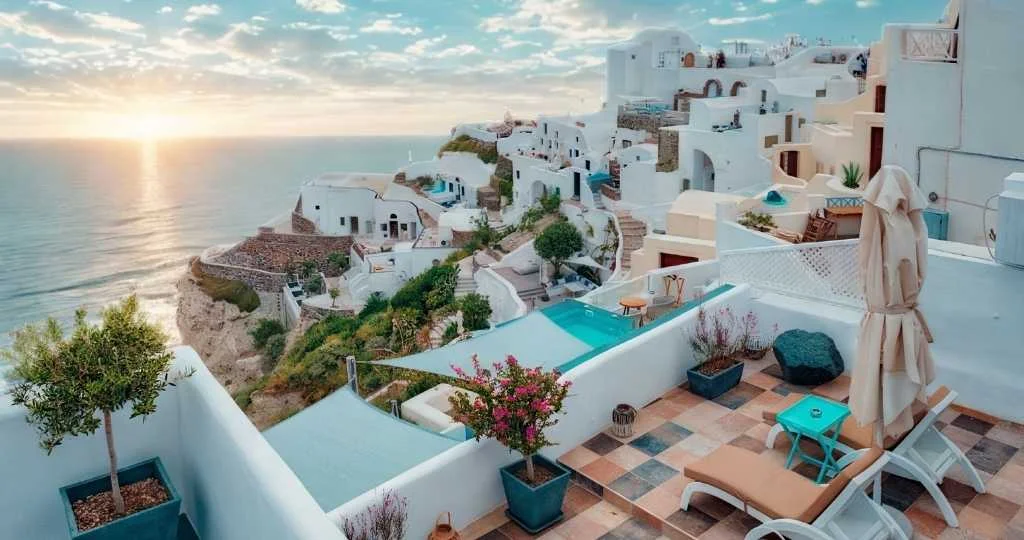
🇩🇿 Algiers — The White City by the Mediterranean
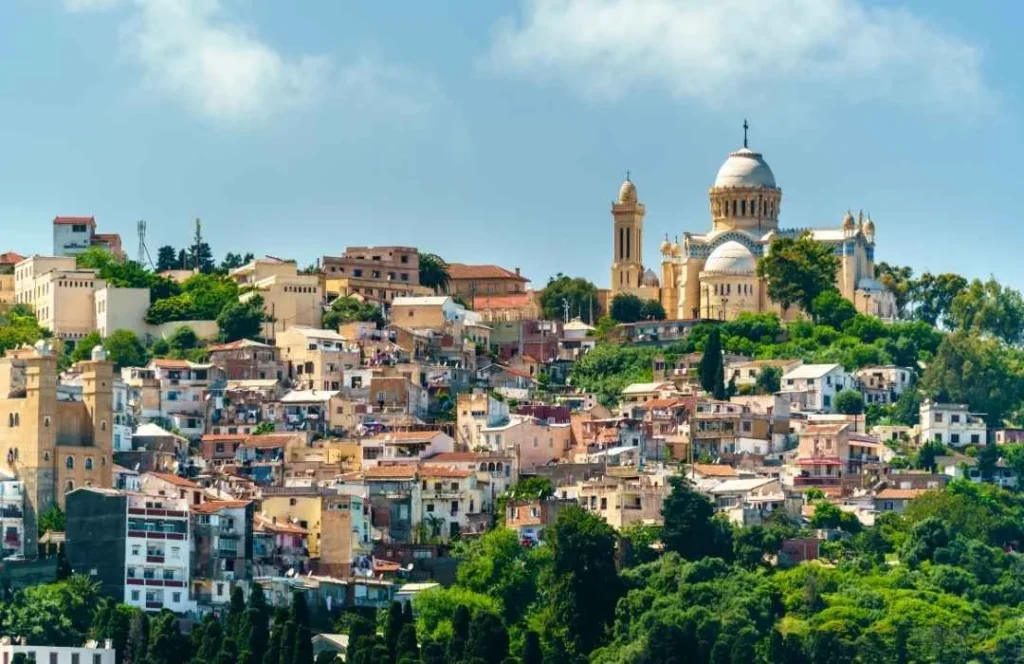
Algiers pours down to a silver bay; the Casbah climbs in chalk-white steps that smell of dust, coffee, and sea spray. This is the first thing you see from the plane window on approach, and it delivers on its promise from the ground.
The Casbah of Algiers — a UNESCO World Heritage site and the historic heart of the city — is where Algeria’s layered identity is most concentrated and most alive.
The Casbah is a labyrinth of Ottoman-era architecture and narrow alleys. While you can walk it alone, hiring a local guide for one afternoon will provide historical context that you would otherwise miss. The guides who know the Casbah from the inside — who grew up in its lanes and whose families have lived within its walls for generations — take you to Ottoman palaces hidden behind battered plaster doors, rooftop terraces overlooking the bay, and the kind of domestic architectural detail that no information board captures. On a guided walk you get to see fabulous palaces and gain enormous knowledge about the Casbah and Algiers. One particularly memorable guide who lives in the Casbah took his group to his home to see the extraordinary views of the port from his personal terrace — the kind of access that only genuine local knowledge unlocks.
Beyond the Casbah, the Jardin d’Essai du Hamma — a botanical garden of extraordinary scale, planted during the French colonial period and home to trees imported from five continents — is the best solo hour in Algiers: quiet, green, and entirely unlike the city that surrounds it. The Martyrs’ Memorial (Maqam Echahid), the concrete triumphal arch that rises above the city on a hilltop, provides the finest panoramic view of Algiers and the Bay of Algiers together — best visited at dusk when the light turns the white city golden and the Mediterranean reflects it.
From Algiers, Roman order hits you next: Timgad’s grid bites into the plateau; Djemila’s mosaics lie in mountain wind; Tipasa smells of sea salt on broken columns. The northern capital is the natural base from which the rest of Algeria unfolds.
Average daily budget: $45–75 USD Solo-Friendly Rating: 8.5/10
“Algiers is the city that makes you feel like you’ve discovered something the world hasn’t caught up with yet. The Casbah climbs above you in chalk-white tiers, smelling of dust and coffee and the sea. Nobody is following a guidebook. Nobody is wearing a tour group lanyard. You are simply in a city being itself, and it is extraordinary.”
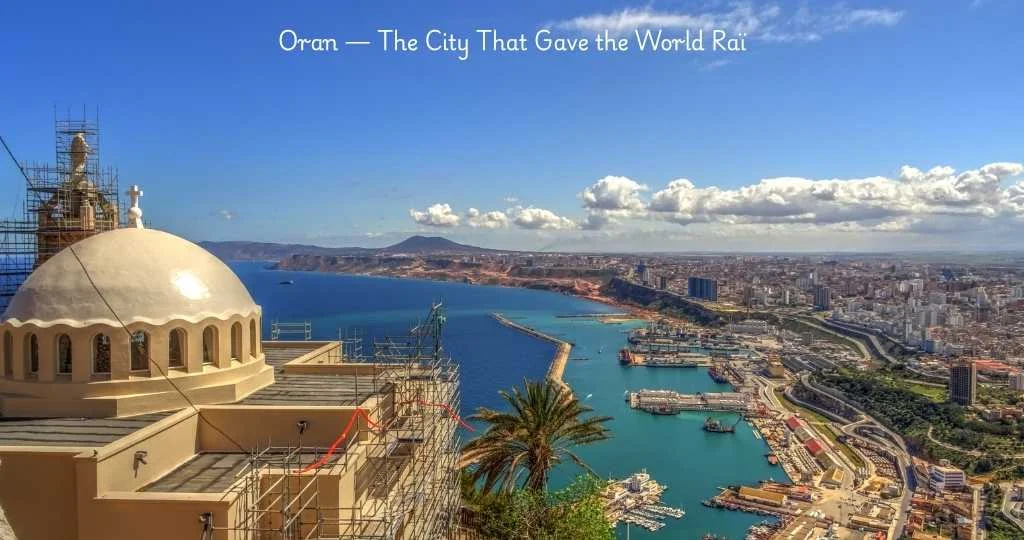
🇩🇿 Oran — The City That Gave the World Raï
Oran hums with raï drifting from taxi radios and sardines smoking on curbside braziers. This is the sensory introduction to Algeria’s second city — a Mediterranean port with Spanish fortifications, French colonial boulevards, and a musical culture so distinctive it became globally recognized.
Santa Cruz Fort, perched on Mount Murdjadjo directly above the city, is reached by a cable car that deposits you at an elevation where the entire sweep of Oran and the Mediterranean coastline is visible simultaneously. The Spanish-built fortress itself, its walls still intact after centuries, provides a military history lesson and a panoramic view in the same hour. The city below — Place du 1er Novembre at its center, the corniche stretching along the waterfront — is best explored on foot in the late afternoon when Oran’s genuine character emerges: social, musical, coastal, and entirely its own.
The raï music culture of Oran is not a performance for tourists. It is the city’s native language. Cafés and small venues play it continuously. Taxi drivers hum it. The genre — born from Berber folk music, filtered through French influence, electrified in the 1970s and 1980s — carries the specific melancholy and joy of a port city that has absorbed and synthesized everything that arrived by sea over centuries. For the solo traveler who experiences it in Oran rather than through a streaming playlist, it sounds completely different.
Average daily budget: $40–70 USD Solo-Friendly Rating: 8.5/10
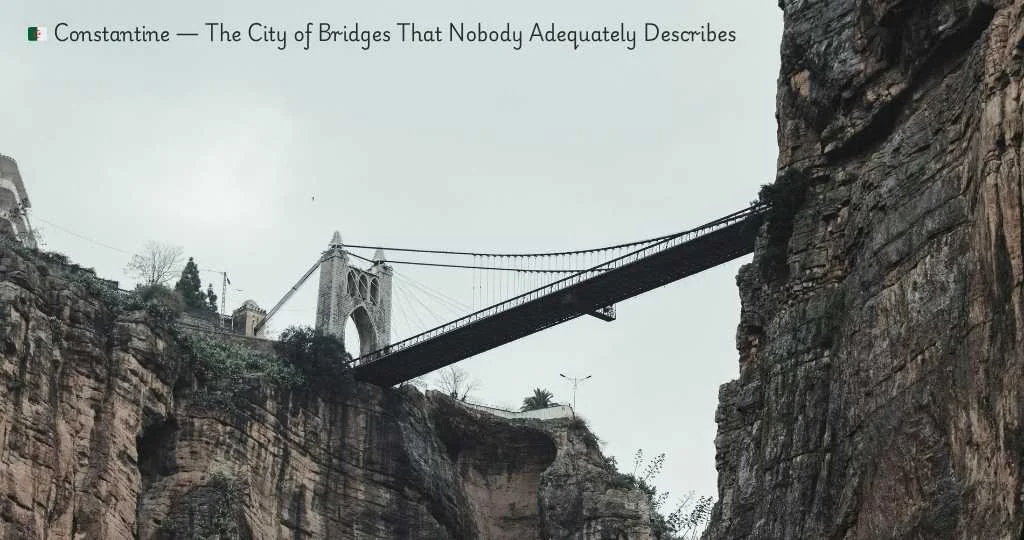
🇩🇿 Constantine — The City of Bridges That Nobody Adequately Describes
Constantine is known as the City of Bridges and is perched on a plateau divided by a deep ravine. It is one of the most visually striking cities in the Mediterranean. Solo travelers will find it easy to navigate on foot, crossing the various suspension bridges that link the different quarters.
No photograph prepares you for Constantine. The city is built on a rocky plateau cut through by the Rhumel Gorge — a canyon dropping 175 meters that divides the old city from the new in a way that has made bridge-building the defining architectural act of the place for centuries. The Sidi M’Cid Bridge suspension bridge, at 165 meters above the gorge floor, is among the most dramatic pedestrian crossings in Africa. You walk across it looking straight down into a canyon of ancient limestone, with the old city of Constantine arranged on the cliff edge to your left and the modern city extending to your right.
The Roman stones at Timgad steam after rain; you get Timgad almost to yourself, just crows and wet grass.
Constantine is the ideal base for a day trip to Timgad — the Roman city founded by Emperor Trajan in 100 AD, nicknamed the Pompeii of Africa for the completeness of its preservation. These sites are often nearly empty, allowing you to explore the ancient theaters and temples in total solitude. Walking Timgad’s perfectly preserved grid — the forum, the triumphal arch of Trajan, the 3,500-seat theater, the ancient library — entirely alone, with nothing but wind and crows for company, is one of the most genuinely extraordinary experiences available to a solo traveler anywhere in North Africa.
Average daily budget: $35–60 USD Solo-Friendly Rating: 9/10
“I spent two hours at Timgad without seeing another tourist. Just a 2,000-year-old Roman city, perfectly preserved on an Algerian plateau, with wind moving through the forum columns and nothing else. That kind of solitude with that kind of history is essentially unavailable anywhere else in the world right now.”
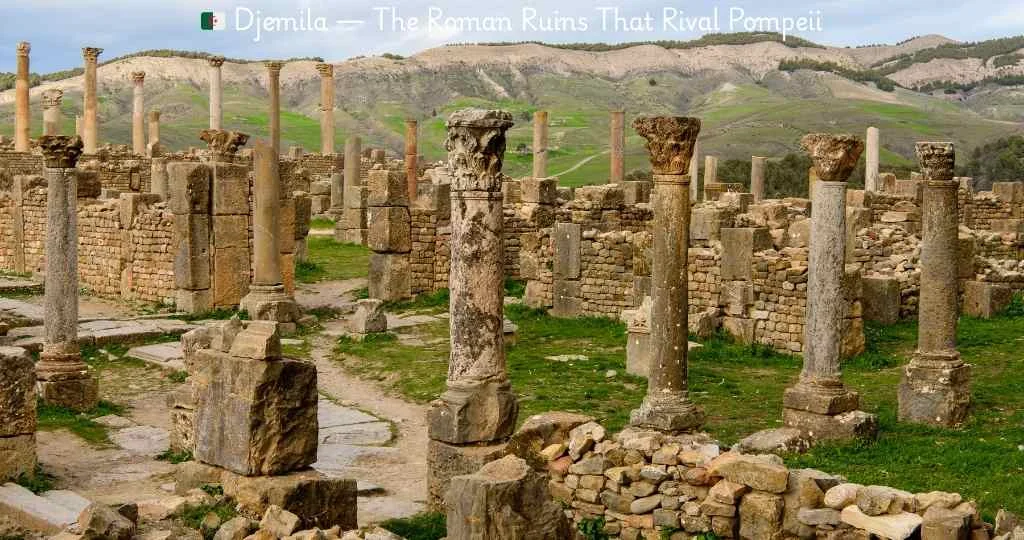
🇩🇿 Djemila — The Roman Ruins That Rival Pompeii
Djemila, also known as Cuicul, is a remarkably well-preserved Roman town with ancient ruins including temples, forums, and theaters showcasing the architectural and historical heritage of the Roman period. It is often compared to Pompeii because of how well its forums, theaters, and basilicas have been preserved.
What distinguishes Djemila from Timgad is its setting — high in the mountains of northeastern Algeria, at 900 meters elevation, in a landscape of rolling hills and winter-cold air that makes the Roman engineering achievement feel even more extraordinary. A city of 20,000 people, built and inhabited from the 1st to the 6th century AD in mountain terrain that should not have supported it, now standing open and largely unvisited on a hillside that smells of wild thyme and stone.
Djemila’s mosaics lie in mountain wind. The site museum contains mosaics so detailed and so well-preserved — hunting scenes, mythological narratives, geometric borders — that standing before them after walking the ruined city they once decorated collapses the distance between 2nd-century Roman Algeria and the present in a way that no amount of reading can replicate.
For the solo traveler who has seen Rome, Athens, or Carthage, Djemila is the answer to a question you didn’t know you were asking: what does all of this look like when the crowds have gone away and the commercial scaffolding has been stripped off and you are simply left alone with the ruins? Like this. Exactly like this.
Average daily budget: (Day trip from Constantine, add $15–25 for transport) Solo-Friendly Rating: 9.5/10
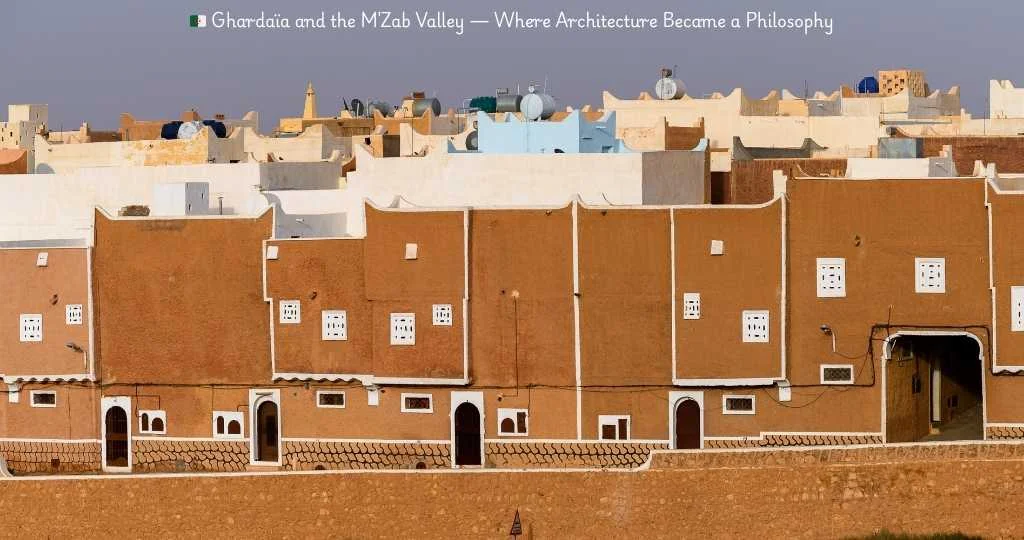
🇩🇿 Ghardaïa and the M’Zab Valley — Where Architecture Became a Philosophy
The M’Zab Valley, centered around the city of Ghardaïa, is famous for its distinctive 11th-century urban planning and the conservative, community-driven lifestyle of its residents.
The five fortified towns of the M’Zab Valley — collectively a UNESCO World Heritage site — were built by the Mozabite Berber community in the 11th century according to urban planning principles so sophisticated that Le Corbusier visited in 1931 and acknowledged their influence on his own architectural thinking. The towns are organized around a mosque whose minaret serves as a watchtower, with the market below, the residential quarters climbing the hillsides in concentric rings, and the cemetery positioned to catch the first and last light of each day. Every element has a function. Nothing is decorative without being useful. A six to eight-day trip here allows you to see how traditional markets and religious architecture have remained largely unchanged for centuries.
The ancient stone market of Ghardaïa, the oasis gardens of El-Meniaa, and Timimoun’s red mud-brick houses and ochre buildings extend the M’Zab experience into a desert landscape of extraordinary color and scale. In the M’Zab, Ghardaïa’s cubic lanes make their own shade, a minaret like a spear over clay roofs.
The M’Zab Valley is the destination that most fundamentally changes how solo travelers think about the relationship between architecture, community, and the desert. It is not a ruin. It is a living city built on principles that modern urban planning has mostly forgotten. Walking its lanes alone, with a local guide who understands the Mozabite culture from the inside, is among the most intellectually and aesthetically rewarding experiences available in North Africa.
Average daily budget: $40–65 USD Solo-Friendly Rating: 8.5/10
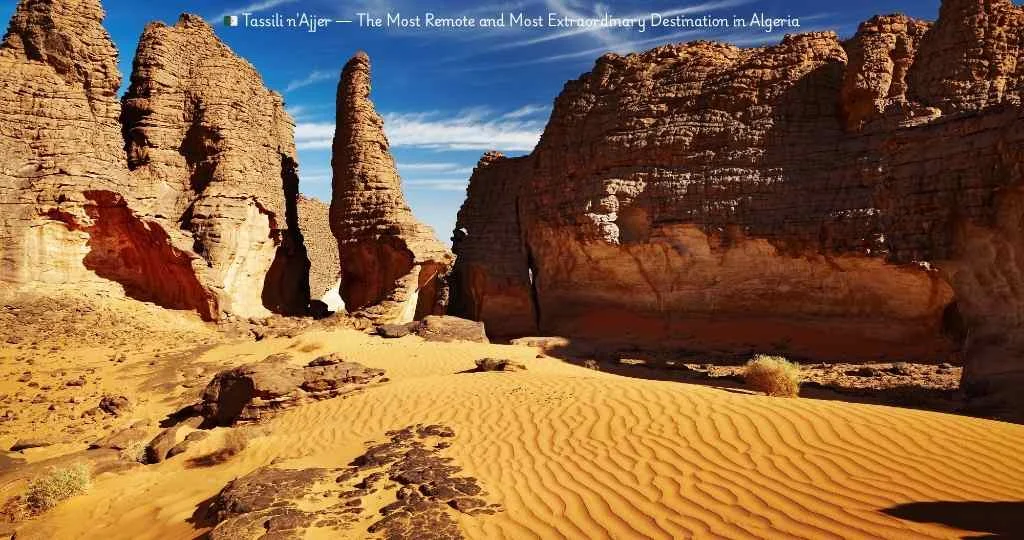
🇩🇿 Tassili n’Ajjer — The Most Remote and Most Extraordinary Destination in Algeria
The UNESCO-listed Tassili n’Ajjer National Park reveals its wonders from Djanet. Marvel at 15,000 prehistoric paintings, surreal sandstone formations, and hidden canyons. Five nights camping in the Sahara feature Tuareg guides sharing their ancient desert culture over traditional tea ceremonies. Pixidia
Tassili n’Ajjer is not a destination for a casual weekend. It is a commitment — to remoteness, to physical effort, to the kind of experience that does not have a gift shop at the end. You fly south to meet your Tuareg guides, who will lead you through a landscape of surreal sandstone formations and ancient rock art that dates back thousands of years. This trip involves camping under the stars and moving with the natural rhythm of the desert.
The rock art at Tassili — over 15,000 engravings and paintings depicting animals, human figures, and scenes of daily life from a period when the Sahara was green and wet and inhabited — is the oldest accessible gallery of human creative expression on earth. Under a headlamp in the deep Saharan night, the painted hunters and antelope and cattle glow against the sandstone in ways that close 10,000 years of distance between the hand that made the mark and the eye reading it.
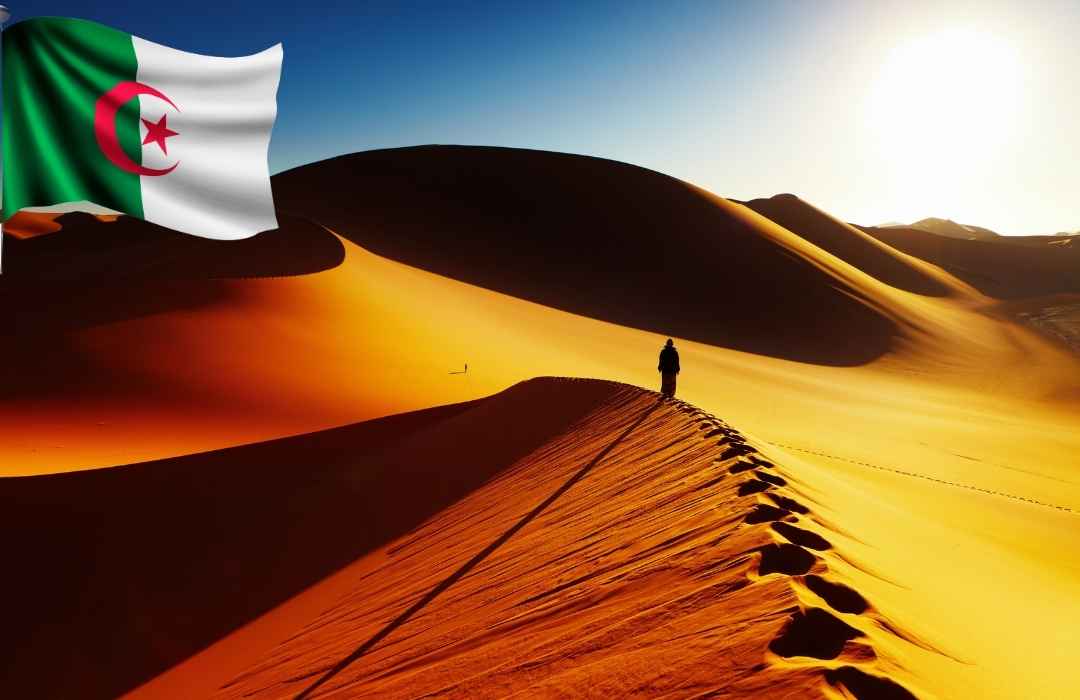
Dawn at Assekrem turns the black pinnacles gold and the Sahara into a quiet sea. The Assekrem plateau in the Hoggar Mountains — accessible from Tamanrasset — is the companion experience to Tassili: a high volcanic plateau where the French priest Charles de Foucauld built a hermitage in 1910, at 2,700 meters elevation, from which the entire Sahara is visible in every direction at sunrise in a display of light and landscape that has no equal anywhere.
This journey requires a registered Tuareg guide, a permit, and proper desert equipment. It rewards the preparation with an experience that solo travelers who have made it consistently describe as the most profound journey of their lives. That is not marketing language. It is the consistent, independent testimony of people who went alone into the largest desert on earth and came out changed.
Average daily budget: $80–150 USD (including guide, permits, camping) Solo-Friendly Rating: 8/10 (requires organized arrangement, not solo independent navigation)
The ElitTrip Algeria Solo Traveler Overview
| Destination | Best For | Avg Daily Budget | Solo-Friendly Rating |
|---|---|---|---|
| Algiers | First experience, history, culture | $45–75 | 8.5/10 |
| Oran | Music culture, Mediterranean coast | $40–70 | 8.5/10 |
| Constantine | Dramatic landscape, Roman ruins | $35–60 | 9/10 |
| Djemila | Roman ruins in mountain solitude | Day trip from Constantine | 9.5/10 |
| Ghardaïa / M’Zab | Desert architecture, living heritage | $40–65 | 8.5/10 |
| Tassili n’Ajjer | Prehistoric art, Saharan wilderness | $80–150 | 8/10 |
Getting Around Algeria Alone: What Actually Works
Roads in Algeria are very good — impressively so. The car is arguably the best way to explore the country independently, particularly for reaching sites between major cities. For the northern circuit — Algiers to Oran to Constantine with day trips to Timgad and Djemila — either car rental or the intercity transport network provides viable options.
Domestic flights are the most practical solution for covering Algeria’s vast distances. The country is the largest in Africa and its southern destinations — Djanet, Tamanrasset — are genuinely remote. Air Algérie connects major cities with reasonable frequency and affordable fares booked in advance. For the Tassili n’Ajjer and Hoggar regions, flying south is not optional — it is how you get there within a reasonable trip length.
Trains connect Algiers with Oran and Constantine with good reliability. There is a train from the airport to the center of Algiers — one per hour — which costs 130 DZD each way and proves very useful for both arrival and departure. For intercity travel between northern cities, trains are comfortable, affordable, and an experience in themselves.
Buses and shared taxis (louages) connect cities and towns that trains don’t reach. Shared taxis take seven passengers and run on a “leave when full” basis — affordable, direct, and a guaranteed immersion in how Algerians actually travel. For Constantine to Timgad specifically, a combination of shared taxi and local bus covers the route at minimal cost.
In cities, the transport situation requires active management. Credit and debit cards are rarely useful outside of high-end international hotels in Algiers or Oran. You will need to carry enough cash to cover your entire trip. Split your cash into different bags and use the hotel safe for the bulk of your funds. Carrying a mix of large and small denominations of Algerian Dinars is essential — small bills are necessary for street food, short taxi rides, and tips for local guides.
While official banks and airport exchanges exist, they offer a rate significantly lower than the informal market. Most travelers bring cash in Euros or US Dollars and exchange through reliable contacts recommended by their hotel manager. This is not a dangerous transaction — it is simply how the Algerian economy operates for tourists, and every hotel in the country knows how to facilitate it safely.
Practical Solo Travel Tips for Algeria in 2026
When to go
Spring and autumn are the optimal windows: March to May and late October to November. Markets spill dates and oranges, cafés drag chairs into the light, and the Sahara breathes — enough wind to cool, not enough to flay. You can link Algiers to Ghardaïa to Djanet without fighting the elements. Prices ease and doors stay open.
Summer in northern Algeria is hot but manageable — the Mediterranean cities are genuinely pleasant in early morning and evening. Summer in the Sahara is genuinely brutal and not suitable for desert excursions. Winter delivers its own rewards: Roman stones at Djemila steam after rain, and you get Timgad almost to yourself. In the desert the stars feel close enough to burn, but nights bite hard — a real cold-rated sleeping bag and wool layers are essential.
What to wear
Clothing should cover the shoulders and knees. Women do not need to cover their hair unless entering a mosque, but carrying a light scarf is practical for sun protection and sudden weather changes. In more conservative southern regions such as the M’Zab Valley, adhering to modest dress codes is more important and ensures you are welcomed by the local community.
Language
French is non-negotiable for independent solo travel in Algeria. A simple Salam or Sahit goes a long way. Many younger Algerians speak some English, but French remains the primary language of administration and tourism. Google Download Google Translate with French and Arabic offline packs before you land — it becomes your most-used app within the first hour.
Health
Drink only bottled water. Ensure you are up to date on hepatitis A vaccination before traveling. Carry oral rehydration sachets for any stomach upset — traveler’s diarrhea is the most common health complaint among visitors.
For solo female travelers specifically
Traveling alone as a woman in Algeria can come with challenges. Modest attire is typically expected, covering arms, legs, and shoulders helps you blend in and avoid unwanted attention. Avoid wandering solo in unknown spots, especially at night. Stick to daylight hours for outdoor exploration in unfamiliar neighborhoods. If you take a taxi, the back seat provides an additional degree of comfort.
Algeria is doable for experienced solo female travelers, but there is slightly more to consider than in Morocco or Tunisia. Verbal attention can occur, particularly in larger cities, but is usually out of curiosity rather than malice. Most experienced solo female travelers report feeling safe throughout, particularly when with a guide or in the company of local contacts.
FAQ: What Solo Travelers Ask Before Booking Algeria
Is Algeria worth the visa difficulty?
Algeria is an interesting country to visit with incredible sites — from ancient Roman ruins to desert oases. The visa process is bureaucratic but manageable, and every traveler who completes it consistently reports that the country itself justified every hour of paperwork. The visa difficulty also has a practical benefit for the solo traveler: it keeps mass tourism out. The Roman ruins you explore will not have crowds. The Saharan landscapes will not have tour buses queued at the entrance. Algeria requires effort to visit, and that effort is part of why it rewards the traveler so specifically.
Can I travel Algeria completely independently without a guide?
For northern Algeria — Algiers, Oran, Constantine, Timgad, Djemila — yes, with a solid plan and functional French. For the M’Zab Valley and Ghardaïa, a local guide significantly enhances the experience and helps navigate the conservative community context. For Tassili n’Ajjer, Tamanrasset, and the deep Sahara — a licensed Tuareg guide is not optional. It is required by the Algerian government for remote desert travel, and it is also simply the correct decision: these landscapes are enormous, the navigation is non-trivial, and the cultural access that a genuine Tuareg guide provides is not replicable any other way.
How long should a first solo trip to Algeria be?
Focus your first trip on the northern coastal strip and one specific region of the Sahara. Trying to see the entire country in ten days is a recipe for exhaustion. Ten to fourteen days gives you Algiers (two nights), Oran (two nights), Constantine with Timgad and Djemila day trips (three nights), and either Ghardaïa or a Saharan excursion (three nights). This circuit covers Algeria’s essential experiences without rushing through any of them.
What is the single most important preparation for solo travel in Algeria?
The visa, started six months in advance. Everything else — the French language basics, the cash management, the local SIM card, the operator contact for desert regions — flows from having the paperwork in order. Without the visa, nothing else matters. With it sorted cleanly and early, every subsequent decision becomes manageable.
Final Thought: What Algeria Does to the Solo Traveler Who Goes
There is a specific arc to solo travel in Algeria that almost every experienced independent traveler who has been there describes. The anticipation before the trip that mixes excitement with something that sits just below certainty. The first day in Algiers that is disorienting and loud and doesn’t quite match any previous travel reference point you have. The second day that is better. The third day in the Casbah when a guide takes you to his rooftop terrace and the entire bay of Algiers is below you and the air smells of sea spray and coffee and you understand, finally, what the country actually is.
Algeria is a magical country, so rich in culture, history, natural wonders, and incredible people. The contrast between the coast, the capital Algiers, and the Sahara with its distinct oases couldn’t be more stunning. We visited great historic towns and locales — each place has its own culture, history, and characteristics, and every day was full of fresh encounters.
That freshness is what makes Algeria a solo elite trip destination in the most specific sense. Not a destination where you follow a trail that ten thousand people walked before you this month. A destination where you negotiate your own path, earn your own access, and come home with a story that is genuinely, irreducibly yours.
Go before the trail gets worn smooth. Go with your visa in order and your French functional and your patience intact. Come back knowing that there are still places in the world that ask something real of the traveler who arrives alone — and that Algeria is one of the finest of them.
ElitTrip is built for travelers who go alone. Read our complete Morocco Solo Travel Guide, our honest Tunisia Solo Travel Guide, and our full Egypt Solo Travel Guide — the complete ElitTrip North Africa series for independent travelers who go without a safety net and find one inside themselves.
Want to Share Your Experience?
Have you traveled using one of our guides or found inspiration here?
👉 Share your experience in the comments or send us your story
Your insights help other travelers plan more thoughtful, rewarding journeys.
Latest Reviews
There are no reviews yet. Be the first one to write one.
Want to Share Your Experience?
Have you traveled using one of our guides or found inspiration here?
👉 Share your experience in the comments or send us your story
Your insights help other travelers plan more thoughtful, rewarding journeys.
Latest Reviews
There are no reviews yet. Be the first one to write one.