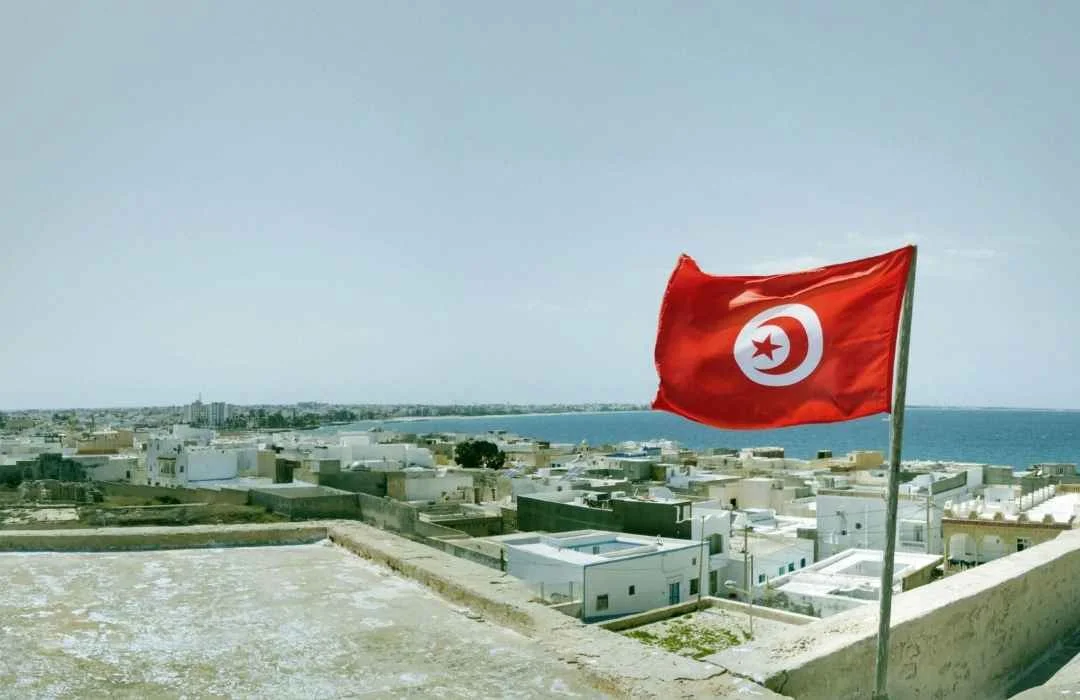
Tunisia Solo Travel Guide: The ElitTrip Honest Guide for Travelers Going Alone in 2026
Tunisia has been sitting at the edge of your travel list for a while now. You have seen the photographs — the blue and white village of Sidi Bou Said perched above the Mediterranean, the golden dunes of the Sahara stretching toward a horizon with nothing on it, the Roman colosseum at El Jem rising from the Tunisian plain like something that landed from another civilization entirely. You have also seen the headlines from 2015, the travel warnings, the online forum posts that made it sound terrifying. This guide is going to tell you the truth about all of it — because Tunisia is one of the most surprising, most rewarding, and most undervisited solo travel destinations in the Mediterranean world, and it deserves an honest account.
Table of Contents
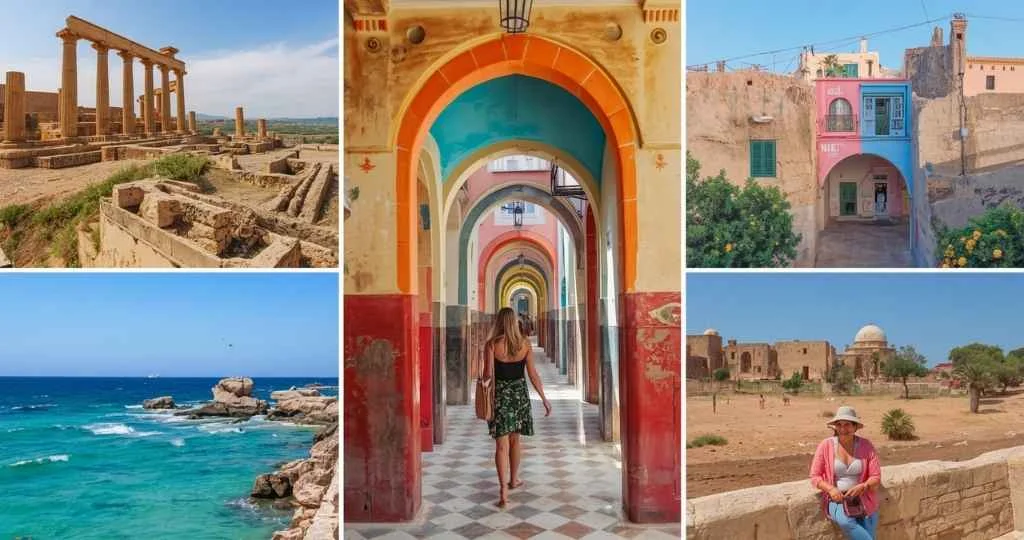
Why Tunisia Is the Most Underestimated Solo Travel Destination in North Africa
In 2026, Tunisia ranked 43rd globally and 2nd in Africa in the Travel Safety Index published by the specialized platform HelloSafe, achieving a score of 72.9 out of 100. Among African countries, only two made it into the global Top 50 for 2026: Tunisia and Morocco. That ranking does not appear in most travel conversations about Tunisia, because the conversation about Tunisia has been frozen in 2015 for almost a decade — locked on the terrorist attacks that devastated the country’s tourism industry and left a perception of danger that the current reality does not support.
Tunisia is on the rise as one of the hottest tourist destinations of the 2020s, welcoming over 10 million visitors in 2024 alone. The infrastructure has been rebuilt, the security presence has been significantly expanded, and the country’s extraordinary diversity — Roman ruins on a scale that rivals Italy, the largest medina in North Africa, a Saharan desert experience that costs a fraction of Morocco’s equivalent, and a Mediterranean coastline of genuine beauty — remains entirely intact and largely undiscovered by the kind of independent traveler who would appreciate it most.
From a solo travel perspective, Tunisia offers something rare: a country where independent travelers are still unusual enough to be genuinely welcomed rather than treated as an inevitability. Tunisians are extraordinarily curious about visitors who arrive alone and move through the country on their own terms — always willing to help, enormously interested in where you come from and why you chose their country, and possessed of a hospitality that reveals itself most fully to the traveler who is not surrounded by a group and therefore actually available for conversation.
This is the solo elite trip version of Tunisia. Not the all-inclusive resort. Not the organized bus tour with fourteen other couples. The version where you navigate the medina of Tunis alone on a Tuesday morning, eat makroudh pastry from a stall in Kairouan with date syrup on your fingers and no one watching, and sit in a desert camp outside Douz under a sky so thick with stars that the Milky Way casts a shadow. That version. This guide.
The Honest Safety Picture: What You Actually Need to Know Before You Land (Tunisia Solo Travel Guide)
Before the destinations, the honesty that most Tunisia travel guides either omit or exaggerate in opposite directions.
Tunisia was once one of the most visited countries in Africa. After two major terrorist attacks in 2015 and another in 2020, tourism declined sharply. But those headlines do not reflect the everyday reality. Tunisia has steadily regained its footing and rebuilt its safety measures. While no place is 100% risk-free, daily life here is generally peaceful, normal, and incredibly welcoming. Google
The areas genuinely worth avoiding are specific and well-documented: within 16 kilometers of the Algerian border (except for Tabarka and Ain Draham), within 16 kilometers of the Libyan border, and the mountainous areas of Mount Chaambi and Mount Orbata in western Tunisia. These are designated high-risk zones where terrorism remains an active concern. They are also not places that appear on any reasonable solo travel itinerary. The tourist circuit — Tunis, Sidi Bou Said, Carthage, Kairouan, El Jem, Matmata, Tozeur, Djerba, Hammamet — does not intersect with any of these zones.
Tunisia has the lowest crime rate in the entire North African region, making it one of the safest places to travel to statistically. Most agree that violent crime rates are low — the most common concern is petty theft and scams, concentrated in tourist areas and easily managed with basic precautions.
During almost three weeks of solo backpacking across Tunisia using public transportation, the experience was absolutely great — nobody ever bothered, nobody threatened, and absolute kindness was found wherever the country was explored. The reality on the ground is quite different from what the media suggests.
The honest summary: Tunisia is safe for independent travel within the established tourist circuit. The risks are real but specific — petty scams, occasional overcharging, vendor pressure in busy medinas, and the border zones named above. None of these are reasons to avoid the country. All of them are reasons to arrive informed.
What Solo Travel in Tunisia Actually Feels Like
Rural Tunisia feels super relaxed and honestly quite safe. Walking around small towns and countryside areas actually feels more at ease than in the busy streets of Tunis or Sousse. Petty crime is almost non-existent in these places. Most locals were incredibly friendly and curious about why a foreigner was in their town — especially in the west and the deep south, where people don’t see tourists every day, so you really stand out, but in a way that often leads to warm conversations, not sketchy situations.
The arc of solo travel in Tunisia follows a pattern that experienced solo travelers will recognize. The first day in Tunis is disorienting — the medina is genuinely enormous, the taxi culture requires immediate negotiation, and the gap between the polished travel photography you’ve seen and the working, lived-in reality of the city takes adjustment. By the second day, the city begins to reveal itself. By the third, you have found your café, your route through the souks, and the particular Tunisian rhythm that is slower and more generous than the medina’s initial intensity suggests.
The further south you travel, the more dramatically this opening occurs. In Kairouan, strangers invite you for tea in earnest rather than commercially. In Matmata, the family whose underground home you visit for fifteen minutes insists you stay for lunch. In the desert outside Douz, the Bedouin guide who leads your camel through the dunes names constellations in Arabic and asks what stars look like from your country. These are not performances for tourists. They are the actual texture of a country that has not yet learned to treat independent travelers as a category rather than a person.
The Best Places to Visit in Tunisia as a Solo Traveler
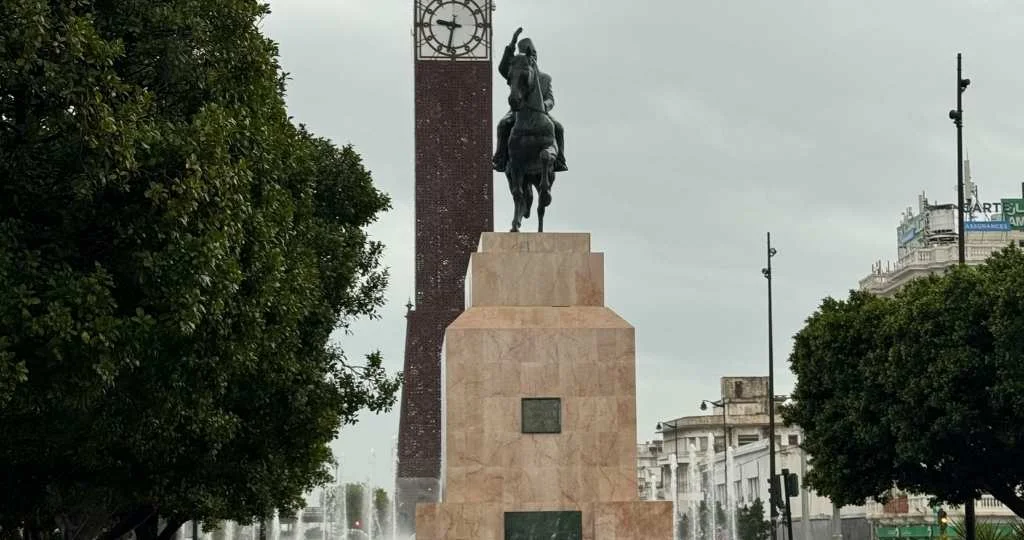
🇹🇳 Tunis — The Capital That Earns Its Complexity
Tunis does not apologize for being what it is: a working North African capital of over two million people, layered with Ottoman minarets, French colonial boulevards, Phoenician memory, and the largest UNESCO-listed medina in North Africa — all operating simultaneously at full volume. It takes a day to stop being overwhelmed by it and a week to begin understanding it. For the solo traveler with patience, it is extraordinary.
Wandering the largest medina in North Africa in Tunis means navigating twisting alleyways to discover tiny stores overflowing with goods, ancient mosques, and bustling squares where the smells of spice and essential oils fill the air. The specialty souqs that make up the medina markets — the perfume makers’ souq, the Grand Souq des Chechias where the iconic blood-red felt hats are made — are a full morning of genuine discovery.
The Bardo National Museum, housed in a former Ottoman palace in the western suburbs, contains one of the finest collections of Roman mosaics in the world — floors ripped from Roman villas across Tunisia and reassembled in gallery after gallery of extraordinary color and detail. The mosaic of Virgil flanked by two muses, discovered at Sousse, is alone worth the entry fee. Give it three hours minimum and arrive when the doors open to have the early galleries to yourself.
The Zitouna Mosque at the center of the medina — the Great Mosque of Tunis, founded in 737 AD and expanded over centuries — is currently partially restricted for non-Muslim visitors, but the courtyard glimpsed through its gate and the surrounding streets of theological schools and manuscript dealers give a sense of the intellectual life that made medieval Tunis one of the great centers of Islamic learning. Expect to hear the call to prayer at 4:30am if you stay in the medina — an experience that is disorienting for the first morning and unexpectedly moving by the third.
For the solo traveler who finds the medina too loud and too persistent, the Ville Nouvelle — the French colonial city center built around Avenue Habib Bourguiba — offers a different Tunis entirely: wide café-lined boulevards, the imposing Municipal Theatre, and a street life that is cosmopolitan and relaxed in ways that feel almost European. The contrast between these two cities within a single city, walkable in an afternoon, is itself one of the most interesting cultural experiences Tunisia offers.
Average daily budget: $35–60 USD Solo-Friendly Rating: 8/10
“I arrived in Tunis expecting chaos and found something more interesting — a city actively negotiating between its past and its future, where a Roman mosaic sits in a palace beside a café playing French pop music and a call to prayer drifts across both. Nothing about it is resolved. Everything about it is alive.”
✈ Pro Tip: Taxis from Carthage International Airport charge 50% extra fare after 9pm. If you arrive late, fix the price before getting in — the standard daytime rate into central Tunis is around €8–10, and the night supplement should bring it to no more than €15. Taxis cannot enter deep into the medina, so your accommodation address should be a landmark near the medina entrance rather than an internal lane.
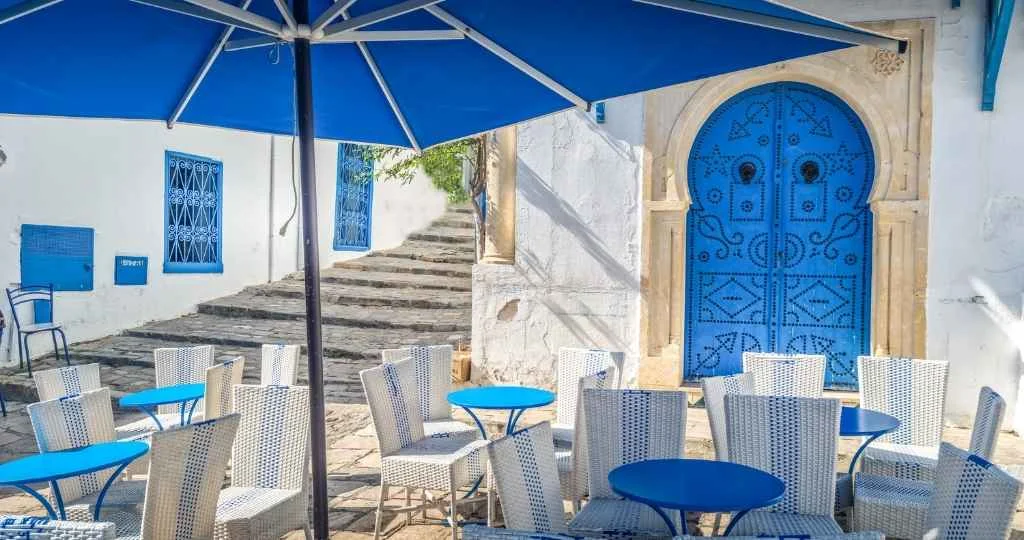
🇹🇳 Carthage and Sidi Bou Said — The Day That Changes Your Sense of History
These two sites sit twenty minutes apart on the northern coast and combine into the finest single day available to a solo traveler in Tunisia — ancient civilization and Mediterranean beauty in one unhurried loop.
Carthage was once the most powerful city in the western Mediterranean world — a Phoenician trading empire that challenged Rome for dominance of the ancient world and lost, catastrophically, in 146 BC when Rome destroyed the city entirely and salted the earth where it stood. The ruins that remain today are Roman rather than Phoenician — Rome rebuilt Carthage as its African capital — but they are extraordinary in their own right. The Antonine Baths, overlooking the sea from a bluff above the gulf, were the third largest Roman bath complex ever built, and even in ruin their scale communicates something important about the ambition of a civilization that built for permanence. Byrsa Hill, crowned by the Carthage National Museum, provides the panoramic context — the ancient harbor, the gulf, Tunis in the distance — that makes the strategic importance of this site immediately legible.
The ancient Antonine Baths and Byrsa Hill provide stunning insights into Tunisia’s layered history. The sensation of standing in one place and feeling several civilizations layered beneath your feet is uniquely powerful in Carthage.
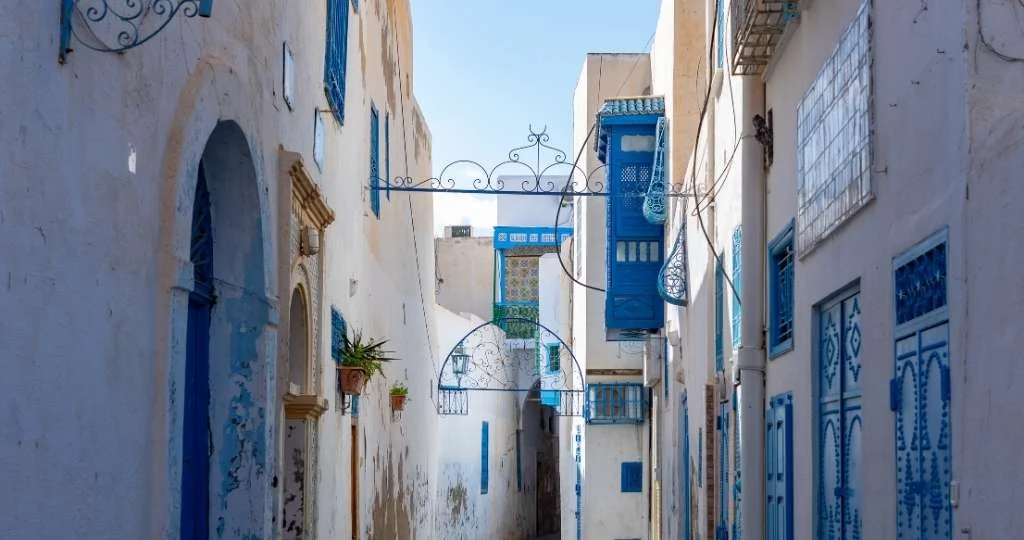
**Sidi Bou Said**, fifteen minutes further along the coast, is where Tunisia takes a breath. Perched high above the Mediterranean on a cliff face, with white walls and blue shutters in every direction, it makes for incredible photo opportunities — but the photographs consistently undersell it, because what they cannot capture is the light off the water, the smell of jasmine from the courtyard gardens, and the particular stillness of the place in the early morning before any other visitor has arrived.
The correct approach to Sidi Bou Said as a solo traveler: arrive at 8am on any day except Saturday. Walk to the furthest terrace café before the town wakes up properly, order a coffee, and look at the Mediterranean below while the only other people present are local residents going about their morning. By 10am the villagTunisia solo travel guidee will have changed entirely. You will have had the best version of it.
✈ Pro Tip: Both Carthage and Sidi Bou Said are accessible on the TGM light rail line from central Tunis — one of the most pleasant and inexpensive urban transit experiences in North Africa. Buy a day pass at the Tunis Marine station and ride it end to end; the coastal views between the two sites are worth the trip alone.
🇹🇳 Kairouan — The City That Asks Something of You
Kairouan is a must-see focal point of ancient Tunisia — the town held as the fourth most holy city in Islam, where for those unable to make the pilgrimage to Mecca, seven visits here are considered equivalent. Wandering and chatting your way through Kairouan, you naturally pick up on a sense of stature surrounding the place. Laying eyes on the Great Mosque is truly special.
The Great Mosque of Kairouan — founded in 670 AD by Uqba ibn Nafi, rebuilt and expanded by the Aghlabid dynasty in the 9th century — is the oldest mosque in North Africa and one of the oldest in the Islamic world. Non-Muslim visitors can enter the vast courtyard and the portico that surrounds it, but not the prayer hall itself — a restriction that paradoxically intensifies the experience of the building rather than diminishing it, because you are left to read its architecture from outside, as an observer rather than a participant, which asks you to look more carefully. The minaret — square, ancient, rising above the surrounding medina with the particular authority of something that has been standing longer than most countries — is one of the most compelling pieces of architecture in the Mediterranean.
Kairouan was founded by the Umayyads in the 7th century and went on to become an important centre for Sunni and Quranic learning. Its Great Mosque, Barber Mausoleum, and old town together offer a profound and authentic perspective on Tunisia’s spiritual and cultural legacy.
Beyond the mosque, Kairouan is famous across Tunisia for its handwoven carpets — produced by women in workshops scattered through the medina using techniques passed down through generations — and for makroudh, the date-filled semolina pastry that is the city’s defining food and available from every corner stall, warm from the fryer, dripping with date syrup or honey. Eating one standing up at a Kairouan pastry stall is one of the small, specific, irreplaceable pleasures of traveling in Tunisia alone.
Average daily budget: $30–55 USD Solo-Friendly Rating: 8.5/10
“Kairouan has a quality of stillness that is unusual in a city of its size. The medina’s alleys are quieter than Tunis, the pace is slower, and the people are less interested in what you might buy and more interested in who you are. I spent a morning there talking to a carpet weaver about her daughter’s university studies and left understanding something about Tunisia I couldn’t have read in any guide.”
🇹🇳 El Jem — The Roman Amphitheater That Stops You Cold
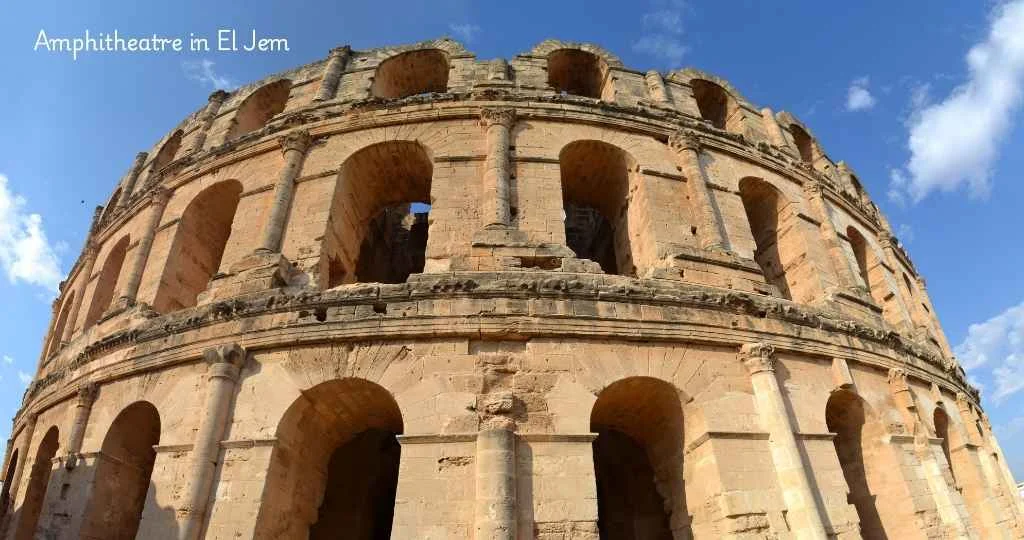
The Roman amphitheatre of El Jem is the second largest Roman arena ever built — rising above the surrounding city like a colosseum that materialized in the middle of the Tunisian plain. This is the least crowded and most dramatically surprising major Roman monument in the Mediterranean world. You arrive in a small, unremarkable town, turn a corner, and there it is: 35 meters of Roman engineering rising from the flat landscape with the matter-of-fact authority of something that has been there for 1,800 years and fully expects to be there for another 1,800.
The El Jem Colosseum gives you that instant “this is massive” feeling — the world’s second biggest Roman colosseum, with giant corridors and a scale that rewards exploration from every level. Unlike Rome’s Colosseum, El Jem is not surrounded by tourist infrastructure. There is no queue, no timed entry, no crowds of hundreds blocking the arched corridors. You can walk the underground passages where gladiators and animals waited before entering the arena floor in near-complete solitude. You can climb to the top tier and look out over the Tunisian countryside in every direction and feel, very clearly, the strange privilege of being alone inside something this old and this extraordinary.
For solo travelers, El Jem is the single most dramatic half-day available in Tunisia. It pairs naturally with the coastal city of Mahdia — 45 minutes east — where a beautiful whitewashed medina, a small fishing harbor, and one of Tunisia’s most relaxed lunch scenes provide the perfect decompression after the weight of the amphitheater.
✈ Pro Tip: El Jem is most easily reached by train from Tunis or Sfax — the station is a ten-minute walk from the amphitheater. The town has limited accommodation; most solo travelers visit as a day trip from Sousse or continue south toward Djerba the same evening.
🇹🇳 Matmata — The Underground World That Earned Its Fame
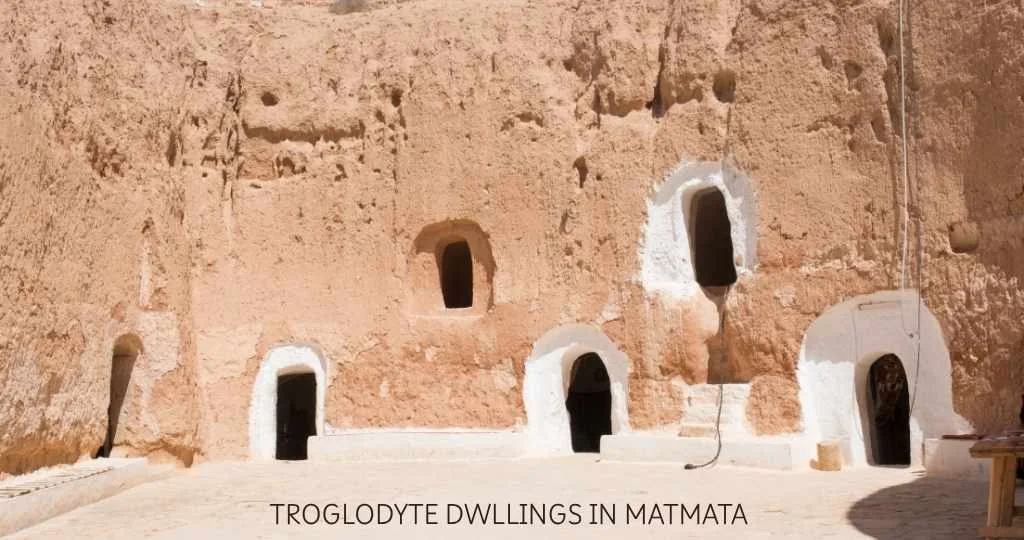
Matmata is famous for its troglodyte village and Star Wars sets — the small Berber village in southern Tunisia that was the location setting for scenes in two Star Wars films. The Berbers created underground dwellings along the Matmata Plateau: houses built from a pit dug into the earth rather than constructed above it, with rooms radiating from a central courtyard that remains cool in summer and warm in winter.
The Star Wars connection brings visitors. The actual experience of Matmata retains them differently. Entering a lived-in underground house reveals a way of life shaped entirely by the land — the ingenuity of building downward rather than upward, the practical genius of a people who adapted to an environment that most civilizations would have considered uninhabitable, the particular quality of light in a courtyard that exists eight meters below the surface of the earth.
Hotel Sidi Driss — the original Lars Homestead from the Star Wars films, still operating as a guesthouse — allows visitors to eat lunch in the courtyard where Luke Skywalker’s childhood meals were filmed. The food is simple Tunisian home cooking. The setting is one of the strangest and most memorable dining experiences available to a solo traveler anywhere in North Africa.
From Matmata, the landscape transitions dramatically into the Dahar mountains — ochre stone, fortified Berber granaries called ksour, cliffside villages like Chenini and Douiret that cling to the hillside above valleys of extraordinary silence. Sunset over Chenini, with the deep red light on the stone and nothing moving in any direction, is one of those moments that solo travel makes uniquely personal because there is no one to interrupt it.
Average daily budget: $25–50 USD Solo-Friendly Rating: 8.5/10
🇹🇳 Tozeur and the Sahara Desert — Where Tunisia Goes Infinite
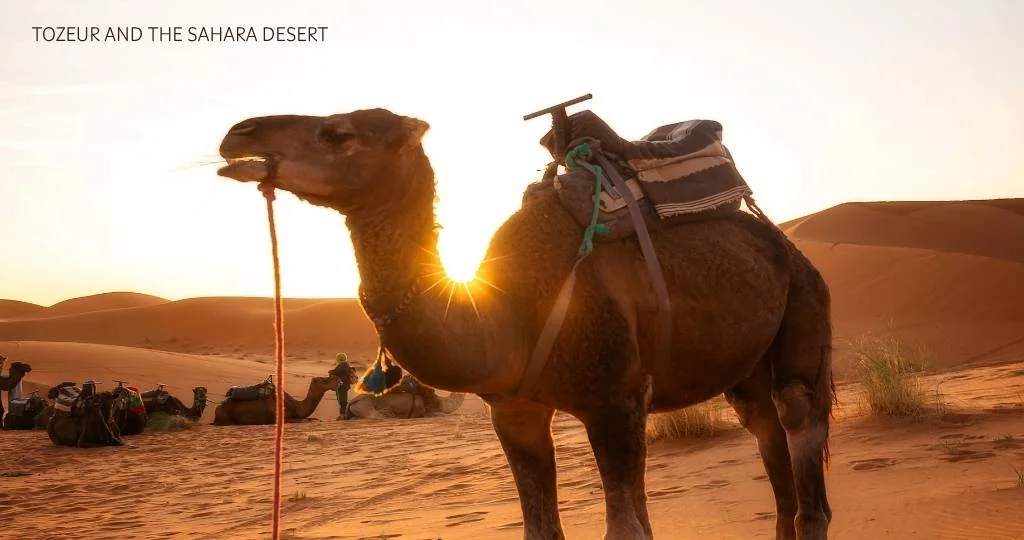
For those seeking nature, silence, and disconnection, the best experience in Tunisia is in the Sahara, starting from Douz, with camel trekking and desert bivouacs under the stars. Recommended duration: two to seven days depending on how deeply you wish to enter the desert.
Tozeur is the gateway to the southern desert experience — an oasis town of extraordinary palm groves and distinctive geometric brick architecture, positioned at the edge of the Chott el Jerid: the largest salt lake in the Sahara, a vast flat white expanse that shimmers with mirages in the midday heat and turns every color of the spectrum at sunrise. Heading into the desert from Tozeur, you look out over the vast Chott El-Jerid, the largest salt pan in the Sahara. Most travelers opt for an overnight in the desert — an excellent way to appreciate both the natural beauty of the environment and gain insight into traditional Bedouin life. Dig into some couscous and settle in by the campfire for an experience that is genuinely magical.
The mounta in oases of Chebika, Tamerza, and Mides — reachable by 4×4 from Tozeur — are three of the most dramatically beautiful natural sites in all of Tunisia: palm groves fed by mountain springs, waterfall pools carved into canyon walls, and the ruins of old villages abandoned after catastrophic floods in 1969, their broken mud walls still standing above the new settlements built below. These are also the landscape settings for the Star Wars films — the Sidi Bouhlel Canyon near Tozeur served as multiple Tatooine exterior scenes, and walking through it alone with that knowledge creates a peculiar doubling of reality that is one of Tunisia’s most unexpected solo travel pleasures.
Average daily budget: $40–80 USD including desert accommodation Solo-Friendly Rating: 9/10
“I spent a night alone in a desert camp outside Douz. The guide made dinner over an open fire and then left me to the silence. The stars that appeared when the fire died down were the kind of stars you do not believe exist until you see them — not points of light but a fabric, layered and luminous, so dense that the dark spaces between them are the minority. I understood, sitting there, why the desert has always produced prophets.”
🇹🇳 Djerba — The Island at the End of the World
Djerba is where Tunisia goes to slow down — a flat, sun-bleached island in the Gulf of Gabès connected to the mainland by a Roman causeway that has been in use for 2,000 years, its 120 kilometers of coastline lined with palms and the particular clear shallow water of the Mediterranean at its most southern extent.
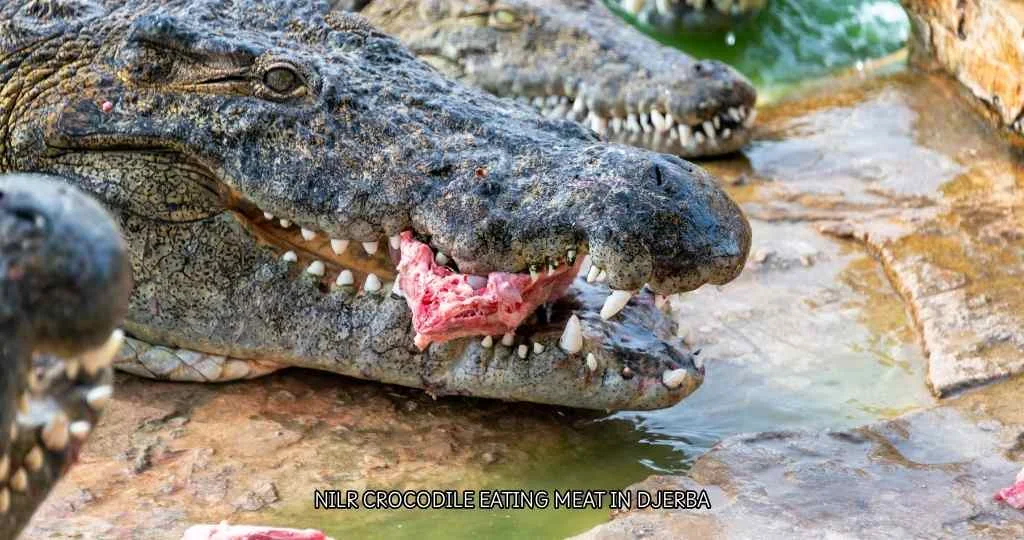
Djerba combines Mediterranean charm with local traditions, colorful markets, and traditional villages — including ancient mosques and historic Jewish heritage sites that make it a culturally rich stop quite unlike the resort towns of the north. The El Ghriba Synagogue, one of the oldest in the world and a place of annual pilgrimage, sits in the village of Hara Sghira surrounded by whitewashed houses with blue doors — a visual echo of Sidi Bou Said that carries an entirely different cultural weight. The pottery village of Guellala on the island’s southern tip has been producing distinctive glazed ceramics for centuries, and the potters working in open-fronted workshops will chat with a solo visitor who shows genuine interest in what they are making.
Djerba is called “The Golden Sands island” — its beaches are some of Tunisia’s finest, and civilizations from the Romans to the Ottoman Empire to the Spanish have left their mark on the island, giving it a unique architectural heritage with over 360 religious buildings including isolated mosques on the shorelines. For the solo traveler who has spent ten days absorbing the weight of ancient history and desert silence, Djerba is the coastal exhale the trip needs — warm, uncomplicated, and beautiful in a way that asks nothing of you except presence.
Average daily budget: $35–65 USD Solo-Friendly Rating: 9/10
The ElitTrip Tunisia Solo Traveler Overview (Tunisia solo travel guide)
| Destination | Best For | Avg Daily Budget | Solo-Friendly Rating |
|---|---|---|---|
| Tunis | History, medina, culture | $35–60 | 8/10 |
| Carthage + Sidi Bou Said | Roman history, Mediterranean beauty | Day trip from Tunis | 9/10 |
| Kairouan | Islamic heritage, food, silence | $30–55 | 8.5/10 |
| El Jem | Roman architecture, drama | Day trip base | 9/10 |
| Matmata + Dahar | Berber culture, underground life | $25–50 | 8.5/10 |
| Tozeur + Sahara | Desert, silence, stars | $40–80 | 9/10 |
| Djerba | Coastal calm, island culture | $35–65 | 9/10 |
Getting Around Tunisia Alone: What Actually Works (Tunisia solo travel guide)
Trains connect Tunis with Sousse, Sfax, El Jem, and Monastir reliably and comfortably. For the northern coastal route and the central destinations, the train is the right choice — inexpensive, punctual by North African standards, and safe. Buy tickets at the station on the day of travel for short journeys; book in advance for overnight or peak-period routes.
Louages — shared long-distance taxis operating on fixed routes between towns — are the most efficient way to reach destinations the train doesn’t serve. They depart when full from dedicated louage stations on the edge of most cities, cost slightly more than buses, and reduce journey times significantly. You can take a train or bus to Gabès and then a louage to Matmata — the combination works smoothly and is how most independent travelers reach the south without a rental car.
City taxis Solo Female Travelers require two rules: agree the fare before getting in, or insist the driver uses the meter. Taxis are safe but make sure you order a licensed service and that the driver has turned on the taximeter. If there is no taximeter, discuss the price of the trip before you sit inside. A taxi app called InDriver operates in Tunis and reduces the negotiation entirely.
Rental cars make sense for the southern circuit — Matmata, Tozeur, the mountain oases, Djerba — where the distances between sites are significant and public transport connections are infrequent. If something goes wrong in remote areas — a flat tire at 2am in the middle of the desert with the next town 30 kilometers away and no signal — the remoteness becomes real. Carry a spare, carry water, and tell your accommodation where you’re going.
Practical Tunisia Travel Tips for Solo Travelers in 2026
Tunisia solo travel guide
When to visit
Ideal times to visit are springtime from April to June and autumn from September to November. Temperatures feel comfortable most of the year, excluding some hot weeks in summer, with a low chance of precipitation. For the Sahara specifically, November through February offers the most comfortable desert conditions — cool enough at night to need a sleeping bag, warm in the day, and with the particular clarity of winter desert light that makes the dunes look most dramatically themselves.
Visa
Citizens of 97 countries and territories can visit Tunisia for up to 90 days without a visa. Check your specific nationality’s requirements before departure — the list includes most EU countries, the UK, the US, Canada, and Australia. No advance application is required for eligible nationalities; a valid passport with at least six months’ remaining validity is sufficient.
Money
Do not bring Tunisian currency into the country in any amount — it is illegal to import the dinar. Foreign currency above TND 10,000 (approximately $3,000 USD) must be declared on arrival. Exchange money at airport banks or ATMs rather than street changers. Carry small Tunisian dinar notes for markets, taxis, and medina purchases — most transactions outside of hotels and larger restaurants are cash-only.
Food and water
No major health risks are present, but travelers should drink bottled water throughout the trip. Tunisian food CNBC is genuinely extraordinary — a layered cuisine of Berber, Arab, Ottoman, and French influences that has produced dishes as specific as Kairouan’s makroudh, Sfax’s octopus tagine, Djerba’s seafood couscous, and the omnipresent harissa that appears beside every meal as a condiment of varying ferocity. Eating well in Tunisia is inexpensive, accessible, and one of the most reliable pleasures the country offers a solo traveler.
Safety practices for daily travel
Avoid crowded places and demonstrations, and always carry ID — a photograph of your passport is sufficient if stopped by security personnel. Tunisia has a relatively low crime rate, but petty theft is not uncommon in crowded areas. Carry a cross body bag positioned in front of your body in the medinas of Tunis and Sousse. Do not buy excursions and entrance tickets from street vendors — always book through your accommodation or a licensed operator. Register your trip with your government’s traveler enrollment program before departure.
For solo female travelers
Traveling in Tunisia as a solo female traveler is quite safe. What applies to any traveler, applies to female travelers — there is no need to cover yourself beyond what is respectful in religious contexts. Dress modestly and avoid walking alone at night in unfamiliar areas. Use licensed taxis or ride-sharing apps for evening transport. The harassmen that characterizes some Mediterranean destinations is notably less intense in smaller Tunisian towns and in the south, where tourists are rare enough to be treated as individuals rather than a category.
FAQ: Tunisia solo travel guide
Is Tunisia worth visiting for a solo traveler in 2026?
Yes — if you love culture, the Sahara desert, beach and history, Tunisia is an ideal destination. It offers all kinds of experiences, from the largest medina in North Africa to Berber underground villages to Roman ruins that rival Italy, at a fraction of the cost of comparable Mediterranean destinations.
How long should a solo trip to Tunisia be?
For a full immersion combining history, encounters, landscapes, and desert experience, the most complete itinerary includes Tunis, Kairouan, the Dahar region, the Sahara, Tozeur, and Djerba. This requires ten to twelve days minimum to do without rushing. A first-time solo visit of seven days covers the northern cultural highlights comfortably without reaching the south.
Can I travel Tunisia’s south alone without a guide?
The southern circuit from Matmata to Tozeur and the Sahara is navigable independently by louage and taxi for the towns themselves. For the desert specifically — the dunes outside Douz, the deep Sahara — a local guide is both practically necessary and genuinely valuable. A solo trek through the Sahara with local Amazigh guides reveals the desert in ways that independent navigation cannot — connections with the landscape, the stars, and the people who have lived in it for centuries.
What is the single thing that surprises solo travelers most about Tunisia?
The kindness. Almost universally, solo travelers who go to Tunisia expecting the friction they prepared for find that the country’s hospitality consistently exceeds it. Tunisians are always willing to help and enormously curious about the country you come from — and the solo traveler, who arrives without the social insulation of a group, receives that curiosity directly in ways that transform ordinary interactions into genuine encounters. That is what a solo elite trip is actually made of.
Final Thought: The Tunisia Nobody Is Telling You About
Tunisia solo travel guide + solo elite trip to Tunisia
There is a version of Tunisia that the world stopped paying attention to in 2015 and never quite came back to. A country with Roman ruins that rival anything in Italy, a medieval medina larger than any other in North Africa, a Saharan desert experience that costs a fraction of Morocco’s equivalent, an underground Berber civilization that inspired a galaxy far, far away, and a Mediterranean coastline of genuine and uncrowded beauty — all of it available to the solo traveler who arrives without the assumptions the headlines installed.
Tunisia’s growing reputation as a safe travel destination plays a vital role in its tourism sector’s expansion. The country’s safety ranking reinforces its positioning as a reliable, secure option for international tourists — contributing to its growing appeal for both cultural and eco-tourism travelers.
The solo elite trip to Tunisia is not for the traveler who needs everything smooth. It is for the traveler who wants everything real — the medina that genuinely disorients you, the desert that genuinely silences you, the pastry stall in Kairouan where the date syrup runs down your fingers and nobody is watching and you are, for a few minutes, completely and entirely present in a country that deserved your attention long before you thought to give it.
Go before everyone else works that out. Go this year.
ElitTrip is built for travelers who go alone. Read our complete Morocco Solo Travel Guide, our honest Egypt Travel Guide, and our full solo safety guides for North Africa — everything written for the independent traveler who goes without a safety net and finds one inside themselves.
Want to Share Your Experience?
Have you traveled using one of our guides or found inspiration here?
👉 Share your experience in the comments or send us your story
Your insights help other travelers plan more thoughtful, rewarding journeys.
Latest Reviews
There are no reviews yet. Be the first one to write one.