Solo Travel Al Marj, Libya: Your Complete Guide to the Green Mountain
Solo Elite Trip · elitetrip.de
TL;DR: Solo Travel Al Marj – Al Marj is the gateway to Libya’s Jebel Akhdar — the Green Mountain — a forested, rain-fed highland that contradicts everything most people believe about this country. For solo travelers who want somewhere genuinely off the map, ecologically remarkable, and historically layered with Greek and Roman ruins, eastern Libya nature solo delivers an experience unlike anywhere else in North Africa. It is not easy travel. But it is real travel. This guide covers Libya solo travel visa access, what to actually see, how to move around alone, safety in honest terms, and when to go.
Table of Contents
Why a Solo Traveler Should Consider Al Marj at All
Libya is not on most solo travel lists. That is precisely why it should be on yours.
Over the last two years, Libya has been making a deliberate push to attract international tourism, with the country introducing an e-visa system in 2024, streamlining the once lengthy and bureaucratic process for visitors. One adventure travel company reported a 200 per cent increase in bookings for Libya compared to 2024, with initial bookings for 2026 already higher than two years ago.
Solo travelers who have been to Morocco, Tunisia, and Egypt — and want to go somewhere that feels genuinely undiscovered — are increasingly looking at Libya’s eastern region. Al Marj sits at the western edge of the Jebel Akhdar (Arabic: الجبل الأخضر — the Green Mountain), a highland system that receives more rainfall than almost anywhere else in the country, supports forests that cover thousands of square kilometres, and contains a UNESCO World Heritage Site that you can visit with almost no one else present.
That last point matters to solo travelers. Cyrene — one of the ancient world’s most important Greek cities — is yours to walk almost entirely alone. No queue. No audio guide crowd. No organised tour moving you forward on schedule. Just two and a half thousand years of history and however long you decide to stay.
That experience alone is worth the complexity of getting here.
The Geography Solo Travelers Need to Understand
Al Marj is not a single attraction — it is a base and a gateway. Understanding the region’s layout helps you plan your days independently without wasting time on logistics.
| Location | Distance from Al Marj | Solo Relevance |
|---|---|---|
| Cyrene (Shahhat ruins) | ~60 km east | Walkable UNESCO site, minimal crowds |
| Wadi al-Kouf | ~40 km east | Valley with historic caves, nature walks |
| Al Bayda | ~70 km east | Nearest sizeable town, accommodation hub |
| Apollonia (Marsa Sousa) | ~75 km east | Coastal Greek ruins, quieter than Cyrene |
| Benghazi | ~100 km west | Nearest major city, flight connections |
The Akhdar mountain range extends along the Mediterranean coast for about 100 miles in an east-northeasterly direction between the towns of Al Marj and Darnah, rising in two steps to a limestone plateau crowned by hills reaching nearly 900 metres.
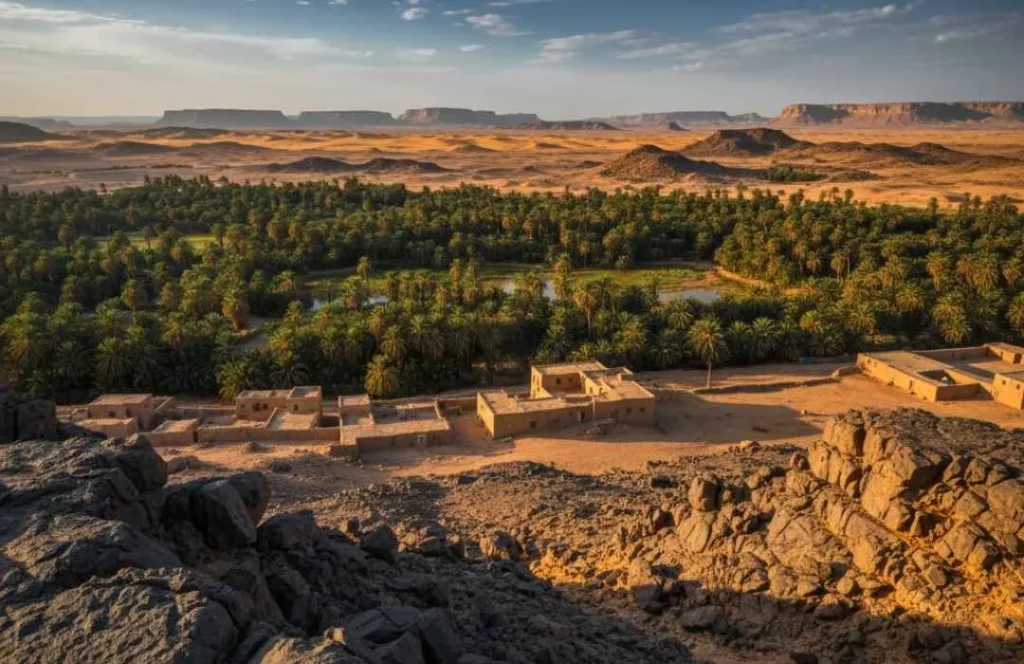
For a solo traveler, this geography means one thing practically: Al Marj is your logical western anchor, Al Bayda is your eastern accommodation base, and the 70-kilometre road between them passes through the best of what the Jebel Akhdar solo travel has to offer — forests, wadis, agricultural villages, and the turnoff to Cyrene.
Pro Tip: The road between Al Marj and Al Bayda is one of the most scenically rewarding drives in North Africa. If you have a private driver — which is how most solo travelers move through this region — ask them to take the highland route rather than the coastal bypass. The difference in what you see is significant.
What Makes This Region Unlike the Rest of Libya
Most of Libya is desert. This is not.
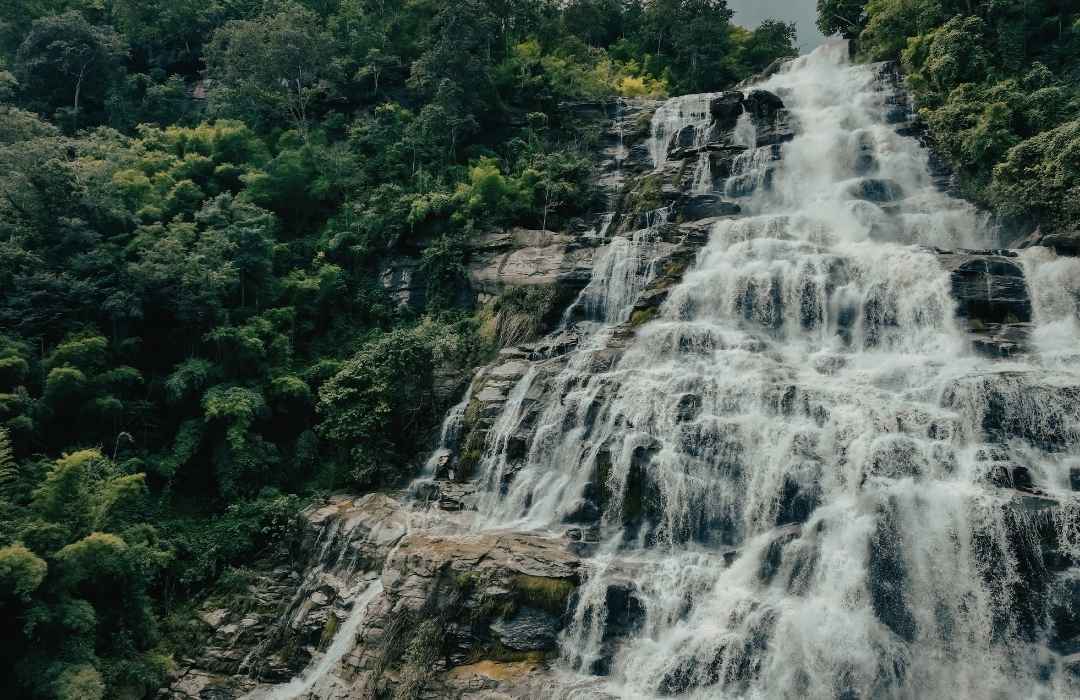
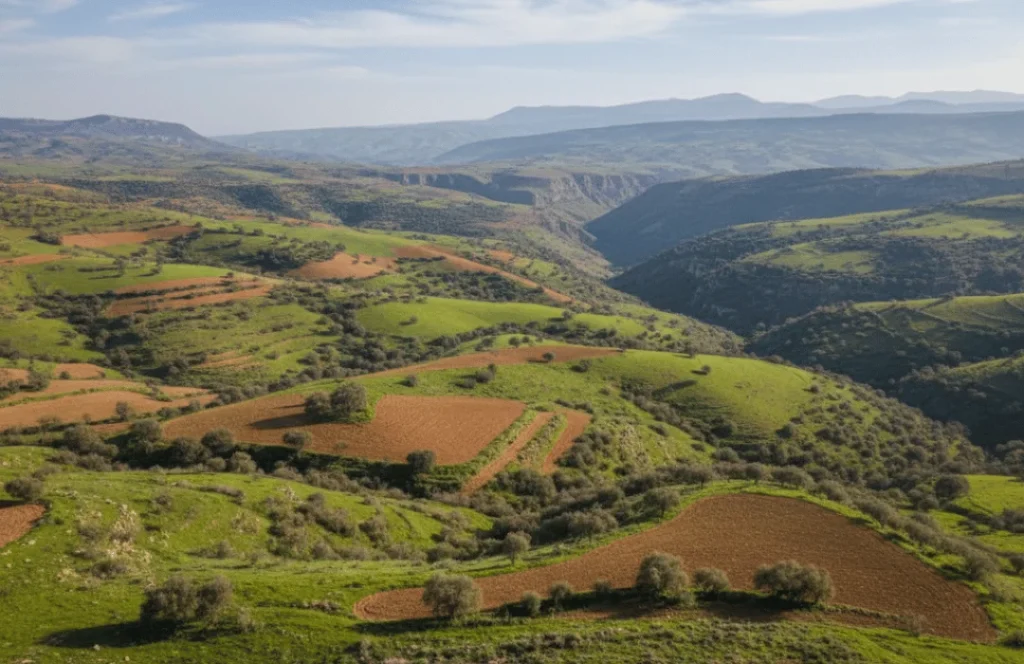
The Jebel Akhdar is one of the very few forested areas in Libya — a country taken as a whole is one of the least forested on Earth. The region receives some 600 millimetres of precipitation annually, enabling rich forests and agriculture that are something of a rarity in this arid country.
For solo travelers arriving after other North African destinations, the visual shift is immediate. Where Morocco’s Atlas Mountains feel managed and tourist-ready, the Jebel Akhdar feels genuinely unprocessed. The forests here — featuring Phoenician juniper, mastic trees, Kermes oak, and carob trees in the maquis zones, with branched asphodel, prickly burnet, and white wormwood in the drier steppe areas — are not planted for visitors. They exist because the rainfall and elevation make them inevitable.
More than half of Libya’s endemic plant species are found in the Jebel Akhdar, with seven found only in this region — including Cyclamen rohlfsianum, Arbutus pavarii, and Arum cyrenaicum. You will not find a guided botanical tour explaining this. You will simply walk through it, which is better.
The landscape changes noticeably by season. Late winter and spring (February to April) bring wildflowers to hillsides that look dry and scrubby in summer photographs. If your travel dates are flexible, this is not a minor detail — it changes the entire visual character of the region.
The Specific Sites Solo Travelers Should Plan Around
Cyrene — A UNESCO Ruin You Will Have Almost to Yourself
The archaeological site of Cyrene originated as a Greek colony in 631 BC, became a Roman province in 74 BC, and was destroyed by a major earthquake in 365 AD. It combines impressive elements from both its Greek and Roman past across four main sections spread over a wide area.
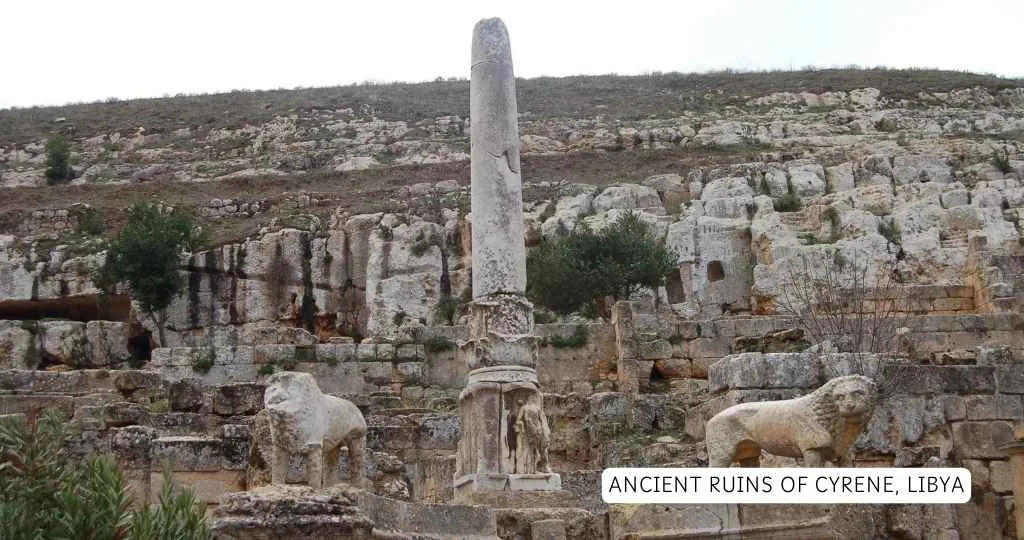
Cyrene has been a UNESCO World Heritage Site since 1982. It was added to the List of World Heritage in Danger in 2017, which means international conservation attention is active — but also that tourist infrastructure remains minimal. For solo travelers, minimal infrastructure means no coach tour crowds, no timed entry slots, and no gift shop queue blocking the Temple of Zeus.
What to see specifically:
- The Temple of Zeus — a Greek temple from the 6th century BC, standing on its own about 1km north of the main site. The scale is genuinely surprising for first-time visitors.
- The Sanctuary of Apollo — the original heart of the Greek settlement, set in a steep-sided valley where a natural freshwater spring still emerges from the cliff. The Baths of Trajan, the Greek Theatre, and the Sanctuary itself concentrate on a triangular plateau at the base of the Wadi Bu Turqiyah.
- The Street of Battus (Skyrotà) — a road running southeast along the ridge for about one kilometre from the Acropolis, passing the Agora, the House of Jason Magnus, the Stoa of Hermes and Heracles, and reaching theatres and the city gates. Walking it alone at midday with almost no other visitors is a specific kind of quiet that few archaeological sites in the world can offer.
- The Necropolis — rock-cut tombs covering approximately 20km² to the south and north of the city. Most visitors skip this. Solo travelers who do not are rewarded with an eerie, atmospheric landscape that requires no guide and no ticket.
Pro Tip: Arrive before 9am. The light on the Temple of Zeus in the early morning is extraordinary, and you will have it entirely to yourself. By 11am, any organised tour groups that have driven from Benghazi will begin arriving.
Wadi al-Kouf — Where History and Landscape Overlap
Wadi Al-Kuf means “the valley of the caves” — a valley rich in natural caves used from prehistoric times. The Libyan resistance leader Omar al-Mukhtar used some of these caves during his 20-year campaign against Italian occupation.
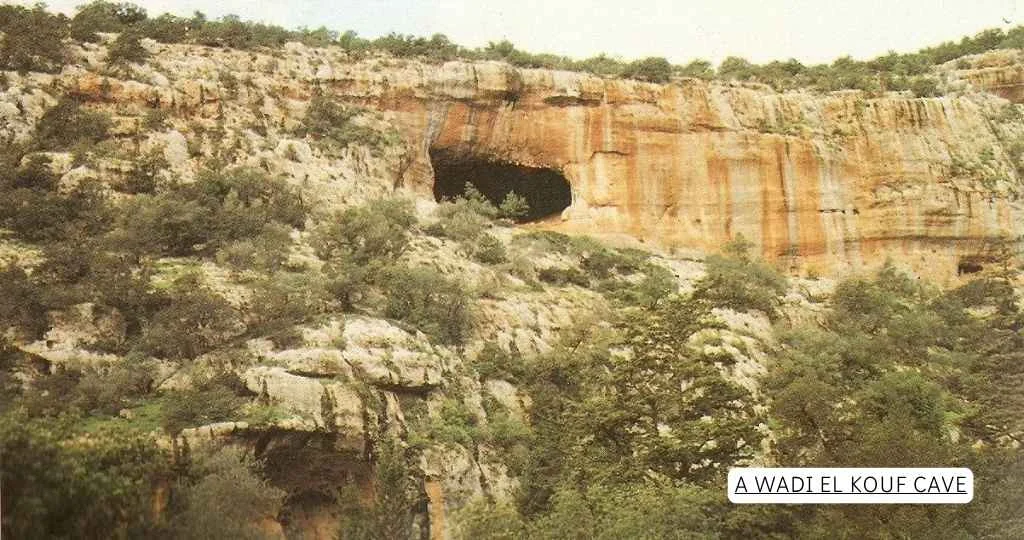
For solo travelers, Wadi al-Kouf offers something different from Cyrene: a landscape with both natural and historical depth that you navigate on your own terms. The valley is accessible from the main highland road, does not require a guide, and rewards unhurried exploration on foot. The caves associated with Omar al-Mukhtar carry weight for Libyan visitors that solo travelers from outside the country should understand — this is not just scenery but a site of genuine national memory.
The Wadi al-Kouf bridge, visible from the road, spans the valley and provides one of the region’s most photographed viewpoints. It is worth arriving at different times of day — the shadows and light change dramatically between morning and late afternoon.
Pro Tip: Bring water. The valley floor gets hot even when the highland plateau above it is cool. There are no facilities at the site.
Apollonia (Marsa Sousa) — The Coastal Counterpoint
Apollonia served as the ancient port city of Cyrene and is another significant historical site in the region, integrating ruins that remain well-protected and include a small museum. Located on the coast approximately 16km north of Cyrene, it offers solo travelers a second major archaeological site that almost no international visitor reaches.
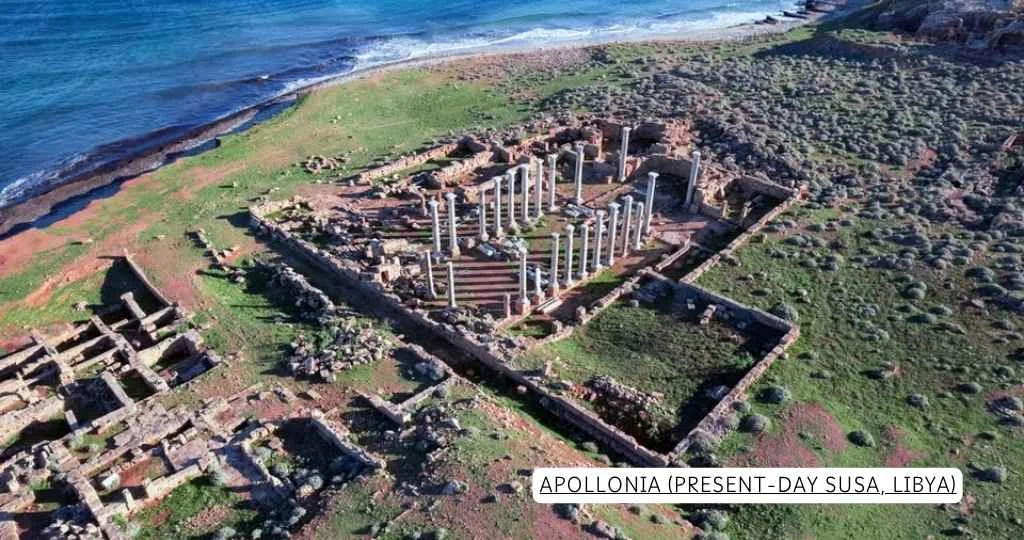
The ruins sit directly above the Mediterranean Sea. Walking through the remains of a Byzantine basilica with the Libyan coast stretching below is an experience that requires no embellishment. The site is quieter than Cyrene and less photographed. Go in the late afternoon.
Solo Travel in Al Marj: Practical Logistics
Visa — The Most Important First Step
As of April 2024, the Libyan government implemented an e-visa system through which you can obtain your visa in approximately one week. It costs US$63, with approval typically arriving in about five working days. Once approved, you have 90 days to enter Libya.
This is a significant change from the previous system, which required a letter of invitation from a licensed Libyan tour company and a visit to a Libyan embassy. The e-visa applies to most nationalities, though requirements can change — verify the current status at Libya’s official e-visa portal before planning your trip.
Important note for solo travelers: Theoretically, independent travel in Libya is not straightforward. In practice, most solo travelers visiting eastern Libya arrange a local driver or guide through a reputable Libyan tour operator for the first trip, while maintaining full control of their daily itinerary. This is not the same as booking a package tour. It is hiring local expertise as infrastructure — someone who knows road conditions, can communicate with local checkpoints, and provides the local knowledge that Libya’s underdeveloped tourism signage does not.
To see how this environment connects with surrounding regions, read:
👉 Eastern Libya Nature: Hills, Plains, and Rural Landscapes Explained
Getting Around Independently
Public transport between eastern Libyan cities exists but is irregular and difficult for non-Arabic speakers to navigate without local assistance. The practical options for solo travelers:
| Transport Option | Best For | Cost Estimate |
|---|---|---|
| Private driver hired daily | Full itinerary flexibility | $50–100/day |
| Shared taxi (servees) between cities | Budget travel between main towns | $5–15/trip |
| Rental car (requires confidence + Arabic) | Maximum independence | $40–80/day |
Pro Tip: If you hire a private driver, negotiate a full-day rate before departure and agree on the route in advance. Drivers in this region frequently become de facto guides — the best ones know which farms have honey to sell, which viewpoint is best at which time of day, and which roadside spot serves the best Libyan tea. Let them show you.
Accommodation
Accommodation options in the Al Marj–Al Bayda corridor are limited but functional. Al Bayda has small hotels and guesthouses that cater primarily to Libyan travelers. Prices are low by any international standard — expect to pay the equivalent of $20–45 per night for a clean private room.
Travelers report that accommodation in less-developed areas of Libya ranges from basic guesthouses to former school buildings repurposed as lodging. Facilities are not at European standards, but Libyan hospitality consistently compensates. The welcome you receive in small Libyan guesthouses is not a hotel industry performance. It is a cultural default.
Safety: The Honest Assessment for Solo Travelers
Libya requires honest safety assessment, not reassurance and not catastrophising.
The country has experienced significant instability since 2011. A peace agreement between eastern and western governments was reached in 2020, and the Jebel Akhdar region and eastern Libya are currently accessible for tourism, with tour operators actively running trips to Benghazi, Apollonia, and Cyrene.
The practical picture for solo travelers in the Al Marj and Jebel Akhdar region specifically:
- Eastern Libya, including the Cyrenaica region where Al Marj sits, has been more stable than western Libya in recent years
- Tourist sites like Cyrene are not in conflict zones and are actively visited by international travelers
- Checkpoints exist on major roads — a local driver who knows the protocol makes these straightforward
- Spontaneous solo exploration without local knowledge or Arabic language ability carries higher risk than in other destinations covered on this site
Check before you travel:
- US State Department Libya travel advisory: travel.state.gov
- UK Foreign Office Libya travel advice: gov.uk/foreign-travel-advice/libya
- Your own country’s foreign ministry travel advisory
These resources give current, specific risk assessments that no travel blog can replace. Read them before booking, not after.
“Libya is one of the least visited countries in the world — not because it lacks something worth seeing, but because the barriers to getting there filter out the casual traveler. What remains is an experience reserved for those who actually prepared for it.” — consistent finding among experienced Libya visitors
What Solo Travel in Al Marj Actually Feels Like Day to Day
No guide should promise you a standard experience in Libya because standard does not apply here. What consistent visitors report instead:
The social dynamic is different from any other destination. Libyans are not accustomed to international tourists and respond to solo foreign visitors with a level of genuine curiosity and hospitality that is rare in more visited destinations. Visitors consistently note the warmth and welcoming nature of local people across the Jebel Akhdar region.Solo travelers — who are more visible and approachable than groups — experience this most directly.
Facilities require realistic expectations. Services along the roads are limited, and travelers are advised to carry their own prepared food supply for trips between main cities where supplies are available. Tripadvisor For solo travelers used to Southeast Asia or European infrastructure, this requires a mindset adjustment. For those who have traveled in rural Morocco, Ethiopia, or off-grid parts of the Middle East, it will feel familiar.
The archaeology is genuinely overwhelming. Multiple visitors describe Cyrene as one of the most impressive ancient sites they have encountered — comparable to, or exceeding, better-known sites in Jordan or Greece — with the added dimension of having it almost entirely to themselves. One consistent observation: you can walk for the whole day and still not see everything.
The landscape earns its name. The Jebel Akhdar does not disappoint if you visit in spring. The combination of forested ridges, wildflower hillsides, and the particular quality of light in this part of eastern Libya produces a visual experience that contrasts absolutely with desert Libya.
This balance between people, land, and nature is explored further in:
👉 Sustainable Nature Libya: Responsible Travel & Rural Balance
Best Time to Visit Al Marj as a Solo Traveler
| Season | Conditions | Solo Travel Rating |
|---|---|---|
| Feb–April (Peak) | Wildflowers, green hillsides, 15–22°C | ⭐⭐⭐⭐⭐ Best window |
| September–November | Cooler, clear, post-harvest | ⭐⭐⭐⭐ Excellent |
| May–June | Warming up, vegetation still green | ⭐⭐⭐ Good |
| July–August | Hot on plateau, very hot on coast | ⭐⭐ Manageable |
| December–January | Cold nights, possible rain | ⭐⭐⭐ Fine for ruins |
February to April is the non-negotiable recommendation for solo travelers visiting specifically for the landscape. The wildflowers that appear across the hillsides after winter rainfall transform the visual character of the entire region. Archaeological sites like Cyrene are also at their most atmospheric in spring light.
Solo Female Travel in Eastern Libya
Honest answer: eastern Libya is more conservative than North African destinations like Morocco or Tunisia that have long-established international tourism. The local culture is traditional and Islamic, and solo female travelers will attract more attention in this region than in other destinations covered on this site.
This does not mean it is inaccessible. It means:
- Dress modestly (loose clothing, covered arms and legs) at all times outside accommodation
- Having a local guide or driver provides a clear social anchor that simplifies interactions significantly
- Smaller towns like Al Bayda are more conservative than the site-specific environments around Cyrene, where local site workers are accustomed to international visitors
- Solo female travelers who have previously traveled in rural Egypt, Jordan, or the Gulf will find the social dynamics recognisable
Solo female travelers who have visited eastern Libya consistently report that the hospitality extended to them was genuine, that they felt personally safe, and that their experience was shaped primarily by preparation and having local support rather than by gender-specific risk.
FAQ – Solo Travel Al Marj Libya
Can I visit Cyrene without a guide?
Technically yes — the site is open and walkable independently. Practically, having a local contact who can arrange transport from Al Bayda or Al Marj, and who knows which roads are currently accessible, makes the visit significantly smoother. The ruins themselves require no guide to appreciate.
Is Arabic essential?
For independent movement — yes, basic Arabic is genuinely useful. English is not widely spoken outside larger cities. A translation app with an offline Arabic pack is minimum preparation. A local driver who speaks some English is a more practical solution.
How do I connect with other solo travelers in this region?
You mostly will not, at least not in the way you would in Lisbon or Bali. Libya is not a backpacker circuit. The solo travelers who come here are typically experienced independent travelers who are self-sufficient by preference. The social experience comes primarily from Libyan locals, not other international visitors.
What should I pack that I cannot easily find in Al Marj?
All medication you need. A good offline map downloaded in advance (Maps.me covers Libya reasonably well). Cash in USD or EUR — exchange is available in larger towns but ATMs for international cards are not reliable. A physical guidebook if you can find one. A power bank. Basic first aid supplies.
Is this a good first solo trip?
No. Eastern Libya is a destination for solo travelers who have already developed comfort with ambiguous infrastructure, Arabic-speaking environments, and destinations where the plan occasionally needs to change on arrival. If you are planning your first solo trip, start elsewhere on this site and return to Libya when your travel instincts are developed.
The Solo Traveler’s Final Word on Al Marj
Al Marj does not compete for your attention. It does not need to.
This is a region where the landscape has been shaped by thousands of years of rain, farming, and people living close to the earth. Where the ruins of Cyrene — one of the ancient world’s great cities — sit largely unwatched under a North African sky. Where the endemic plants in the Jebel Akhdar forests exist because the conditions are right for them, not because anyone planted them for tourists.
Solo travelers who reach this part of Libya carry something back that packaged travel cannot manufacture: the specific memory of being somewhere genuinely uncommon, at a pace entirely their own, in a country that is still deciding how much of itself it wants to share with the world.
That window — where a place is accessible but not yet processed — is exactly where solo travel at its best happens.
Go prepared. Go with respect. Go before it changes.
Solo Elite Trip — elitetrip.de Written for independent solo travelers.
Ready for another off-the-map destination? Read our complete solo travel guide to Morocco → Is Travel in Morocco Safe? The Honest 2026 Guide
Want to Share Your Experience?
Have you traveled using one of our guides or found inspiration here?
👉 Share your experience in the comments or send us your story
Your insights help other travelers plan more thoughtful, rewarding journeys.
Latest Reviews
There are no reviews yet. Be the first one to write one.