Solo Road Trip in US: The Complete Guide to Planning, Safety & the Best Routes
There is a particular kind of freedom that only exists when you’re behind the wheel on an empty American highway, playlist running, no one to answer to, and the next stop entirely your call. No group votes on where to eat. No compromises on how long to linger at the overlook. Just you, the road, and the full unfiltered version of wherever this country decides to take you.
The solo road trip in the US is one of the great travel experiences available to anyone with a driver’s license and a willingness to figure things out as they go. The infrastructure is built for it — 4 million miles of road, 63 national parks, and enough roadside weirdness to fill a lifetime of detours.
But let’s be honest about the fears too. Safety concerns, loneliness on long stretches, mechanical anxiety, the vague dread of eating alone at a diner in a town where you know no one. This guide addresses every single one of those concerns — practically, honestly, and with the kind of detail that actually helps you make the trip happen.
Table of Contents
Phase 1 (Solo Road Trip in US): Pre-Trip Planning & Logistics
Choosing Your “Why”
Before you open Google Maps, get clear on what kind of solo road trip you actually want. These are two fundamentally different trips and they require different planning:
Fast-paced sightseeing — covering maximum ground, hitting major landmarks, high mileage days, hotel or motel stays, eating on the move. Best for travelers with limited time who want geographic breadth.
Slow-travel immersion — fewer miles per day, longer stays in each location, farmers markets and local diners, conversations with strangers. Best for travelers seeking depth over distance.
Neither is wrong. But trying to do both simultaneously is how you end up exhausted and resentful somewhere outside Albuquerque at 9 PM. Decide before you leave.
Setting a Realistic Budget
| Expense Category | Budget Option | Mid-Range | Comfortable |
|---|---|---|---|
| Gas | $400–$600/trip | $600–$900/trip | $900–$1,200/trip |
| Accommodation | Camping $15–$35/night | Motels $60–$100/night | Hotels $120–$200/night |
| Food | Grocery prepped $20–$30/day | Mix $40–$60/day | Dining out $70–$100/day |
| Activities | Free/National Parks $35 pass | $20–$40/day | $50–$100/day |
Gas budgeting: Download GasBuddy before you leave — it shows real-time gas prices at stations along your route and can save meaningful money on a long trip. On a 2,000-mile road trip, optimizing fuel stops can save $40–$80.
Accommodation strategy: The America the Beautiful Pass ($80, annual) covers entrance fees to all US National Parks and federal lands — one of the best investments for any road tripper hitting multiple parks. For camping reservations, book through Recreation.gov at least 6 months in advance for popular sites like Yosemite or Zion.
Food reality: Grocery prepping for breakfast and lunch while allowing yourself one real dinner per day is the sweet spot that keeps costs down without making every meal feel transactional. A cooler in the back seat is a solo road trip essential.
Mapping the Route
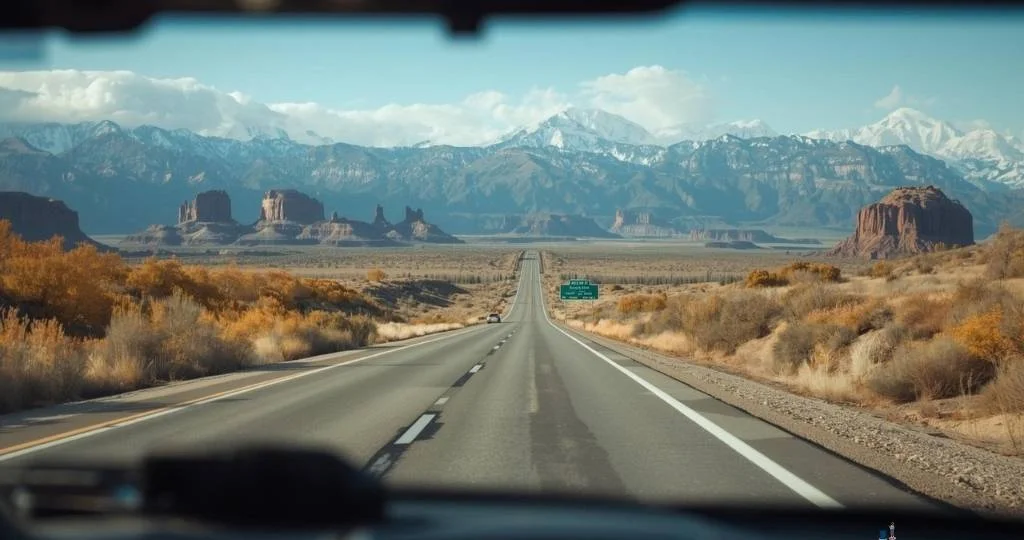
Google Maps “My Maps” is the solo road tripper’s most underused planning tool. Create a custom map, layer your must-stop points of interest, campsite locations, gas stations, and overnight stays — then save it offline. You can see your entire trip at a glance and adjust on the fly without losing your overall structure.
Roadtrippers (app and web) is exceptional for discovering what exists between your planned stops — the roadside attractions, quirky museums, and unexpected overlooks that become the memories you actually talk about when you get home.
Timing Your Trip
| Region | Best Months | Avoid |
|---|---|---|
| Southwest (Utah, Arizona) | March–May, Sept–Nov | July–August (extreme heat, 110°F+) |
| Pacific Coast | June–September | November–February (heavy rain, mudslides) |
| Rocky Mountains | June–September | November–April (mountain pass closures) |
| Blue Ridge Parkway | September–October | December–March (ice, closures) |
| Deep South | October–April | July–August (brutal humidity) |
| Route 66 | April–June, September–October | January–February (cold snaps) |
Phase 2 (Solo Road Trip in US): The Vehicle — Your Mobile Sanctuary
Rental vs. Personal Car
| Factor | Rental Car | Personal Car |
|---|---|---|
| Upfront cost | $40–$120/day | $0 |
| Mechanical risk | Company’s problem | Your problem |
| Mileage limits | Often capped (check contract) | Unlimited |
| Familiarity | Learning curve | Fully comfortable |
| Van/SUV options | Available at premium | Depends on what you own |
The honest answer: If your personal car has over 100,000 miles or hasn’t been recently serviced, a rental for a long solo road trip is worth serious consideration. Breaking down alone on a remote stretch of highway is a problem of a different magnitude than breaking down near home.
Pre-Trip Vehicle Inspection Checklist
Run through this at least one week before departure — not the day before:
- ✅ Tires — check tread depth (quarter test: insert a quarter into the tread; if you can see the top of Washington’s head, replace them) and inflate to manufacturer-recommended PSI
- ✅ Engine oil — check level and color; change if due within the next 3,000 miles
- ✅ Coolant, brake fluid, power steering fluid — all reservoirs at correct levels
- ✅ Brakes — listen for grinding or squealing; have inspected if any doubt
- ✅ Battery — most auto parts stores (AutoZone, O’Reilly) will test your battery free of charge
- ✅ Windshield wipers — replace if streaking; visibility in rain is non-negotiable
- ✅ All lights — headlights, brake lights, turn signals
Essential Roadside Emergency Kit
- 🔧 Jumper cables (or a portable jump starter — NOCO Boost is the gold standard, around $100)
- 🔧 Spare tire + jack + lug wrench — and the knowledge to use them (watch one YouTube video before you leave)
- 🔧 Reflective triangles or road flares
- 🔧 Basic tool kit (screwdrivers, pliers, zip ties, duct tape)
- 🔧 Empty gas can
- 🔧 First aid kit
- 🔧 Blanket and water (minimum 1 gallon) for breakdown scenarios in remote areas
Organizing Your Car: The Zone Method
Treat your car as a mobile home with intentional zones:
Driving Zone (front seat area) — navigation device or phone mount, water bottle, snacks within reach, sunglasses, toll change
Food Zone (back seat floor or passenger seat) — cooler, non-perishable snacks, utensils, paper towels
Sleep/Emergency Zone (trunk or cargo area) — overnight bag, sleeping bag if camping, roadside kit, first aid kit
A well-organized car reduces daily friction dramatically and makes the trip feel intentional rather than chaotic.
Phase 3 (Solo Road Trip in US): Safety and Security
This is the section that determines whether a solo road trip is empowering or terrifying. Get this right.
Digital Safety
Share your live location with at least one trusted person before you leave — not just your itinerary, but real-time GPS location via Google Maps location sharing or Apple’s Find My. Update them if your plans change significantly.
The Two-Hour Check-In Rule: Text one person at every major stop — when you arrive, when you leave, and your next destination. It takes 30 seconds and creates a live trail that matters if something goes wrong. According to the National Highway Traffic Safety Administration (NHTSA), most serious road incidents happen in remote areas where help response time is significantly longer — a live location trail is your most practical safety net.
Physical Safety
Parking: Always choose well-lit, populated areas for overnight stops. For stealth camping in a vehicle, crack windows for ventilation, use window covers (Covercraft makes excellent custom ones) to reduce visibility, and park in areas where overnight vehicle presence is normal — truck stops, Walmart parking lots (many allow overnight parking), and established dispersed camping areas on BLM (Bureau of Land Management) land.
Personal protection: Pepper spray is legal in all 50 states for personal protection, though concentration limits vary by state. A personal safety alarm (130dB, keychain-sized) is universally legal and highly effective as a deterrent. Know the laws of every state you’re crossing before carrying any other form of protection.
The Vibe Check: This is not soft advice — it is legitimate safety intuition. If a gas station, campsite, or rest stop feels wrong when you pull in, trust that feeling and leave. The discomfort of driving another 20 miles to the next option is always preferable to ignoring an instinct that turns out to be correct. Experienced solo road trippers universally cite this as one of their most important practices.
Solo Female Travel Specifics
- At hotel check-in: Don’t say “just me” or “solo.” Say “my travel companion is arriving later” if pressed, or simply don’t volunteer that information. Request a room away from ground floor and stairwells.
- In conversation: A casual mention of a partner “back at the campsite” or “meeting me tomorrow” is a social off-ramp that works universally without confrontation.
- Online booking: Use gender-neutral profile names on booking platforms if privacy is a concern.
Phase 4 (Solo Road Trip in US): The Solo Traveler’s Tech Stack
Navigation
- Google Maps offline — download the regions you’re traveling through before you lose cell signal. Essential in the Southwest and Rocky Mountain regions where connectivity drops entirely.
- Gaia GPS — the gold standard for off-road and backcountry navigation. If any part of your route involves unpaved roads or trail access, this app is non-negotiable.
Connectivity
Cell signal reality check: Large stretches of the American West — parts of Nevada, Utah, Wyoming, Montana — have zero cell coverage for hours at a time. Solutions:
- WeBoost Drive 65 signal booster ($500) dramatically improves weak signal in marginal coverage areas
- Garmin inReach Mini ($350) provides two-way satellite messaging and SOS capability anywhere on earth — worth it for remote routes
- Starlink for RVs/vans ($599 hardware + $150/month) — overkill for most, but genuinely useful for longer van life setups
Essential Apps
| App | Purpose | Cost |
|---|---|---|
| GasBuddy | Real-time gas prices | Free |
| iOverlander | Community-sourced campsites | Free |
| Roadtrippers Plus | Route planning + quirky stops | $35/year |
| AllTrails Pro | Hiking trails + offline maps | $36/year |
| Recreation.gov | National Park campsite booking | Free |
| Gaia GPS | Backcountry navigation | $40/year |
| Audible / Libby | Audiobooks for long drives | Varies / Free |
| Spotify | Trip soundtrack curation | $11/month |
💡 Pro Tip: Build your road trip playlist before you leave — not during. Create one playlist per region or mood: desert driving, mountain passes, coastal sunset, late-night driving. The right music at the right landscape is one of the genuinely transcendent experiences of a solo road trip in the US.
Phase 5 (Solo Road Trip in US): The Mental Side of Solo Road Tripping
Managing Loneliness
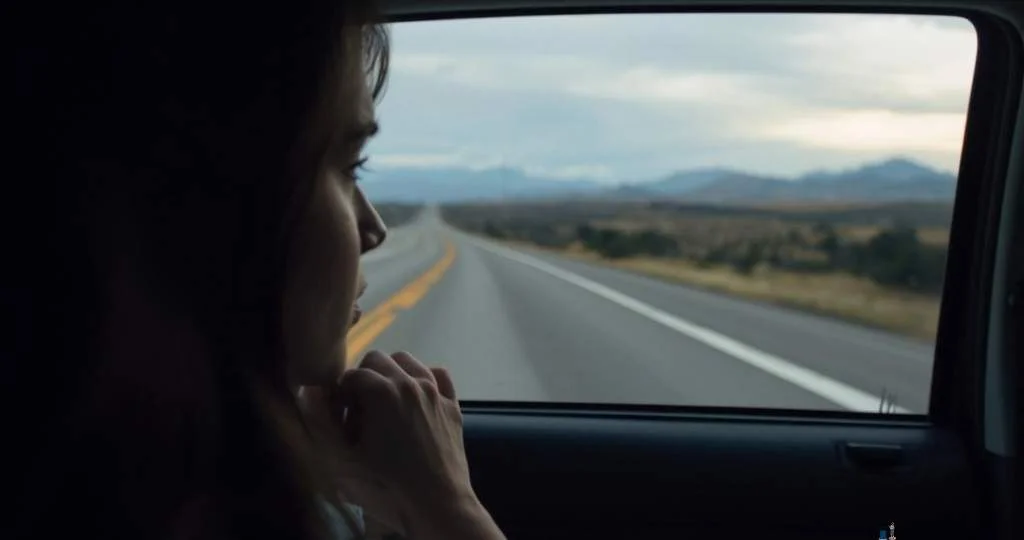
Loneliness on a solo road trip tends to hit hardest in two specific moments: the first evening alone in a new place, and around day 4–5 when the novelty has leveled off. Here’s what actually works:
- Local coffee shops in the morning — sit at the counter, ask the barista what you shouldn’t miss nearby. Conversations start naturally.
- Brewery taprooms in the evening — communal seating, friendly bartenders, and a built-in conversation starter (what’s on tap?). Consistently the best solo social environment in small American towns.
- Group tours for single attractions — a guided tour of Antelope Canyon or a rafting trip on the Colorado River puts you with 8–12 people for a shared experience. Natural, low-pressure, and often where the most memorable connections happen.
The flip side: learn to distinguish loneliness from solitude. Sitting alone watching the sunset over Bryce Canyon’s amphitheater is not loneliness — it’s one of the finest experiences available to a human being. Not every quiet moment needs to be filled.
Combatting Driving Fatigue
The 3-3-3 Rule is the most practical framework for sustainable solo road tripping:
- Drive no more than 300 miles per day
- Arrive at your destination by 3 PM (daylight, time to settle, no rushed night driving)
- Stay at least 3 nights in each location (depth over distance)
Most solo road trip mistakes — exhaustion, bad decisions, near-accidents — happen when people push past this framework chasing mileage goals.
The Joy of Dining Solo
Eat at the bar. Always. In any restaurant with bar seating, this is the single best move a solo traveler can make — bartenders are attentive by profession, conversations happen naturally, and you have something to look at (the back bar, the room) without the self-consciousness of a table for one facing a wall.
For a true solo treat: one night per major stop, book the nicest restaurant in town and eat at the bar with a full tasting menu or prix fixe. No compromise, full experience, entirely yours.
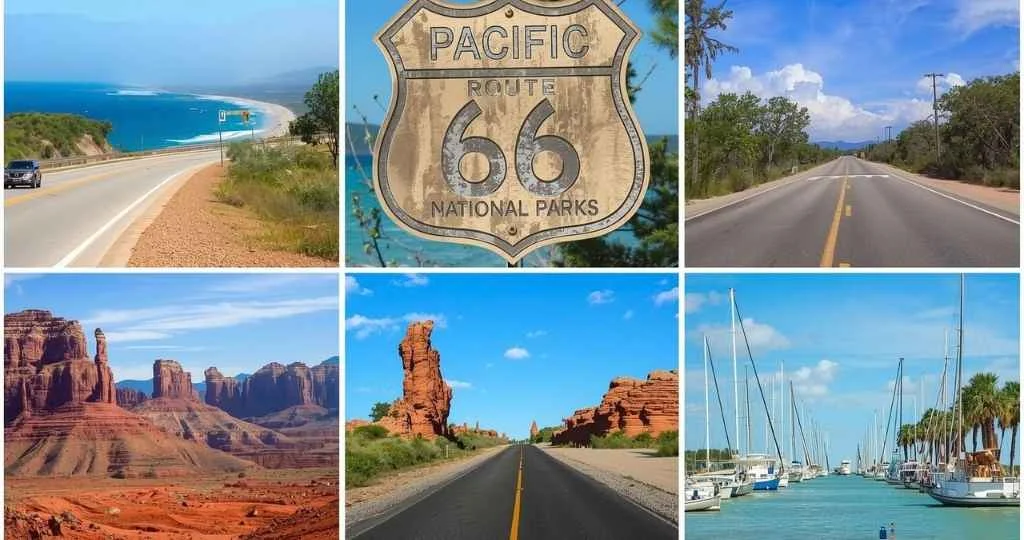
Phase 6 (Solo Road Trip in US): The Top 5 Best Solo Road Trips in the US
1. The Classic: Route 66
Best for: History buffs, Americana lovers, first-time solo road trippers
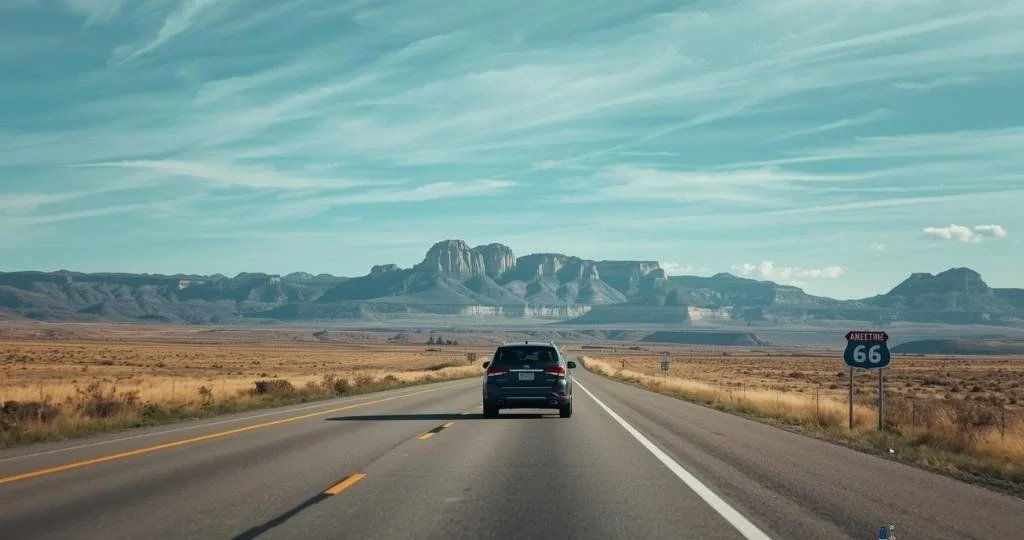
The granddaddy of American road trips — 2,400 miles from Chicago’s Grant Park to Santa Monica Pier in California, passing through 8 states and some of the most iconic roadside Americana on the continent. The Cadillac Ranch outside Amarillo, Petrified Forest National Park in Arizona, and the neon-soaked streets of Albuquerque’s Route 66 district are highlight reel material.
🔑 Pro Tip: Don’t try to drive the entire historic route in one go — you’ll spend more time on detours hunting for original alignment than actually enjoying it. Use the Historic Route 66 Association maps to pre-select your priority sections and supplement with interstate where the original road has been absorbed.
Ideal duration: 14–21 days | Best season: April–June, September–October
2. The Nature Lover: Utah’s Mighty 5
Best for: Hikers, photographers, national park collectors
Five extraordinary national parks in one state — Zion, Bryce Canyon, Capitol Reef, Arches, and Canyonlands — connected by some of the most dramatic highway driving in North America. Highway 12 between Bryce Canyon and Capitol Reef is widely considered one of the most scenic roads in the United States.
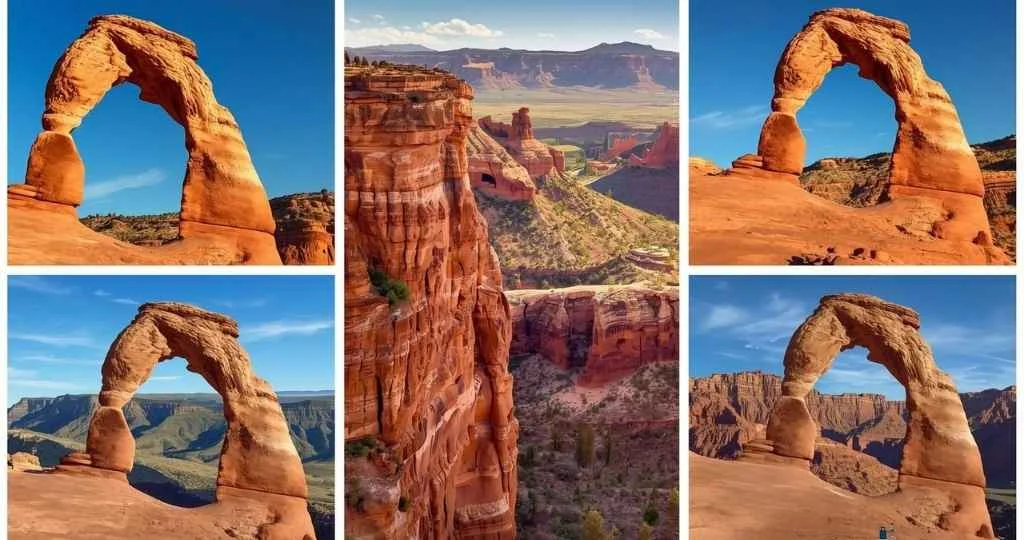
🔑 Pro Tip: Book Zion’s Angel’s Landing permit (required since 2022) through Recreation.gov months in advance. The hike is worth every bureaucratic hoop. And go at sunrise — the canyon light at 6 AM is completely different from the midday tourist rush.
Ideal duration: 10–14 days | Best season: March–May, September–November
3. The Coastal Escape: Pacific Coast Highway
Best for: Scenery, slow travel, California dreamers
The Pacific Coast Highway (Highway 1) from San Francisco’s Golden Gate Bridge to Santa Barbara — or extended to San Diego — is the quintessential American coastal drive. Big Sur remains the centerpiece: 90 miles of cliffs, redwoods, and Pacific Ocean views that routinely render drivers genuinely speechless. Bixby Creek Bridge at golden hour is a photograph worth planning around.
🔑 Pro Tip: Check Caltrans road conditions (dot.ca.gov) before driving any Big Sur section — Highway 1 closes after storms and slides with minimal warning. Build at least one flex day into your PCH itinerary.
Ideal duration: 7–10 days | Best season: June–September
4. The Cultural Loop: Deep South — New Orleans to Nashville
Best for: Music lovers, food travelers, history seekers
Start at Frenchmen Street in New Orleans (not Bourbon Street — Frenchmen is where the real music lives), drive through the Mississippi Delta following the Blues Trail to Clarksdale, continue through Memphis and Beale Street, and arrive in Nashville’s Music Row for the finale. This is American music history driven in real time.

🔑 Pro Tip: Stop at Doe’s Eat Place in Greenville, Mississippi — a Delta institution since 1941 that serves the best tamales in America in a setting that feels entirely unchanged by time. It’s the kind of place you can only find by driving.
Ideal duration: 10–14 days | Best season: October–April
5. The Wildcard: Blue Ridge Parkway
Best for: Fall foliage, slow drives, Appalachian culture
The Blue Ridge Parkway runs 469 miles from Shenandoah National Park in Virginia to Great Smoky Mountains National Park in North Carolina — entirely without traffic lights or commercial vehicles. It’s the most visited unit of the National Park System, and in October, the reason is undeniable: the fall color display along the Appalachian ridgeline is extraordinary.
🔑 Pro Tip: The stretch near Mabry Mill (MP 176 in Virginia) in mid-October is one of the most photographed spots in the entire Eastern US — with good reason. Arrive before 8 AM to get the mill and millpond with morning mist and zero crowds.
Ideal duration: 5–7 days | Best season: September–October (foliage), June–August (summer)
Phase 7 (Solo Road Trip in US): Sustainable & Ethical Road Tripping
Leave No Trace on US Public Lands
The Leave No Trace Center for Outdoor Ethics (lnt.org) outlines seven principles that every road tripper using public land should internalize:
- Pack out everything you pack in — no exceptions, including organic waste in fragile desert environments
- Camp on durable surfaces — established sites, rock, gravel, or dry grass; never on vegetation
- Campfire rules — check fire restrictions at every stop via InciWeb or the relevant land management agency’s site before building any fire
- Wildlife distance — 100 yards from bears and wolves, 25 yards from all other wildlife in National Parks
Support Local — The Economic Argument
Every dollar spent at a locally-owned diner, independent motel, or family-run gas station stays significantly more within the local economy than dollars spent at chains. On a 2-week road trip, making a conscious effort to choose local over chain for meals and accommodation can redirect hundreds of dollars into communities that depend on traveler spending. It also, without exception, produces better meals and more interesting conversations.
Conclusion: What the Road Actually Does to You
Here’s what nobody tells you about a solo road trip in the US before you do it: it’s not primarily a travel experience. It’s a clarity experience.
Something about sustained movement, self-reliance, and long stretches of road with only your own thoughts for company strips away the noise. Problems that seemed enormous before you left start to look different at mile 800. You make 40 decisions a day entirely on your own and none of them are catastrophic. You learn, in a practical and undeniable way, that you are more capable than you thought.
That’s what the road gives back. And it’s worth every mile of preparation to get there.
💬 What’s your dream solo road trip route? Drop it in the comments — I read and respond to every one.
You’ll also love:
- 8 Art Creative US Cities for Solo Travel
- 15 Safety Solo Travel Tips for Female Travelers in the US
- 6 Epic and Safe Destinations Solo travel for women
- Epic Adventure Travel Experiences Beyond the Ordinary
- Life-Changing Adventure Travel Beyond the Ordinary
- Best Places to Travel Solo Female in US
- Safety Solo Travel Tips for Introverts in the US
- solo travel tips on a budget: How I Traveled to 10 Countries Alone
Want to Share Your Experience?
Have you traveled using one of our guides or found inspiration here?
👉 Share your experience in the comments or send us your story
Your insights help other travelers plan more thoughtful, rewarding journeys.
Latest Reviews
There are no reviews yet. Be the first one to write one.