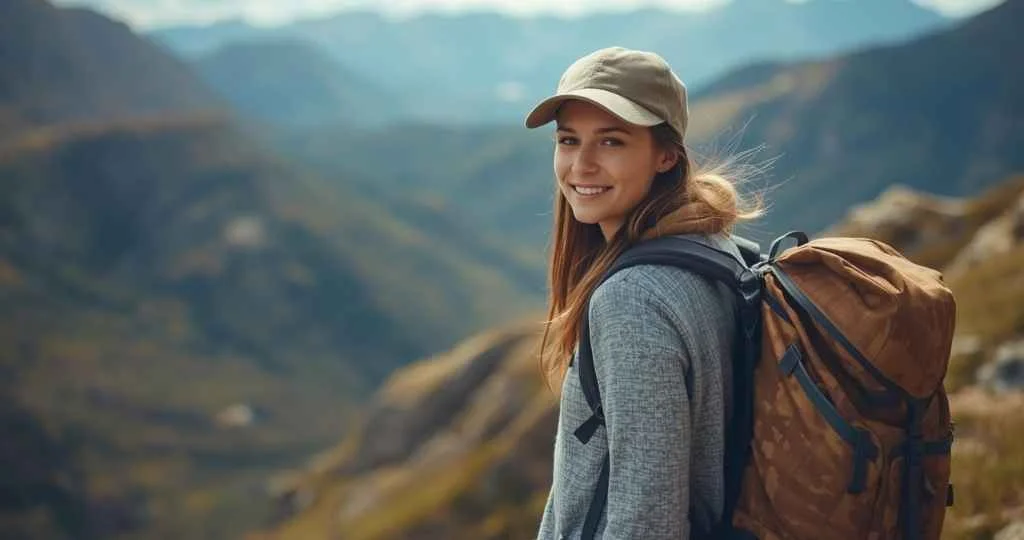
Safety Solo Travel Tips for Introverts: How to Explore Confidently on Your Own Terms
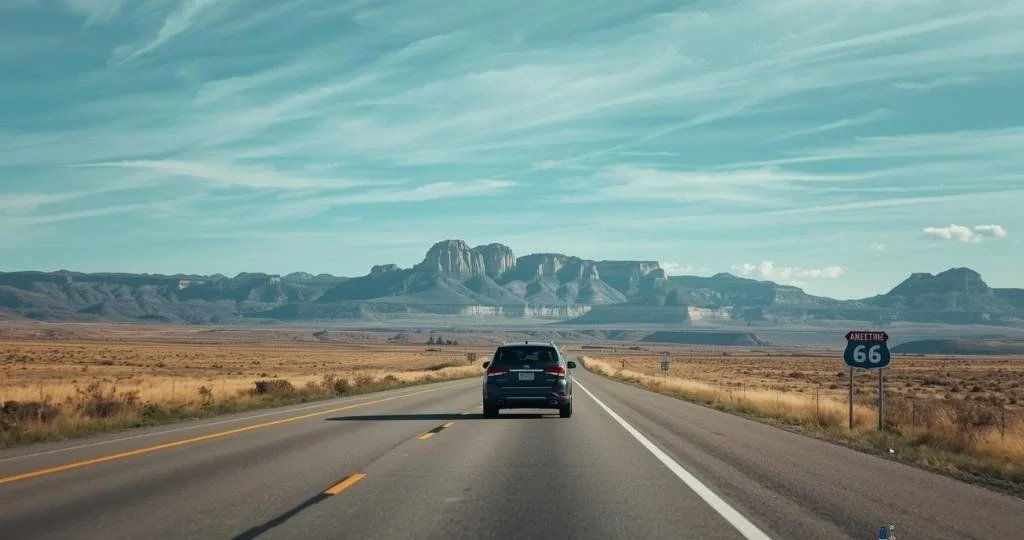
I didn’t speak to another traveler for four days during my first solo road trip through the American Southwest. Not because I was antisocial — but because I didn’t need to, and I’d finally stopped feeling guilty about it.
If you’re an introvert planning to travel solo in the United States, the advice you usually find is built for extroverts. “Join a group tour!” “Talk to your hostel roommates!” “Put yourself out there!” But here’s the truth: introverts don’t need more social strategies. They need smarter safety solo travel tips that work with their nature — not against it.
The good news? Introverts often make the safest solo travelers. You’re observant, deliberate, and you don’t take unnecessary risks just to impress people. This guide is built on that foundation.
⚡ TL;DR — Top 3 Safety Solo Travel Tips for Introverts:
- Use digital-first communication for everything — book, check in, and navigate without talking to strangers when possible.
- Pre-plan your “recharge spaces” (a coffee shop, a park, a library) so you always have a safe, quiet exit from overwhelming situations.
- Your instinct to observe before acting is a safety superpower — trust it.
Table of Contents
1. Pre-Trip Planning: Safety Solo Travel Tips for Introverts
Introverts plan. Deeply. This is genuinely one of the most underrated solo travel safety tips — and it’s where introverted travelers consistently outperform their extroverted counterparts.
Research the Neighborhood Before You Arrive — Block by Block
In the US, a “safe neighborhood” is not a neighborhood-level concept. It’s a street-level one. The south end of one block can be entirely different from the north end of the next.
Use these tools before booking anything:
| Tool | Use |
|---|---|
| NeighborhoodScout | Hyper-local crime rate by zip code |
| Walk Score | Walkability + transit access by address |
| FBI Crime Data Explorer | Official federal crime statistics |
| Google Street View (night mode) | Visual assessment of your accommodation street after dark |
Set your Street View timeline to evening hours. Look for lighting levels, foot traffic, and whether the area feels active or deserted.
Choose Accommodations That Respect Solitude
For introverts, accommodation choice is both a comfort and a safety decision.
Private Airbnbs are often ideal — they eliminate the forced social dynamics of shared dorms. When browsing, look for: keypad entry (no need to coordinate arrival with a host), strong Wi-Fi (your communication lifeline), and reviews that mention “quiet” or “private.”
Boutique hotels with mobile check-in apps (Marriott Bonvoy, Hilton Honors) let you bypass the front desk entirely. You get 24/7 staffed security without having to interact with anyone.
Avoid: Party hostels, shared Airbnbs with live-in hosts if you value space, and accommodations with mandatory “family dinner” policies.
Pro Tip (Austin, TX): The South Congress neighborhood feels lively but walkable. Book a hotel on the south end of SoCo rather than near Rainey Street — you’ll be a short Uber from the energy without being embedded in it.
2. Transportation Safety: Moving Quietly and Confidently
Rideshares Are Introvert-Friendly — With One Critical Rule
Uber and Lyft are ideal for introverts. You don’t need to navigate transit systems, read schedules in public, or interact with strangers in confined spaces. But safety requires one non-negotiable habit:
Before every single ride, use the in-app “Share Trip Status” feature. Send it to one trusted person. This logs your route, driver’s name, vehicle plate, and real-time GPS location. It takes four seconds and can matter enormously.
Additional rideshare tips for introverts:
- Enable “Quiet Mode” in the Uber app — it signals the driver you prefer no conversation
- Always confirm the driver’s name before getting in by asking “What’s the name on your pickup?” — never state your own name first
- Sit in the back seat, on the driver’s side — closest to the door, maximum visibility
Public Transit: Know Your Cities
| City | Transit Vibe | Introvert Safety Note |
|---|---|---|
| New York City | Dense, anonymous | Safe until midnight; avoid empty cars |
| Washington DC | Clean, official | Stay near lit stations; avoid end-of-platform waits |
| Chicago | Grid-logical | Avoid the Red Line north of Belmont after 10 PM |
| San Francisco | Sparse nights | BART ends ~midnight; Uber after 9 PM is safer |
| Los Angeles | Car-dependent | Almost no viable transit; always use Uber/Lyft |
| Portland, OR | Calm, walkable | MAX Light Rail is safe but watch for late-night platform loitering |
Pro Tip (Chicago): The Chicago L train is actually one of the easiest systems to navigate quietly — just sit near the door and know your stop. Don’t look up from your phone at the Clark/Lake station at midnight. The $12 Uber to Lincoln Park is worth it.
Solo Road Trip Safety for Introverts
A solo road trip is arguably the perfect introvert travel format — complete autonomy, no social obligations, your own music. But US road trips have specific safety considerations:
- Gas tank rule: Keep it above half — always. Dead zones exist along US-50 in Nevada, on State Highway 12 in Utah, and through most of rural Montana. Gas stations can be 60+ miles apart.
- Offline navigation: Download Google Maps offline for your entire route before leaving cell range. Signal drops completely in Zion National Park, Capitol Reef, and across most of the Four Corners region.
- The 20-Minute Rest Stop Rule: Don’t linger at highway rest stops, especially on I-40, I-10, and rural interstates after dark. Get out, stretch, use the facilities, and leave. Lock your doors the moment you park.
- Tell someone your daily itinerary via text each morning. Not your full plan — just: “Driving from Flagstaff to Page today. Should arrive by 4 PM.”

3. Technology: The Introvert Traveler’s Best Friend
Technology removes the need for human interaction in nearly every safety scenario — and in 2025, the tools available are genuinely excellent.
Stay Connected: Never Lose Signal
Airalo eSIM — Purchase before you leave home. A US data plan costs approximately $8–15 and activates instantly on your existing phone. This means you maintain GPS and communication even while switching carriers across state lines — critical for national park road trips.
Safety Apps Built for Solo Use
Noonlight — A silent panic button. Hold the button down; if you release it without entering your four-digit PIN, it dispatches emergency services with your exact GPS coordinates. No speaking required. This is particularly powerful for introverts who may freeze under pressure — the action is pre-built.
Life360 — Share your location continuously with a “safety contact” back home. They see where you are in real time without you needing to send check-in messages. Set it and forget it.
GeoSure — An app that gives neighborhood-level safety scores globally, including across US cities. Check a specific address before you walk there.
Tech Setup Rule: Before any solo day of exploration, enable your location sharing, charge your phone to 100%, carry a small power bank (10,000 mAh is plenty), and download your offline map. Do this the night before, not the morning of.
The Fake Call Trick — Upgraded
Apps like Fake Call Plus or Sideline let you schedule a fake incoming call for a specific time. If you feel uncomfortable in any situation, trigger it. The social cover of being “on a call” allows you to exit any interaction without confrontation — which, for introverts who struggle with saying a blunt “no” to strangers, is genuinely useful.
4. Social Safety: Protecting Yourself Without Small Talk
The Core Rule: You Don’t Owe Anyone Your Story
Introverts are often more vulnerable to social pressure precisely because they find confrontation uncomfortable. This is the single most important behavioral safety tip for introverted solo travelers: you are under zero obligation to answer personal questions from strangers.
If someone asks if you’re traveling alone: “Meeting up with people later.” If someone asks where you’re from: Keep it vague — “East Coast.” If someone asks if you’re staying nearby: “Just passing through.”
These aren’t lies. They’re boundaries.
The Bartender Alliance — Without the Small Talk
You don’t have to be the gregarious solo traveler chatting up the whole bar. But knowing one staff member can be a safety lifeline.
When you sit down at a restaurant or bar, make brief, genuine eye contact with your server or bartender when they first approach. That’s it. You don’t need to overshare or perform friendliness. If something feels wrong later — an overly persistent stranger, an uncomfortable situation — that one point of acknowledged connection is enough for staff to check in on you.
Most US bar staff are familiar with the Angel Shot system:
- Neat: “Walk me to my car or an Uber”
- On the rocks: “Call me a cab”
- With lime: “Call the police quietly”
Not every establishment will know it, but any bartender who sees a solo woman looking tense will respond to a direct, quiet ask: “Could you help me get out of this conversation?”
Finding Quiet Community When You Want It
You may not want group tours, but traveling alone for weeks can create a specific kind of loneliness that even introverts feel. Here are low-pressure options:
- Meetup.com — Search “hiking,” “reading,” or “board games” in your destination city. These are activity-first, conversation-second events that introverts typically thrive in.
- Bumble BFF — Set to friend mode, not dating. Filter for interests. You can arrange a single coffee, not a group hangout.
- Library events — Every major US city has a free public library with regular evening programming. The Enoch Pratt Free Library in Baltimore, the Harold Washington Library in Chicago, and the New York Public Library’s branch at Stephen A. Schwarzman Building all run regular free events. Zero social pressure, structured environment.
5. Self-Defense for Introverts: Quiet Tools, Strong Boundaries
What You Can Legally Carry
Self-defense in the US is state-specific. Before packing anything, check the laws for every state on your itinerary.
| Tool | Legal Status | Notes |
|---|---|---|
| Pepper spray | Legal in most states | NY: pharmacy purchase only, max 0.75 oz; MA: FID card required |
| Personal alarm (Birdie) | Legal everywhere | 130dB; no restrictions in any US state |
| Tactical flashlight | Legal everywhere | Doubles as a striking tool; also genuinely useful |
| Tactical pen | Legal in most states | Discreet; allowed in most venues |
Source: National Conference of State Legislatures
For introverts, the Birdie personal alarm is often the best choice — it requires no confrontation, no decision-making under pressure, no legality concerns. Pull the pin, it screams at 130dB. Every person within 100 feet turns to look.
Situational Awareness: The Introvert’s Natural Strength
Here’s something rarely acknowledged in safety tips for solo travelers: introverts are naturally better at situational awareness because they spend less time performing for others and more time observing.
Use this. Before entering any new space — a subway car, a parking structure, a hotel lobby — pause at the threshold and scan the room. It takes three seconds and most people never notice you doing it. You’re looking for: exits, crowd density, anyone who seems to be watching the entrance.
The rule: Eyes up, headphones in one ear only in urban spaces. Full noise cancellation is a vulnerability. You need to hear your environment.
6. Health & Emergency Preparedness
911 for International Visitors
Dial 911 for any emergency — police, fire, or medical. It works from any phone, including phones with no SIM or no credit. Operators will ask you to specify which service you need. If you’re in a remote area with no cell signal, Garmin inReach Mini satellite messengers can send an SOS signal from anywhere on earth — worth renting for national park road trips.
Travel Insurance: Non-Negotiable in the US
US healthcare costs are a genuine emergency risk for international travelers. A single ambulance ride can cost $3,000. An ER visit for a broken bone: $15,000–$30,000. Surgery: potentially six figures.
| Provider | Ideal For | Monthly Cost (approx.) |
|---|---|---|
| World Nomads | Adventure/outdoor travel | $80–150 |
| SafetyWing | Long-term budget travel | $45–90 |
| Allianz Travel | Single trip, all-inclusive | $50–120/trip |
Make sure your plan includes emergency medical evacuation, not just treatment. In a national park, evacuation costs alone can reach $50,000.
7. A Lesson I Learned: The Night I Chose Quiet Over Polite
It was my second night in Nashville, and I’d done everything right. I’d researched the neighborhood (the Gulch), chosen a well-reviewed hotel, and planned a solo dinner at Husk restaurant on Rutledge Hill.
The problem started on the walk back.
A man fell into step beside me on Demonbreun Street. He wasn’t threatening — he was chatty. The social script in my head said: be friendly, don’t overreact, you’re being paranoid. He asked where I was from, where I was staying, whether I was alone.
I felt my body tense before my mind processed why.
I didn’t answer the last question. Instead, I said: “I’m late — my friend’s just up here,” pointed vaguely ahead, and crossed the street in the middle of the block. I walked into the first open storefront — a boutique — and asked the woman behind the counter if I could stand there for a moment. She didn’t ask why. She just said “of course” and kept folding clothes.
He didn’t follow.
What I learned: the discomfort of seeming rude to a stranger lasts about four seconds. The consequences of ignoring your instincts can last much longer. For introverts especially, trust the quiet signal in your body that says something is off. That signal is data. It almost always precedes the logical explanation.
8. Conclusion: Introverts Don’t Just Survive Solo Travel — They Thrive
The US is a country built for solitude when you know where to find it. The empty red rock canyons of Canyonlands. The pre-dawn fog on the Olympic Peninsula. A Tuesday morning coffee at Blue Bottle in San Francisco’s Mission District with a book and nowhere to be.
None of those experiences require you to perform extroversion. They require you to show up prepared, observant, and willing to trust yourself.
Your introversion is not a liability on this trip. With the right safety solo traveling tips, it is your clearest asset.
📍 Which US destination is on your list? Drop it in the comments — I’ll share my top introvert-friendly neighborhood and quiet recharge spot for it.
FAQ: Honest Answers for Introverted Solo Travelers
Do introverts struggle more with solo travel safety?
Not at all — in many ways, introverts are naturally better equipped. The tendency to observe before acting, to avoid unnecessary social risks, and to plan thoroughly maps almost perfectly onto effective solo travel safety behaviors. The main risk for introverts is being overly accommodating to persistent strangers to avoid conflict. The fix: practice short, neutral deflections (“I’m meeting someone”) so they feel natural before you need them.
What are the best US destinations for introverted solo travelers?
Cities with strong independent culture and low social pressure tend to work best. Portland (Oregon) for its bookshop-and-coffee culture; Asheville (North Carolina) for the arts scene and Blue Ridge Parkway access; Sedona (Arizona) for solo hiking without crowds (midweek); and Burlington (Vermont) for walkable safety and farmer’s market solitude. According to WalletHub’s safest cities index, mid-sized cities in the Northeast and Upper Midwest consistently rank highest for personal safety.
Is it safe to eat alone in US restaurants as an introvert?
Completely normal — and the US restaurant culture actively accommodates it. Sitting at the bar is the standard solo dining position and is fully expected at most American restaurants from diners to fine dining. You’ll rarely be the only solo diner, and staff are generally well-practiced at respecting the “reading a book, please don’t chat me up” body language. If you want guaranteed quiet: aim for counter seating at ramen spots, sushi bars, or any restaurant with an open kitchen. The food is better and the silence is built in.
What if I have a panic attack or anxiety episode while traveling alone?
This is underrepresented in most solo travel safety tips, but it’s real. Build a “reset plan” before you leave: identify one quiet, public space in each destination city (a library, a botanical garden, a 24-hour diner) where you can go without needing to interact. Download a grounding app like Calm or Headspace offline. Keep a small note in your phone with your hotel address and the local non-emergency police line — so if you’re overwhelmed and can’t think clearly, someone else doesn’t have to wait for you to remember those details.
Found this useful? Share it with the solo traveler in your life who says “I’m not sure I could do it alone” — because they absolutely can.
You’ll also love:
- 8 Art Creative US Cities for Solo Travel
- Best Places to Travel Solo Female in US
- 6 Epic and Safe Destinations Solo travel for women
- Epic Adventure Travel Experiences Beyond the Ordinary
- Life-Changing Adventure Travel Beyond the Ordinary
- The Ultimate Guide to Solo Road Trip in US
- 15 Safety Solo Travel Tips for Female Travelers in the US
- solo travel tips on a budget: How I Traveled to 10 Countries Alone
Want to Share Your Experience?
Have you traveled using one of our guides or found inspiration here?
👉 Share your experience in the comments or send us your story
Your insights help other travelers plan more thoughtful, rewarding journeys.
Latest Reviews
There are no reviews yet. Be the first one to write one.