Solo Travel in Greece: The Honest, Complete Solo Elite Guide + Free Solo Travel Safety Checklist
Solo Elite Trip · elitetrip.de
TL;DR: Greece is one of the most solo-travel-friendly countries in Europe — safe, English-spoken, well-connected by ferry and bus, and packed with experiences that work just as well for one person as for twenty. Athens rewards the curious. The Cyclades reward those who want beauty and company. Crete rewards anyone who wants an entire country packed into one island. Ten days is the sweet spot. Shoulder season is the secret. You will not run out of things to do, and you will not eat alone unless you want to.
Table of Contents
Why Greece Works So Exceptionally Well for Solo Travelers – Solo Travel in Greece
There is a particular kind of freedom that Greece gives solo travelers and gives it almost immediately. It is the freedom of a country where no one questions why you are alone, where the infrastructure bends toward the individual, and where the culture treats sitting at a taverna table for one as perfectly normal — because to a Greek, eating is always social, and the moment you sit down you are part of the neighborhood.
Greece is one of the oldest tourist destinations in the world. The infrastructure that has grown around that fact — ferry networks connecting hundreds of islands, domestic bus systems reaching mountain villages, an accommodation spectrum from basic hostels to cave-carved luxury hotels — was built for international travelers, many of whom arrive alone. Unlike destinations where solo travelers feel like an afterthought, Greece has been quietly optimizing for independent travel for decades.

The language barrier is minimal. English is spoken in every tourist hub, on most ferries, in nearly every taverna and hotel reception across the country. Even in small Cycladic villages where the main language on the street is Greek, a single sentence of English produces a response. The country has too long a relationship with international visitors to be anything but fluent in accommodating them.
Then there is the philosophical dimension — and with Greece, this is not a stretch. This is the country where the concept of xenia, the sacred duty of hospitality toward strangers, was codified into culture thousands of years before it became a hotel industry buzzword. Hospitality is not a service standard in Greece. It is a moral position. That ancient instinct still operates. The taverna owner who brings you something you did not order because “you need to try this” is not performing customer service. They are practicing something older.
For solo travelers, this cultural warmth is the difference between a trip that is technically successful and one that feels genuinely memorable.
Do You Need a Visa for Greece? The Solo Traveler’s Entry Guide
Greece is a member of the Schengen Area, the free-movement zone covering 27 European countries. This single fact simplifies entry enormously for travelers from many parts of the world.
If you hold a US, UK, Canadian, or Australian passport: You do not need a visa for tourist stays of up to 90 days within any 180-day period. Your passport must be valid for at least three months beyond your planned departure from the Schengen zone.
ETIAS — the new pre-travel requirement: Starting in 2025, travelers from visa-exempt countries will need to complete an ETIAS (European Travel Information and Authorisation System) application before entering the Schengen Area. This is not a visa — it is an electronic registration that takes approximately ten minutes to complete online and is valid for three years or until your passport expires. The fee is €7. Do this before you board; it is a check that happens at the gate.
If you hold a passport from a country outside the visa-free list: You will need to apply for a Schengen tourist visa at the Greek embassy or consulate in your home country. Required documents typically include a valid passport, confirmed travel itinerary, proof of accommodation booking, travel insurance with minimum coverage of €30,000, and proof of sufficient funds for your stay. Apply at least four to six weeks before your travel date — processing times extend during peak season.
Morocco specifically: Moroccan citizens require a Schengen visa. The Greek embassy in Rabat processes tourist visa applications. Requirements include the standard Schengen document set above. Processing takes approximately 15 working days. Book your appointment well in advance of your travel dates.
The practical solo traveler note on visas: Because you are traveling alone, your financial documentation carries more weight. Show bank statements for the three months prior to your application that demonstrate sufficient daily funds (typically a minimum of €50–100 per day, depending on your accommodation type). A letter explaining your travel purpose and itinerary, written clearly and specifically, strengthens any Schengen application.
Best Destinations for Solo Travel in Greece: Region by Region
Athens — The Essential Starting Point for Athens Solo Travel
Athens is where almost every Greece trip begins, and for solo travelers specifically, it is where the trip actually starts to make sense. The city is dense with history, alive with modern energy, and designed at a scale that rewards walking alone.
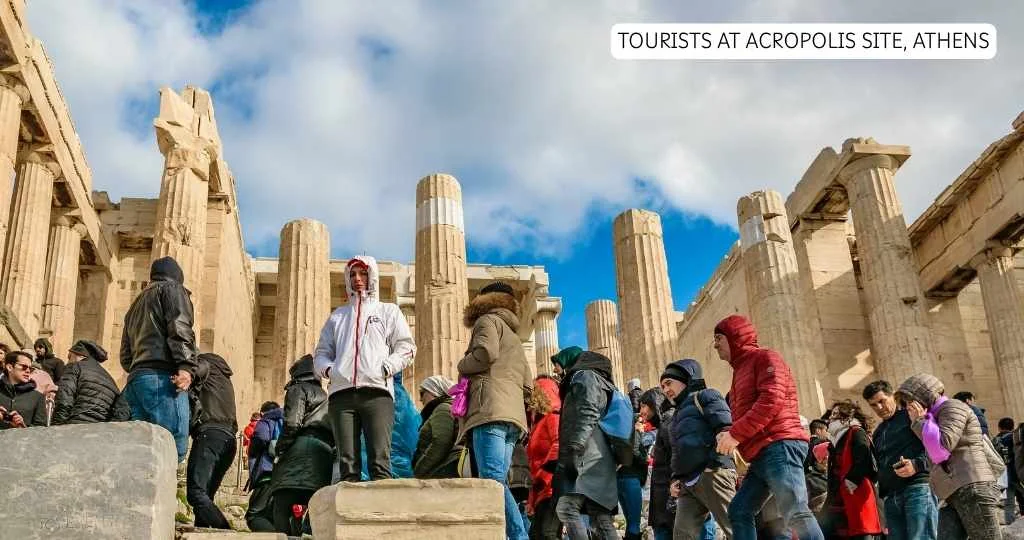
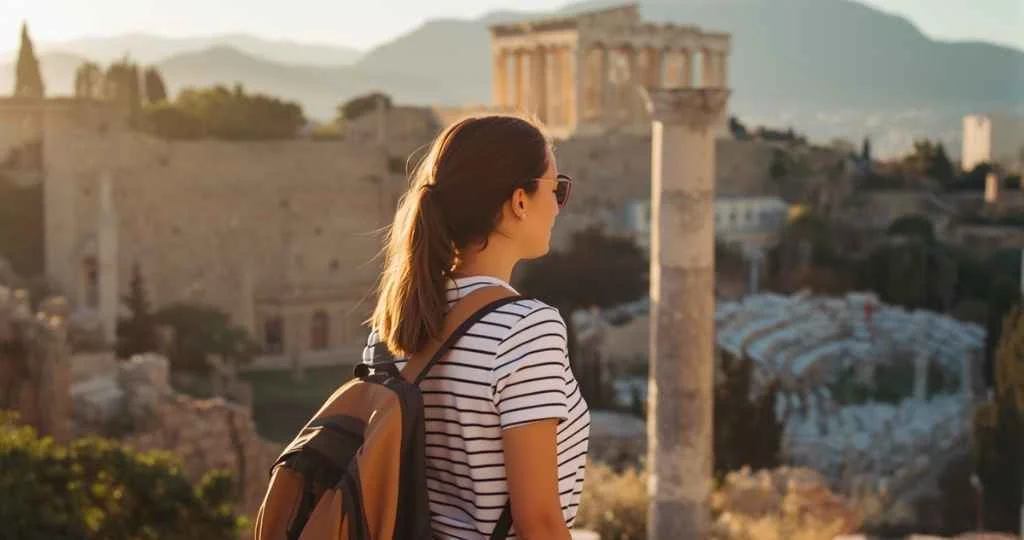
The Acropolis is non-negotiable — not because it is on every itinerary, but because standing above Athens on the rock that has been occupied continuously for three thousand years produces a specific kind of feeling that no photograph prepares you for. Go early, before 9am, when the light is golden and the crowds have not yet arrived from the cruise ships. The Parthenon, the Erechtheion with its famous Caryatid porch, and the sweeping view over the city below are worth two unhurried hours of your morning.
But the Acropolis is not Athens. The Acropolis Museum, immediately below the rock, is one of the finest museums in Europe and should receive equal time — its glass floors reveal archaeological excavations beneath your feet while you walk through millennia of Greek sculptural history above. The friezes from the Parthenon, displayed exactly as they would have appeared on the original building, are among the most powerful objects you will encounter anywhere.
Athens solo travel works because the city’s neighbourhoods each have their own character and can be explored independently at your own pace. Monastiraki is the bazaar — chaotic, fragrant, full of antique dealers, street food vendors, and the kind of human density that energises rather than exhausts. Psyri, immediately adjacent, is where Athenians go to eat at midnight. Koukaki, south of the Acropolis, is quieter, residential, and full of small restaurants that serve lunch to working Athenians rather than tourists. Exarchia is political, artistic, bookshop-dense, and genuinely different from anywhere else in the city.
The street food culture in Athens deserves its own paragraph. A gyros — pork or chicken, wrapped in warm pita with tomato, onion, tzatziki, and fried potato — costs €2.50 to €4 and is one of the great portable meals in world food. A spanakopita (spinach and feta filo pastry) from a neighbourhood bakery costs less than €2. Eating alone in Athens is never awkward because eating while walking is completely normal, and eating at a taverna counter watching the kitchen work is perfectly acceptable. You will never feel conspicuous at a table for one.
How long to spend: Three days for a first visit covering the Acropolis, two museums, and two or three neighbourhood walks. Five days if you add day trips to Cape Sounion (the cliff-top Temple of Poseidon), the port of Piraeus, or the Athenian Riviera. A week if Athens itself becomes your focus — which it can justify entirely.
The Cyclades — Best Greek Islands for Solo Travelers Who Want Beauty and Company
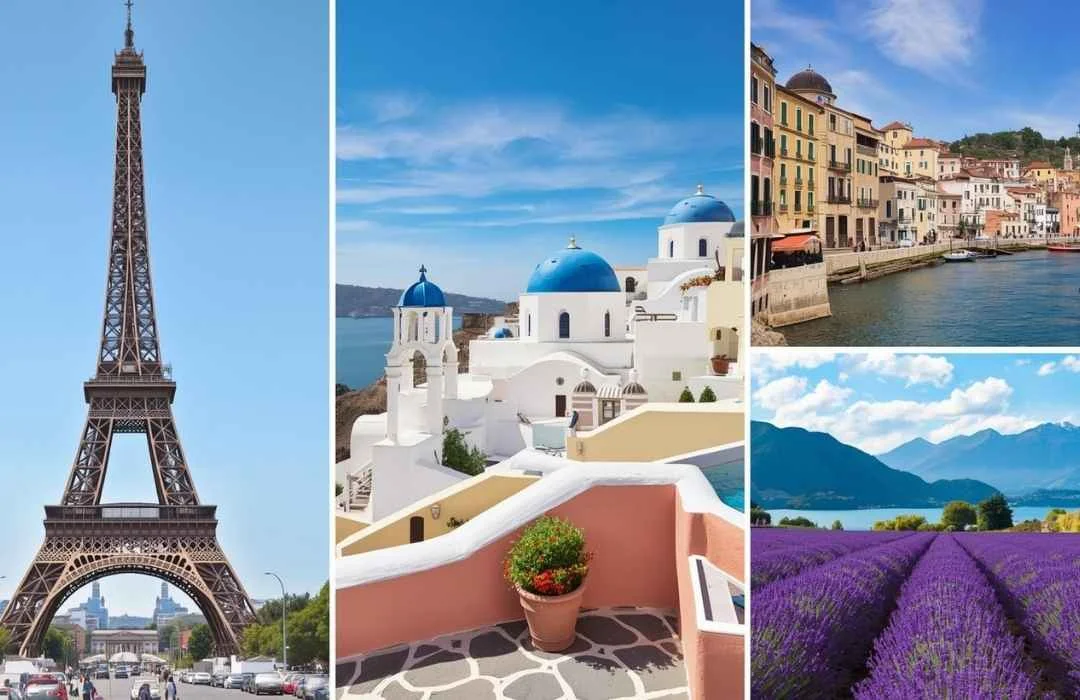
The Cyclades are the islands most people picture when they think of Greece — whitewashed cubic houses, blue-domed churches, bougainvillea spilling over stone walls, and a light so particular it appears to have been filtered specifically for photography. They are also where the solo traveler infrastructure is most developed, and where the social scene most consistently rewards individual visitors.
Santorini requires honest handling. It is extraordinarily beautiful and also the most commercial island in the Cyclades. The famous caldera views from Oia exist, they are real, and they are magnificent — but they are shared with a significant number of other people who have seen the same photographs you have. For solo travelers, Santorini works best as a two-to-three day experience rather than a base. The wine tours (Santorini sits on volcanic soil that produces exceptional Assyrtiko white wine) and the southern beaches at Perissa and Perivolos offer company and conversation in a more relaxed setting than the main caldera villages.
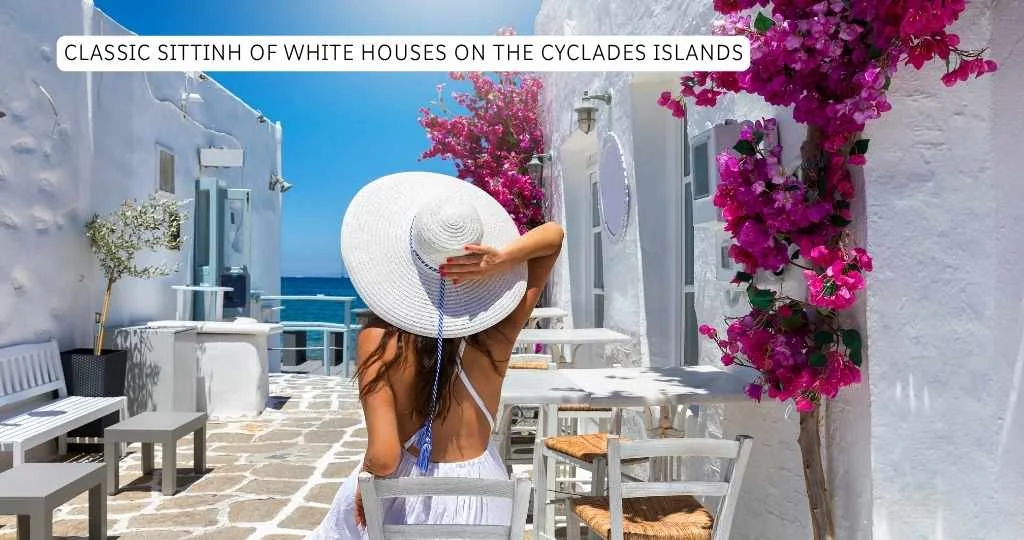
Naxos is the Cycladic island that solo travelers consistently describe as their favourite once they discover it. It is the largest island in the group, the most fertile, the most self-sufficient — it produces its own cheese, olive oil, potatoes, citrus, and spirit (Kitron, made from citron leaves, is specific to Naxos and worth finding). Naxos Town has a Venetian castle, a labyrinthine old quarter, and a waterfront that fills with Greek families in the evening rather than exclusively tourists. The beaches on the western coast — Agios Prokopios, Agia Anna, Plaka — are some of the finest in the Aegean. Solo travelers who want an island where they can stay a week and feel they are somewhere real, not somewhere constructed for visitors, consistently choose Naxos.
Paros sits between Santorini and Naxos in both geography and character. It has the aesthetic beauty of the Cyclades, a busy but not overcrowded main town, excellent transport connections to other islands, and a social scene in Naoussa — its fishing village turned tourism hub in the north — that operates pleasantly for individual visitors. Paros is also where island-hoppers base themselves when they want to move efficiently between the Cyclades, since ferries connect it to Mykonos, Naxos, Ios, and Santorini with regularity.
Mykonos is intentionally chosen last. It is the most famous, the most expensive, and the most consistently debated island in the Cyclades for solo travelers. Its reputation for nightlife is earned — the beach clubs and late-night bars are genuinely vibrant. Its windmills, Little Venice district, and maze of white streets are genuinely beautiful. But it is also the most expensive island in Greece, where a cocktail costs €18 and a hotel room in August requires planning months in advance. For solo travelers on a budget, it is better as a day trip from Paros than as a base. For solo travelers who want to find company in a social environment and have the budget to support it, it delivers exactly what it promises.
The lesser-known Cyclades — Sifnos, Syros, Folegandros, Milos — are where solo travelers who have already done the famous islands consistently find their best experiences. Milos, with its lunar volcanic landscape and turquoise coves, produces a consistently stunned reaction from first-time visitors. Folegandros is tiny, car-light, and among the most genuinely peaceful places in the Mediterranean. Syros, the administrative capital of the Cyclades, is where Greek tourists outnumber international visitors — which means prices are lower, food is more authentic, and the social experience is entirely different.
Crete — An Island That Functions as a Country
Crete is not like the other islands. It is too large, too historically complex, and too internally varied to be experienced the same way as a Cycladic island. With a surface area larger than some European countries and a history stretching back to the Minoan civilisation — Europe’s oldest — Crete demands more time and more engagement than a three-day stop allows.
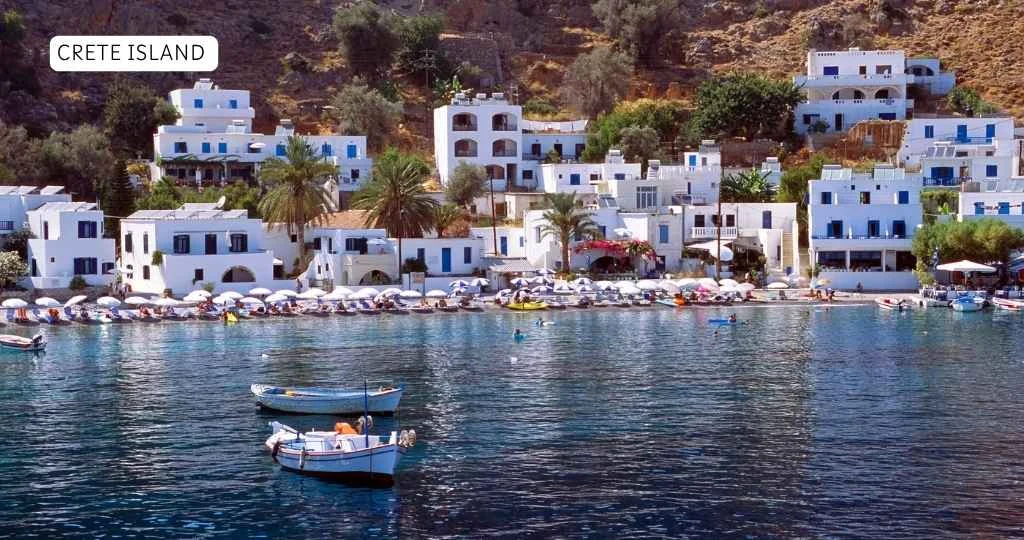
For solo travelers, Crete offers something particular: the ability to completely change your experience without changing your destination. The north coast — where Heraklion, Chania, and Rethymno sit — is cosmopolitan, connected, and full of accommodation and restaurant options. The south coast, reached by road over the White Mountains, is rugged, quiet, and largely undeveloped. The interior is a different country again — olive groves, mountain villages, traditional food prepared on wood fires, and communities where tourism is a secondary concern rather than the primary industry.
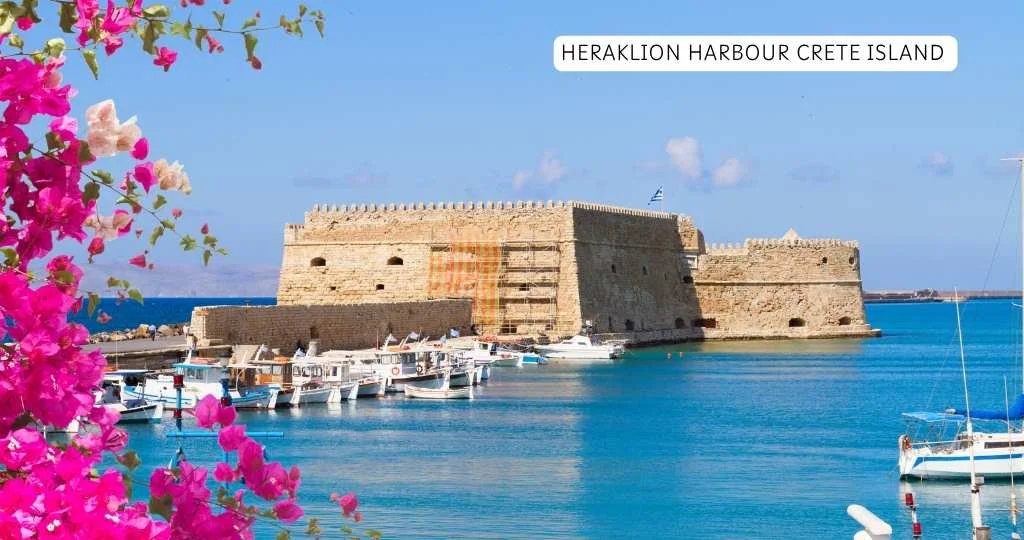
Heraklion is the capital and the entry point for most visitors. The Palace of Knossos — the centre of Minoan civilisation, occupied continuously from 7000 BC — is fifteen minutes from the city centre and is the most significant archaeological site in the eastern Mediterranean that most travelers underestimate in importance before visiting and find overwhelming once there. The Heraklion Archaeological Museum, recently renovated, houses the most complete collection of Minoan art in the world. Together, these two sites justify a full day each.
Chania is the island’s most beautiful town — a Venetian harbour surrounded by Ottoman minarets, Byzantine churches, and neoclassical mansions reflecting three thousand years of successive occupation. Walking the old town alone at early morning, before the cruise ship visitors arrive, is one of the best urban experiences in Greece. The Chania food market, held in a nineteenth-century covered hall, is where local life most visibly concentrates.
The Samaria Gorge is the long hike that Crete is famous for — sixteen kilometres through the longest gorge in Europe, descending from a mountain plateau to the Libyan Sea. It takes five to seven hours depending on your pace and fitness level. Solo travelers hike it without a guide; the path is well-marked and other hikers are consistent company throughout. The exit point, the village of Agia Roumeli, has no road access — you leave only by boat to Hora Sfakion, which itself becomes one of the memorable moments of the day.
Elafonissi in the southwest is the beach that appears in every Crete photograph — pink-tinged sand from crushed coral and shells, shallow warm water the colour of a swimming pool, and a lagoon that allows you to wade to a small island. It is crowded in August and magnificent in May and September.
The Ionian Islands — A Different Greece Entirely
The Ionian Islands — Corfu, Zakynthos, Lefkada, Kefalonia, Ithaca — sit off Greece’s western coast in the Ionian Sea rather than the Aegean, and the difference is immediately visible. They are greener, lusher, and architecturally distinct — Italian influence from centuries of Venetian rule shows in the colonnaded buildings of Corfu Town and the bell towers of Kefalonia’s villages.
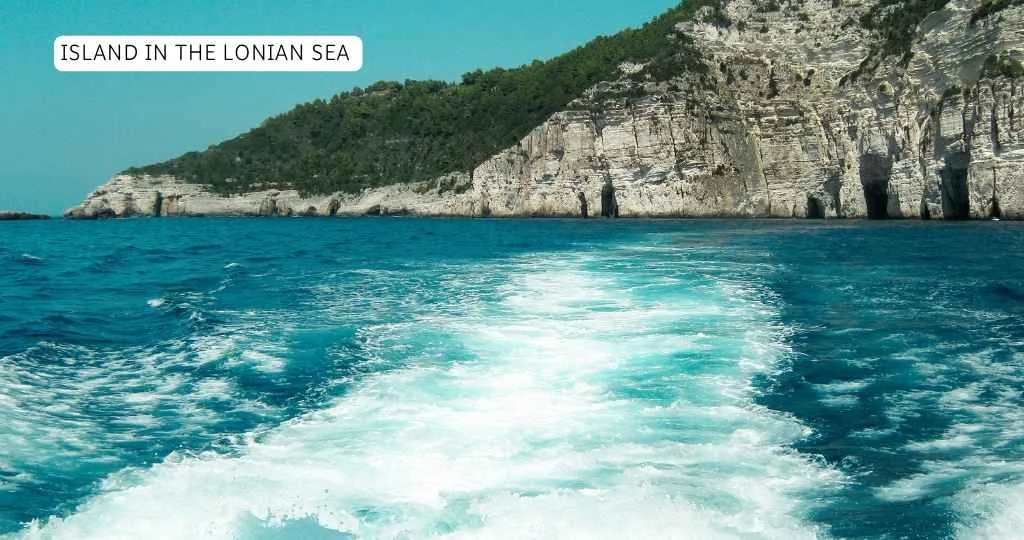
Corfu is the most historically layered of the Ionians. Its old town is a UNESCO World Heritage Site, its cuisine reflects both Greek and Venetian culinary traditions (ginger beer is local; sofrito — veal in white wine sauce — is specifically Corfiot), and its road network makes independent exploration practical. Solo travelers who rent a scooter or small car can reach extraordinary beaches — Paleokastritsa, Porto Timoni, Agios Gordis — that are inaccessible by public transport.
Kefalonia is where Greece feels most cinematic — dramatic cliffs, blue caves, vineyards producing the distinctive Robola white wine, and a coastal road between Assos and Fiskardo that is among the most beautiful drives in Europe. Fiskardo itself, the only village on the island that survived the catastrophic 1953 earthquake intact, is a perfectly preserved Venetian harbour town.
Zakynthos hosts the famous Navagio Beach — the shipwreck on white pebbles enclosed by vertical limestone cliffs that has appeared in more travel photographs than almost anywhere else in Greece. It is reached only by boat, which makes the approach part of the experience. Zakynthos also has a serious sea turtle nesting programme at Laganas Bay; responsible solo travelers who want to see loggerhead turtles (Caretta caretta) should book a licensed boat tour rather than approaching nesting beaches independently.
The Mainland — Delphi, Meteora, and the Peloponnese
Most international visitors to Greece stay on the islands and skip the mainland beyond Athens. This is one of the great missed opportunities in European travel.
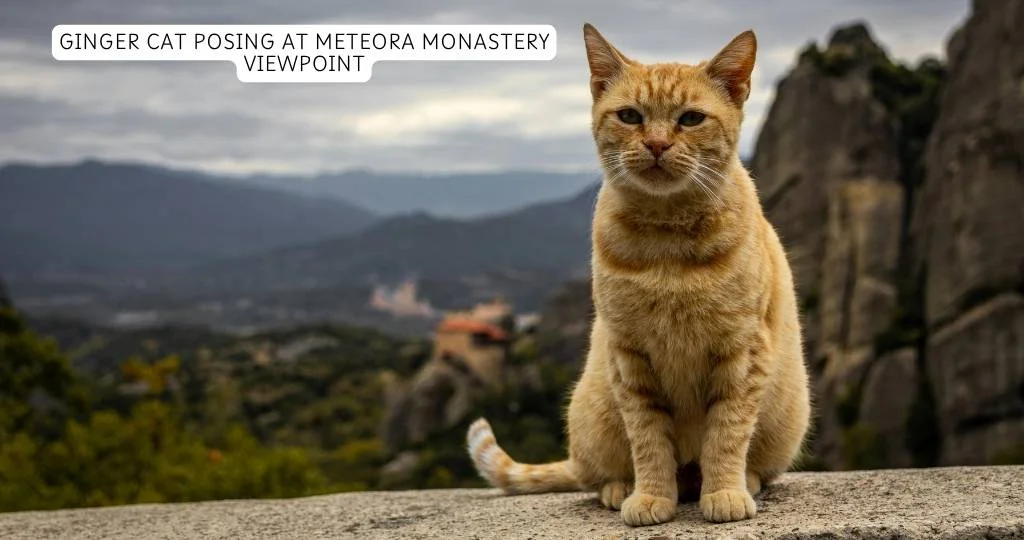
Meteora is genuinely unlike anything else in the world. Massive sandstone pillars rise from the plain of Thessaly to heights of four hundred metres, and on top of them — and this requires seeing to believe — sit centuries-old Eastern Orthodox monasteries. Six remain active today. The visual impact, whether from the valley floor at dawn or from the monastery paths at midday, produces a specific kind of silence in people. Solo travelers who add Meteora to an Athens-islands itinerary consistently name it the most memorable part of their trip.
The nearest town is Kalambaka, easily reached by train from Athens in approximately three and a half hours. The monasteries are a twenty-minute drive from the town. A full day allows you to visit three or four monasteries and walk one of the hiking paths between them.
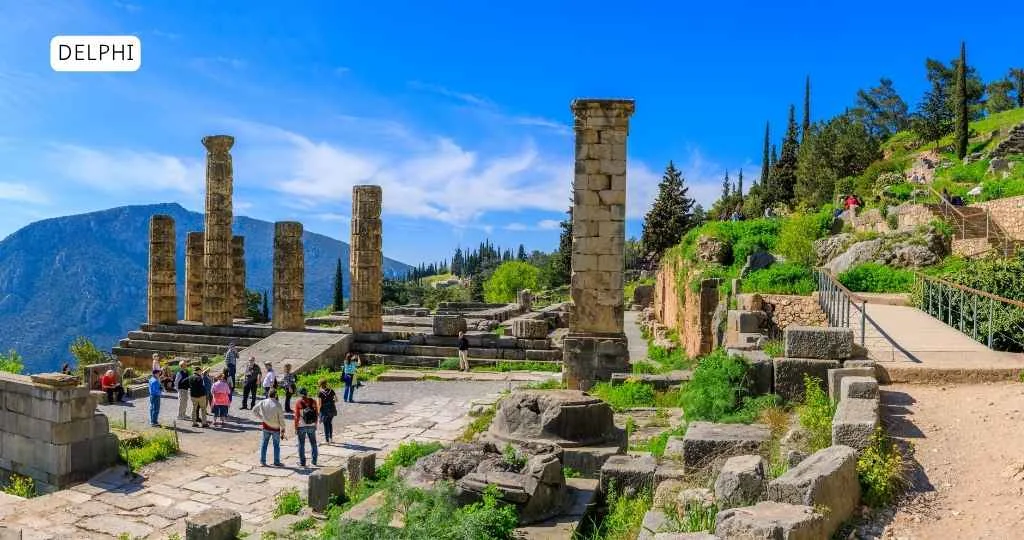
Delphi was the centre of the ancient world — or so the ancient Greeks believed. The sanctuary of Apollo, built on the slopes of Mount Parnassus with a view over a valley of olive trees descending to the Gulf of Corinth, was where the Oracle spoke and where city-states came to seek guidance on decisions of war and governance. The atmosphere of the site — the combination of specific historical weight and extraordinary natural setting — is unlike the Acropolis, which sits within a city. Delphi is alone in its landscape. Solo travelers who arrive by bus from Athens (approximately three hours) often find the absence of crowds outside peak hours allows a contemplative experience that group tours rarely permit.
The Peloponnese is mainland Greece at its most rewarding for independent travelers. The ancient theatre of Epidaurus — still used for performances and acoustically perfect after two and a half thousand years — is one of the most remarkable buildings on earth. Mystras, the Byzantine ghost city abandoned in the fifteenth century, is technically accessible but barely touristed. Monemvasia, a medieval fortified town on a rock connected to the mainland by a causeway, is one of the most dramatic and atmospheric places in Greece and among the least known internationally.
Greece Solo Travel Safety: An Honest Assessment – Solo Elite Trip
Greece is one of the safest countries in Europe for solo travelers. Crime rates are low by European standards, violent crime affecting tourists is rare, and the cultural attitude toward travelers is fundamentally hospitable rather than predatory.
The practical concerns for solo travelers in Greece are consistent and manageable:
Pickpocketing occurs in crowded tourist areas — the Monastiraki flea market in Athens, busy ferry terminals, and the area immediately around the Acropolis entrance. The solution is a money belt or cross-body bag worn in front, combined with the standard practice of keeping your phone in a front pocket rather than a back one. None of this is Greece-specific.
Scooter rentals produce a disproportionate number of injuries among tourists on Greek islands. Roads in the Cyclades and smaller islands can be steep, sandy, and unmarked. If you have limited scooter experience, rent a car or use buses and taxis instead. Greek hospitals are adequate in emergencies but travel insurance that specifically covers scooter use is essential if you ride.
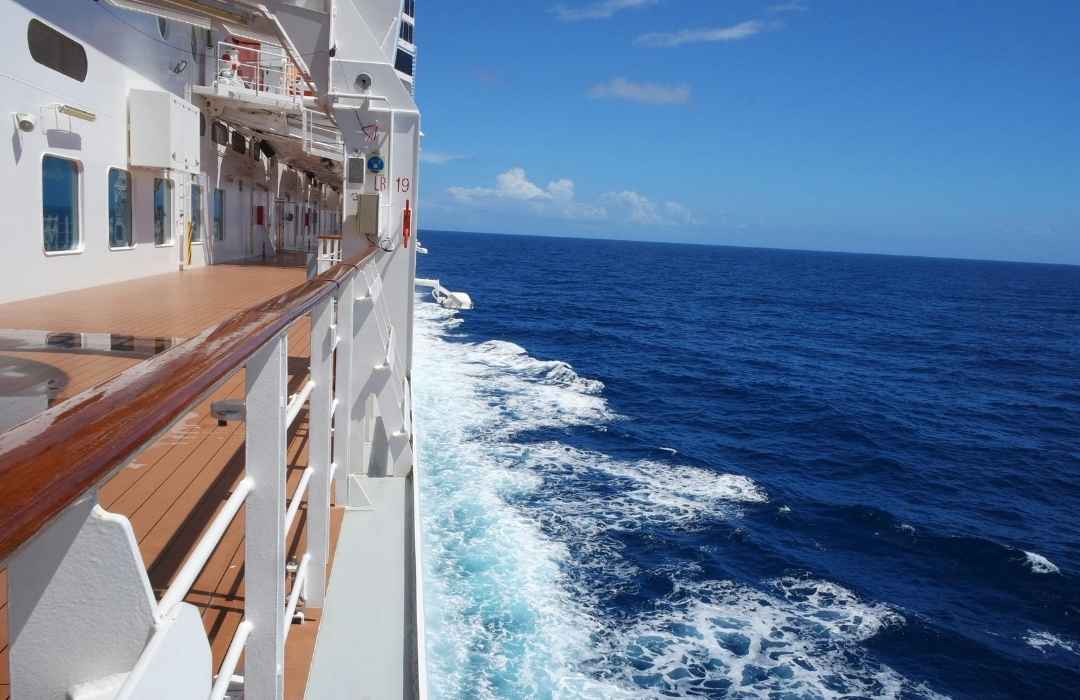
Ferry safety is a practical concern rather than a crime concern. Greek ferries are generally reliable, but schedules are affected by wind (the meltemi — the strong dry wind that blows across the Aegean in July and August — can delay departures by hours or cancel them entirely). Build flexibility into island-hopping itineraries; solo travelers on tight schedules miss flights because of cancelled ferries more often than any other single cause.
Solo female safety in Greece is straightforwardly positive. Greek society, while socially conservative in certain contexts, is not threatening toward women traveling alone. Verbal attention (catcalling) occurs, primarily in entertainment districts at night, and requires the same clear-boundary response it requires everywhere. The practical precautions — licensed taxis rather than unmarked cars, well-lit routes after dark, accommodation where staff know you — are the standard toolkit of solo female travel applied to a low-risk environment.
LGBTQ+ Solo Travel in Greece is largely positive in urban and island settings, with Athens having a visible and active queer community, and islands like Mykonos having an internationally known LGBTQ+ scene. Rural areas and older communities are more conservative. Discretion in those contexts is the operative word — Greece’s legal framework is progressive (same-sex civil partnerships have been legally recognised since 2015, and full marriage equality was legalised in 2024), but social attitudes vary by region.
Greece Budget Solo Trip: Real Numbers for 2025–26
Greece operates on two pricing systems simultaneously: the tourist economy and the local one. Solo travelers who learn to move between them reduce their daily costs significantly without sacrificing quality.
Accommodation: Budget — hostels with private rooms in Athens and popular islands: €25–45/night. Mid-range guesthouses and small hotels on less-touristed islands: €50–90/night. Boutique hotels in Santorini caldera or Mykonos town: €150–400/night. Cave hotels carved into the Santorini caldera cliff face: €200–600/night. Budget-conscious solo travelers who avoid Santorini and Mykonos find that the same money that buys a basic room on those islands covers a genuinely lovely guesthouse on Naxos, Paros, or Crete.
Note: many hotels still charge a single supplement (typically 70–90% of the double room rate rather than a full discount). Guesthouses and smaller family-run properties are more flexible on this than chain hotels.
Food: Gyros from a street stand: €2.50–4. Souvlaki plate at a local taverna (three skewers, bread, dipping sauce): €8–12. Full three-course taverna meal with wine: €20–35. Resort hotel dinner: €40–70. Greek coffee (thick, served in a small cup with grounds): €1.50–2.50. Freddo cappuccino (iced, extremely popular): €3–4.
The cheapest and most flavourful eating in Greece happens at lunch. Greeks eat their main meal in the early afternoon, and the tavernas that serve the daily menu (μαγειρευτά — cooked dishes made that morning) to local workers offer the most authentic and economical food on the island. A two-course lunch with bread, water, and house wine at one of these places costs €10–15. Ask for whatever was cooked that day rather than ordering from the printed English menu.
Transportation: Ferry between nearby Cycladic islands: €8–25 depending on route and season. Athens to Santorini high-speed ferry: €50–80. Domestic flight Athens to Heraklion (Crete): €25–80 booked in advance. City bus in Athens (single ride): €1.20. Metro in Athens (single ride): €1.20. KTEL long-distance bus (Athens to Delphi): €12–16 return. Taxis in Athens are metered and start at €4 flagfall — cheap by European standards.
Attractions: Acropolis with all associated sites: €30 (or €10 in winter). Acropolis Museum: €15 (€5 in winter). Palace of Knossos: €15. National Archaeological Museum Athens: €12. Most Byzantine churches: free. Many smaller archaeological sites outside the main cities: €3–8.
Realistic daily budgets: Budget solo (hostel private room, local food, public transport, two paid attractions per week): €60–80/day. Mid-range solo (guesthouse, taverna dining, some group excursions): €100–150/day. Santorini/Mykonos in peak season: add €80–150/day to any budget tier.
Greece Travel Tips for First-Time Solo Visitors
Arrive in Athens first, always. Direct flights to island airports exist (particularly Heraklion, Corfu, and Rhodes), but starting in Athens gives you a calibration period — time to understand how Greek taxis work, how to read a ferry schedule, what food costs, and how the social rhythm of the country operates. Athens also gives you sea legs before you literally need them.
Book ferries in advance for July and August. This is not optional advice — it is structural. Ferry capacity on popular Cycladic routes in peak season fills weeks in advance. A solo traveler who arrives in Santorini in August without a ferry booking to Naxos is not stranded, but they are paying significantly more for a last-minute ticket and possibly spending a night somewhere unplanned. Book the outward journey at minimum; leave return journeys flexible if you want to adjust plans on the island.
Carry cash for smaller islands and villages. Credit cards are accepted throughout Athens and tourist hubs. On smaller islands and in mountain villages, card readers are present but not universal, and wifi connectivity for payment processing is sometimes unreliable. Carrying €100–200 in cash when leaving a main port provides comfortable backup.
The midday heat in summer is serious. July and August temperatures regularly reach 35–40°C. The Acropolis in direct midday sun is a different physical experience from the same site at 8am. Solo travelers who structure their days around Greek time — active in the morning until noon, resting or beach-based in the early afternoon, active again from late afternoon into evening — have a much more comfortable experience than those who push through midday heat on schedule.
Learn the meal schedule. Greeks eat dinner between 9pm and midnight. Restaurants that open for tourists at 7pm exist, but they are running at low energy before 9pm. If you want the full experience — the kitchen at full capacity, the taverna filling with Greeks eating together — eat late. Solo travelers who cannot adjust to this can eat a larger lunch and treat dinner as a lighter affair; lunch in Greece is substantial enough to make this entirely workable.
Use the Athens metro. It is clean, reliable, air-conditioned, and stops directly at Syntagma (city centre), Monastiraki (bazaar district), Acropolis station, and Piraeus (the ferry port). For solo travelers navigating a large city alone, a metro system that reaches every significant destination is the difference between a confident first day and an expensive, disorienting one.
Free walking tours are a legitimate strategy. Athens has multiple free walking tours (tip-based at the end) that cover the key historical sites with an English-speaking guide. For solo travelers arriving on their first day, these tours serve two purposes simultaneously: orientation and social contact. You will spend two hours walking with other travelers, some of whom will be solo, some of whom you will see again that evening at dinner.
Understand the tipping culture. Tipping in Greece is appreciated but not mandatory and never mandatory at the US percentage level. Rounding up the bill, leaving a few euros for good service, is the norm. Leaving nothing is not rude. Leaving 15–20% is generous and will be genuinely appreciated but is not expected.
Greek Food: What Solo Travelers Actually Need to Know
Greek food is not what the tourist menus suggest. The tourist menus suggest Greek salad, moussaka, and souvlaki. All three are real Greek dishes, and all three are worth eating. But the full range of Greek cuisine — what Greeks actually cook and eat in their homes and neighbourhood tavernas — is dramatically wider and more interesting.
Meze culture is the solo traveler’s best friend. Meze are small dishes ordered collectively and shared — the Greek equivalent of tapas. Ordering three or four meze plates rather than a single main course gives you more food variety, costs approximately the same, and is completely normal to do alone. The standard meze repertoire includes tzatziki (yoghurt, cucumber, garlic — the real version is thick and sharp), taramosalata (fish roe dip, pink and creamy), dolmades (vine leaves stuffed with rice and herbs, served warm with egg-lemon sauce), fried courgette or aubergine slices, and grilled octopus — which in Greece is prepared by drying in the sun before grilling, producing a texture and flavour that has almost no relationship with the rubbery octopus served elsewhere.
Spanakopita and tiropita — spinach and feta filo pie, and cheese filo pie — are the portable Greek foods. Every bakery makes them. They cost €1.50–3 and are equally good for breakfast, lunch, and a late-night walk home. A fresh spanakopita from a neighbourhood bakery is one of the simplest pleasures available in Greece.
Fresh fish and seafood in Greece are genuinely excellent and genuinely expensive at tourist-facing fish restaurants. The practical approach: find a harbour town with working fishing boats (Naxos Town, Fiskardo in Kefalonia, Hora Sfakion in Crete), identify the taverna that the fishermen eat at (it will be the simplest and oldest-looking one near the quay), and eat there. The fish will have been caught that morning, priced by weight (check before you order), and grilled with olive oil, lemon, and oregano without much additional interference.
Greek coffee (ελληνικός καφές) is thick, unfiltered, served in a small cup with the grounds remaining, and should not be stirred after the first sip unless you want a mouthful of mud. It is one of the most satisfying individual rituals available to a solo traveler in Greece — ordering one, sitting with it for thirty minutes, and watching whatever is happening in the square in front of you. This is how Greek men have spent their mornings for generations. You are welcome to join.
Regional specialties worth seeking out: Loukoumades (honey-drenched fried dough balls) in Athens, specifically from the historic bakery Loukoumades in the Monastiraki area. Dakos (Cretan barley rusk topped with crushed tomato, crumbled mizithra cheese, and olive oil) anywhere in Crete. Naxian graviera cheese — a hard, slightly sweet cheese produced on Naxos that is among the finest cheeses in Greece. Fava from Santorini — a split yellow pea puree, silky and slightly sweet, that is entirely specific to the island’s volcanic soil and tastes different from fava produced anywhere else.
Wine: Greece has been producing wine for four thousand years and has dozens of indigenous grape varieties unknown outside the country. Assyrtiko from Santorini (mineral, crisp, specific) is the most internationally recognised. Xinomavro from northern Greece is the red that most compares to Burgundy Pinot Noir in structure. Moschofilero from the Peloponnese is aromatic and floral. Ordering a glass of local wine in whatever region you are in is always more interesting than ordering a brand name.
Solo Travel Itineraries for Greece: Three Options
Seven Days — First Solo Trip to Greece
Days 1–3: Athens Arrive, orient, and do not rush. Day one: walk Monastiraki and Psyri, eat gyros, sit in the Acropolis Museum without checking the time. Day two: the Acropolis itself at opening time, followed by Plaka neighbourhood and a long lunch. Day three: National Archaeological Museum in the morning, Koukaki neighbourhood in the afternoon, a rooftop bar at sunset.
Days 4–6: Naxos Take the ferry from Piraeus (six to seven hours on a night ferry — economical and practical; you arrive in the morning ready to start). Three days on Naxos: one day for the town and castle, one day for the beaches on the west coast, one day for the interior villages of Halki, Filoti, and Apiranthos. Eat dinner on the waterfront each evening and watch the town come to life after 9pm.
Day 7: Santorini (or return to Athens) A single day in Santorini as a finishing experience — the caldera view from Imerovigli rather than Oia (less crowded, equally dramatic), a wine tasting, and a flight home from Santorini airport. Alternatively, return to Athens by ferry and fly from the main airport.
Ten Days — The Balanced Solo Greece Experience
Days 1–3: Athens — as above.
Days 4–5: Delphi day trip then Meteora — Athens to Delphi by bus (day trip, three hours each way), one night in a hotel between Delphi and Meteora, one full day at Meteora monasteries. Train back to Athens from Kalambaka.
Days 6–8: Naxos or Crete (Chania) Naxos for island beauty and Cycladic culture. Chania for urban sophistication and access to the south coast. The choice depends on whether you want the Aegean island experience or a more varied Cretan experience.
Days 9–10: Santorini or Mykonos (if budget allows) Two days is enough for either. One day for Santorini’s caldera villages and a wine tour. One day for Mykonos’s Little Venice, windmills, and one beach club afternoon.
Fourteen Days — The Comprehensive Solo Greece Trip
Add the Peloponnese (Nafplio, Epidaurus, Mycenae — three days, easily done by rental car or KTEL bus from Athens), a second Cycladic island (Paros or Milos), and extend Athens to four or five days. Use the night ferry between Piraeus and Heraklion or Chania to save accommodation costs and travel time simultaneously.
Best Time to Visit Greece for Solo Travelers
April to early June is the optimal window. The weather is warm (20–26°C), the sea is swimmable from late May, the crowds are manageable, and prices are 30–50% below peak. The light in spring Greece has a particular quality — clear and golden in a way that summer heat haze reduces. Wildflowers cover hillsides that are dry and brown in August. Ancient sites are unhurried. This is when Greece is most itself.
September and October deliver the same advantages on the other side of summer. The sea is still warm from months of sun, the tourist season is winding down, and prices fall. Locals who spent summer serving tourists return to their normal pace. The food improves — autumn is when the best fish appears, when wine harvest begins, when figs and pomegranates are on every table.
July and August are peak season. The meltemi wind keeps temperatures tolerable on the islands but can make ferry travel unpredictable. Prices are at maximum. Beaches are full. The Acropolis in August at midday is a test of endurance. For solo travelers who want company and social energy, this is the best time; for those who want contemplative exploration, it is the worst.
November through March is off-season Greece and a different country. Many island businesses close entirely. Ferry frequencies drop dramatically. But Athens is entirely open, less expensive, and full of Athenians living their actual lives rather than hosting visitors. The Acropolis in winter rain, with almost no one else present, is an experience unlike any summer visit. Solo travelers with flexibility and genuine cultural interest often find this the most memorable time to visit.
Solo Travel in Greece FAQ
Is Greece one of the safest countries in Europe for solo travelers?
Yes, consistently. Crime affecting tourists is rare, the culture is fundamentally hospitable, and the infrastructure is well-developed for independent visitors. Standard urban awareness — secure bags in crowds, licensed taxis at night, keeping valuables out of sight — constitutes the full safety toolkit required for most of Greece.
What is the best Greek island for a first solo trip?
Naxos for most solo travelers — large enough to have variety, small enough to feel familiar within a day, affordable relative to Santorini and Mykonos, and with a Cycladic beauty that justifies every photograph. Paros is a close second for those who want more nightlife options.
How does island-hopping work as a solo traveler?
Ferries connect the Cycladic islands several times daily in summer. You book online through the main ferry operators, board with your ticket on your phone, and the rest is straightforward. Blue Star Ferries and Hellenic Seaways cover the main routes. Fast ferries (catamarans) are twice the price and half the time; slower overnight ferries save a night’s accommodation and deliver you rested in the morning.
Can I do Greece on a tight budget as a solo traveler?
Yes, with two strategic choices: avoid Santorini and Mykonos as your bases (use them as day trips if at all), and eat where Greeks eat rather than where tourist menus are displayed in four languages on stands outside the door. With these two adjustments, Greece is a surprisingly affordable European destination.
Do I need to speak Greek?
No. English is effectively the second language of tourist Greece. In rural villages and on very small islands, basic Greek phrases produce outsized warmth — kalimera (good morning), efcharisto (thank you), and parakalo (please/you’re welcome) are enough to communicate respect for the culture. The effort is always appreciated even when the vocabulary is limited.
Is Greece good for solo travelers who are introverted?
Exceptionally so. Greece allows you to be entirely alone — walking ancient sites, sitting with Greek coffee watching a square, reading on a beach that has three other people — without any social pressure. The culture does not push interaction onto you; it simply makes it available at every turn for when you want it. Introverted solo travelers often find this balance — genuine solitude available alongside easy human contact when desired — in Greece more reliably than anywhere else in Europe.
The Solo Traveler’s Final Word on Greece
Greece does not care how you arrive. It cares that you stay long enough to understand it. The travelers who spend three days bouncing between Instagram coordinates leave with beautiful photographs and a surface impression. The solo traveler who spends a week on Naxos knowing no one and leaves knowing the woman who runs the bakery, the fisherman who sells from the back of his truck on Tuesday mornings, and the specific table at the harbour taverna where the owner will simply bring you whatever he made that evening — that traveler understands something about Greece that a group tour cannot deliver.
That understanding is what solo travel is actually for. Not the absence of company, but the presence of genuine attention — the attention you can only give when no one else’s schedule constrains yours, when no compromise is required, when the day can follow its own logic.
Greece gives that back to you in full. The history does not diminish alone. The food tastes just as extraordinary at a table for one. The sea looks the same from a single kayak as from a catamaran full of strangers.
Go alone. Stay longer than you planned. Come back.
🧳 Get Your Free Solo Travel Safety Checklist — the exact step-by-step guide smart solo travelers use to stay safe, confident, and fully prepared on their first trip. Download it now and travel with peace of mind.
Solo Elite Trip — elitetrip.de Written exclusively for independent solo travelers.
Want to Share Your Experience?
Have you traveled using one of our guides or found inspiration here?
👉 Share your experience in the comments or send us your story
Your insights help other travelers plan more thoughtful, rewarding journeys.
Latest Reviews
There are no reviews yet. Be the first one to write one.