Solo Travel Tips on a Budget: How I Traveled to 10 Countries Alone (Without Going Broke) + free Solo Travel Starter Pack
The first time I booked a one-way flight to a country where I didn’t speak the language, I had $1,400 in my account and a spreadsheet I’d spent three weeks building. That trip lasted 47 days. I came home with $200 left and memories I still talk about six years later.
I’ve now applied these solo travel tips on a budget across 10 countries and four continents — Southeast Asia, Eastern Europe, South America, and North Africa. And I’ve learned something counterintuitive: traveling alone on a budget is often cheaper than staying home. Not because it’s easy, but because every decision is yours. No compromise restaurants. No group itineraries. No one’s expensive habits but your own.
These are the exact strategies I used to travel solo cheap — not the generic advice you’ve read before, but the specific, tested, sometimes embarrassing lessons that actually changed how I travel.
Table of Contents

⚡ TL;DR — Top 3 Solo Travel Tips on a Budget if You’re in a Rush:
- Book flights on Tuesday or Wednesday, 6–8 weeks out, using Google Flights’ price calendar — not a comparison site.
- The real budget killer isn’t accommodation — it’s daily transport and eating near tourist zones. Walk 10 minutes away from any landmark and prices drop 40%.
- Travel insurance is not optional. One medical evacuation can cost more than your entire year of travel.
1. The Money Mindset Shift Every Budget Solo Traveler Needs
Most people approach solo travel on a budget the wrong way. They ask: “How much will this trip cost?” — then reverse-engineer whether they can afford it.
The better question is: “What does one day of life in this country actually cost a local?”
That number is your anchor. In Vietnam, a local lunch costs $1.50. In Portugal, a local lunch costs €4. In Colombia, a hostel bed in Medellín’s El Poblado neighborhood runs $12. Once you know the local baseline, you can build a realistic daily budget and identify exactly where tourist pricing is inflating your costs. This is the foundation of every solo travel money saving tip worth following.
The Daily Budget Framework I Use
| Destination | Budget Daily | Mid-Range Daily |
|---|---|---|
| SE Asia (Vietnam, Thailand, Cambodia) | $25–$40 | $60–$90 |
| Eastern Europe (Poland, Hungary, Romania) | $35–$55 | $70–$110 |
| South America (Colombia, Peru, Bolivia) | $30–$50 | $65–$100 |
| Western Europe (Portugal, Spain) | $55–$80 | $110–$160 |
| North Africa (Morocco, Egypt) | $25–$45 | $65–$95 |
These are real numbers from my own trips, tracked daily in Trail Wallet. Not blog estimates. Not tourist packages.
2. How to Afford Solo Travel: The Flight Booking System That Saved Me Thousands
The number one question I get from people researching how to afford solo travel is about flights. Here’s the truth: most people are using the wrong tools.
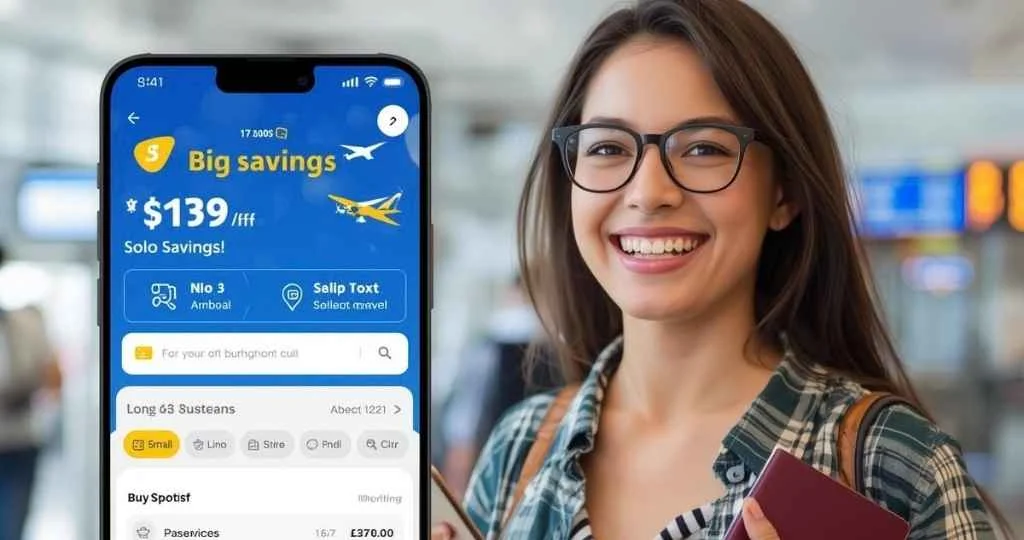
Kayak, Expedia, and Skyscanner show you the same fares as Google Flights — but Google Flights has tools the others don’t.
The Google Flights Method
Step 1 — Price Calendar: Open the calendar view and look for the cheapest 7-day window in your target month. Shifting departure by two days can save $150–$300 on long-haul routes.
Step 2 — Map Explore: Type your home airport into Google Flights’ “Explore” feature and browse a world map with the cheapest fare to every destination. I booked Lisbon over Barcelona purely because the fare gap was $280 on a specific week.
Step 3 — Price Alert, Then Wait: For a trip 8–12 weeks out, set a price alert and wait 10–14 days. Fares cycle through a predictable rhythm. The alert catches the dip.
Step 4 — Book Direct When the Difference Is Small: A $15 saving through a third party is rarely worth losing direct airline communication if your flight changes.
Budget Airline Strategy by Region
| Region | Best Carriers | Watch Out For |
|---|---|---|
| Europe | Ryanair, Wizz Air, easyJet | Luggage fees add $30–60 if not pre-booked |
| Southeast Asia | AirAsia, VietJet, Scoot | Seats unassigned — board early |
| South America | JetSMART, Flybondi, LATAM | Schedule changes are common — build buffer days |
| Middle East / Africa | flydubai, Air Arabia | Dubai layovers can be used as free stopovers |
Pro Tip: The cheapest day to book is consistently Tuesday or Wednesday. Weekend searches cost more — airlines adjust dynamically to demand spikes.
3. Solo Backpacking Tips for Accommodation: Spend Less, Sleep Better
One of the most practical solo backpacking tips I can give you: stop assuming hotels are your only option. I’ve stayed in every accommodation type across 10 countries. Here’s what I’ve learned.
Hostels are not what they were in 2009. The best ones — Generator in Lisbon, Mad Monkey in Phnom Penh, Selina properties across Latin America — are built for solo travelers. Private pod beds, co-working spaces, rooftop bars, organized day trips. The community aspect is optional, never mandatory.
Private rooms in hostels run 30–40% cheaper than equivalent hotels in the same neighborhood, with better locations and better common areas.
Airbnb works best for stays of 5+ nights where you negotiate a weekly discount and cook some meals. For one or two nights, cleaning fees kill the value.
My Accommodation Pecking Order
- Highly-rated private room in a social hostel (4.8+, 200+ reviews) — best value and safety combination
- Boutique local guesthouse — often cheaper than chains, always more interesting
- Airbnb Superhost (50+ reviews, 5+ night stays) — for longer stays or weak hostel cities
- Budget hotel chain (Ibis, Tune Hotels, B&B Hotels) — predictable, safe, bookable last-minute
The One Review Filter That Saves Me Every Time
Before booking anything, search reviews for the word “solo.” If multiple reviewers mention solo travelers specifically, you have real data. A review saying “perfect for solo travelers, staff helped me book day trips” is worth more than 50 generic five-star reviews.
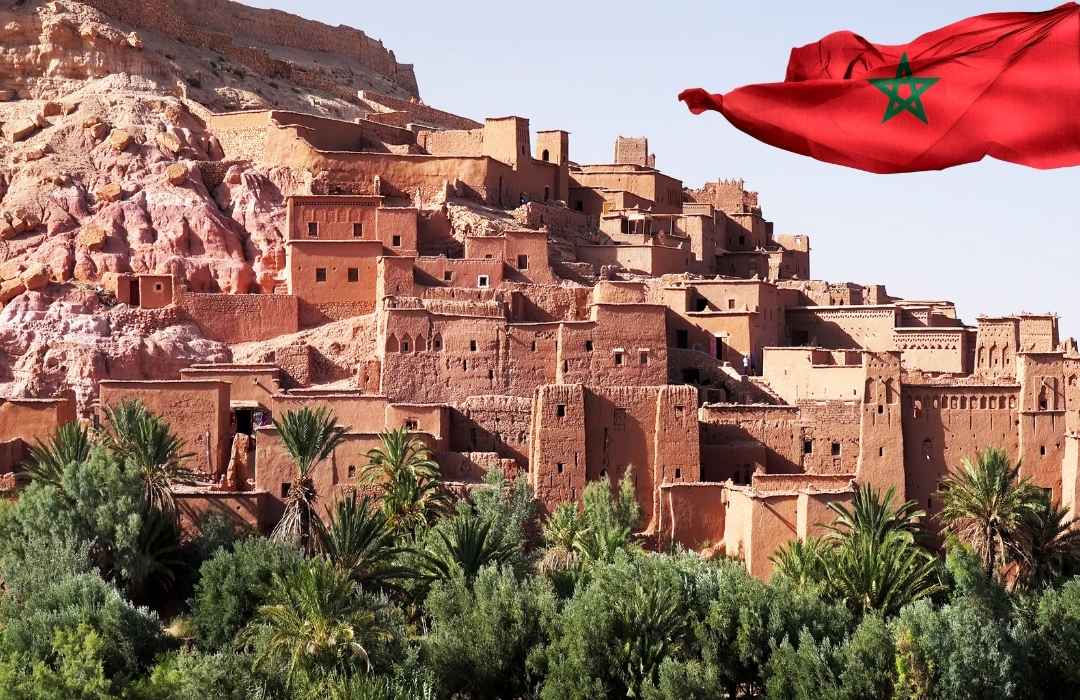
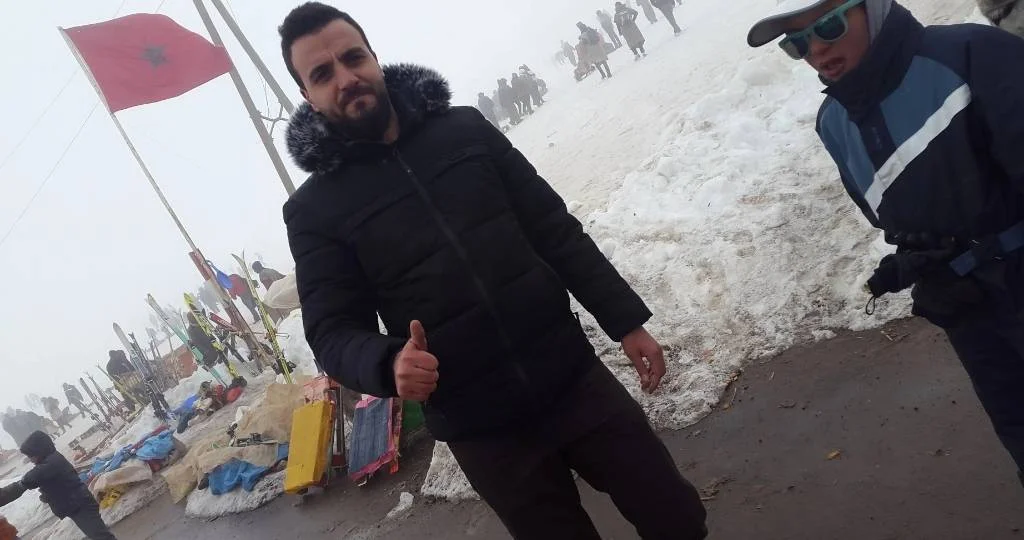
Pro Tip (Morocco): In Marrakech, book a riad inside the Medina rather than a hotel near Jemaa el-Fna square. You’ll pay less, have a private courtyard, and be inside the most atmospheric part of the city. Download the offline map before you enter — the Medina’s alleys are designed to disorient.
4. Solo Travel Money Saving Tips: Where the Money Actually Goes
After tracking 300+ days of expenses, I can tell you exactly where solo travel on a budget falls apart. It’s almost never the big costs. It’s these three:
The Three Real Budget Killers
Eating within 200 metres of a major tourist attraction. The Colosseum in Rome, the Grand Palace in Bangkok, Machu Picchu’s entry zone — prices double or triple within that radius. Walk away. Every time.
Booking tours through hotel concierge desks. These carry 30–50% commissions. Book directly through local operators via GetYourGuide or Viator, or ask locals at your guesthouse.
Using airport currency exchange. The worst rates anywhere, consistently. Withdraw local currency from a city ATM. Use a Wise card or Charles Schwab debit for fee-free international withdrawals.
The 10-Minute Walk Rule
One of the simplest solo travel money saving tips that actually works: for every restaurant, walk at least 10 minutes from the tourist zone before sitting down.
In Hội An’s Ancient Town, the lantern-street restaurants charge $8–12 for a bowl of cao lầu. Three streets back, the same dish costs $2. In Kraków’s Old Town near the Cloth Hall, a sit-down lunch costs 60–80 PLN. Four blocks away, you’re paying 25–35 PLN.
This one rule saved me an estimated $1,200 across my first year of travel.
5. How to Travel Solo Cheap AND Safe (You Don’t Have to Choose)
A myth that costs solo travelers money: that budget solo travel and safety are in tension. They’re not. Unsafe situations come from poor planning, not low spending. Here is the safety stack I use without adding significant cost.
The Budget Safety Stack
Airalo eSIM ($5–15/country) — Never lose GPS or messaging. Activates before you land. Eliminates the airport SIM line entirely.
Google Maps “Share Location” (free) — Share real-time location with one trusted contact permanently. Takes 30 seconds to set up. Costs nothing.
Noonlight or local emergency app (free) — In the US, Noonlight is the best silent panic button available. Internationally, save the local emergency number as a phone contact before you arrive.
Travel insurance — SafetyWing ($45–90/month) or World Nomads — Non-negotiable. A friend needed emergency appendix surgery in Bali. Without insurance: $8,000 out of pocket. With SafetyWing: $0. World Nomads covers scuba diving, motorbike riding, and trekking above 4,000m — SafetyWing does not. Know what you’re buying.
Neighborhood Research Checklist
- UK Foreign Office (gov.uk/foreign-travel-advice) or US State Department (travel.state.gov) for current alerts
- Reddit: “[City name] solo travel” — real, recent, unfiltered
- GeoSure for neighborhood-level safety scores
- Google Street View around your accommodation at night
6. Traveling Alone on a Budget: The Overland Transport Advantage
One of the most underused solo backpacking tips for cutting costs: stop flying between every destination.
When the Bus or Train Wins
| Route | Flight (avg) | Overland | Verdict |
|---|---|---|---|
| Bangkok → Chiang Mai | $40–80 | $12 overnight train | Always the train |
| Lisbon → Porto | $60–100 | €25 Alfa Pendular | Always the train |
| Medellín → Cartagena | $60–90 | $25–35 bus | Depends on your time |
| Kraków → Warsaw | $50–90 | $15–25 PKP train | Always the train |
| Hanoi → Hội An | $40–70 | $18–25 sleeper bus | Sleeper bus — saves a hotel night |
The sleeper bus or overnight train is one of the most powerful solo travel money saving tips in practice: you travel and sleep simultaneously, eliminating both a transport cost and an accommodation cost in one move.
Pro Tip (Vietnam): The Hanoi to Hội An sleeper bus on The Sinh Tourist line runs about $18, departs at 7 PM, arrives the following morning. You save a $15–20 guesthouse night and wake up in a new city. I did this three times in Vietnam alone.
7. Budget Solo Travel Tips for Eating Well
Food is where solo travel on a budget either bleeds money or feeds the soul. The difference is knowing the local eating infrastructure.
Eat Where Locals Eat: Country by Country
Vietnam: Phở from a street cart at 7 AM costs $1–2. Bún bò huế in a plastic-stool restaurant in Hue costs $1.50. Never eat at a restaurant with photos on the menu in the tourist zone.
Morocco: Mint tea and msemen flatbread at a medina café — $1. A tagine from a tourist-facing restaurant near Djemaa el-Fna — $12. The same tagine from a derb alley restaurant two streets in — $4.
Colombia: The almuerzo — a fixed two-course lunch with soup, a main, juice, and sometimes dessert — costs $3–5 everywhere. This is how Colombians eat lunch every day. It is your cheapest, most authentic, most filling option.
Eastern Europe: Milk bars (Bar mleczny) in Poland are communist-era canteen restaurants still operating in Kraków and Warsaw. A full meal costs $3–5. The one on Tomasza Street in Kraków’s Old Town is the best $4 you will spend in Poland.
The Cooking Calculation
For stays of 4+ nights, buying groceries and cooking 50% of your meals cuts your food budget by 30–40%. The Bến Thành Market in Ho Chi Minh City and Hala Targowa in Kraków are worth visiting purely as experiences — the savings are a bonus.
8. Solo Travel Tips for Beginners: The Lesson I Learned the Hard Way
This section is for anyone reading solo travel tips for beginners for the first time. The most important lesson I learned didn’t come from a guidebook.
It was day 31 in Colombia. I was in Cartagena’s Getsemaní neighborhood, which had turned uncomfortable after a pickpocket attempt near the Castillo San Felipe de Barajas. I’d moved accommodations twice and overspent on taxis because I’d stopped trusting my instincts.
My daily spending had crept from $38 to $67 over 10 days — almost entirely from anxiety-driven decisions. More Ubers. Fancier restaurants because I felt I “deserved” it after stressful days. A tour I didn’t even enjoy because a hostel staffer pushed it.
I sat down with my Trail Wallet app and looked at the data. The drift was obvious.
Emotional spending is the biggest threat to a solo travel budget — not exchange rates, not tourist prices, not scams. It’s the invisible leak that no comparison site or packing list can fix.
The fix: one reset day. I walked to the Mercado de Bazurto, ate lunch at a local stall for $3, sat in Parque del Centenario for two hours, and got my head straight. The next five days cost me $32 each.
9. The Real Numbers: What I Spent Across 10 Countries
Here is the honest accounting of traveling alone on a budget across 103 days — every cost tracked daily:
| Country | Days | Total | Daily Avg | Biggest Cost |
|---|---|---|---|---|
| Vietnam | 18 | $520 | $28.90 | Halong Bay tour |
| Cambodia | 8 | $260 | $32.50 | Angkor Wat passes |
| Thailand | 14 | $490 | $35.00 | Koh Tao diving |
| Morocco | 10 | $380 | $38.00 | Sahara desert tour |
| Portugal | 9 | $610 | $67.80 | Accommodation (Lisbon) |
| Spain | 7 | $530 | $75.70 | Food and wine |
| Poland | 6 | $270 | $45.00 | Auschwitz tour |
| Hungary | 5 | $240 | $48.00 | Thermal baths |
| Colombia | 15 | $620 | $41.30 | Flights within country |
| Peru | 11 | $590 | $53.60 | Machu Picchu + train |
| Total | 103 days | $4,510 | $43.80 |
Flights between countries: ~$1,200. Travel insurance (SafetyWing): $135. Grand total: $5,845 for 103 days — $56.75/day all-in.
10. How to Afford Solo Travel Long-Term: The Honest Conclusion
I’ve had meals that changed the way I think about food. I’ve had buses break down at 2 AM in rural Peru. I’ve had days where I sat alone in a café for three hours because I was too tired to be brave — and that was completely fine.
Solo travel on a budget is not a compromise version of travel. It’s a more intentional version. Every decision is yours. Every meal is a choice. Every route is deliberate.
The 10 countries I visited didn’t make me worldly. The 103 days of small decisions — where to sleep, what to eat, when to stay, when to go — did.
You don’t need a large budget. You need a system, a spreadsheet, a decent SIM card, and the willingness to walk 10 minutes away from the tourist restaurants.
💬 Which of these 10 countries is on your list? Comment below — I’ll give you the one neighborhood you must stay in and the one meal you cannot miss.
📥 Want my exact budget spreadsheet, packing list, and eSIM setup guide? Download the free Solo Travel Starter Pack
FAQ: Solo Travel Tips on a Budget
How much money do I need to start solo traveling on a budget?
For Southeast Asia or Eastern Europe — the two most accessible regions for budget solo travel — you can start with $2,000–3,000 for a 6–8 week trip including flights. That covers a return flight ($500–800), travel insurance ($60–90), accommodation ($10–20/night), and food and local transport ($20–30/day).
What is the single best solo travel money saving tip?
The 10-minute walk rule. Walk at least 10 minutes from any major tourist landmark before choosing where to eat or book a tour. Prices drop 40–60% within that distance in almost every country on this list.
Is solo backpacking safe for beginners?
Yes — with preparation. The safety risks of solo backpacking are almost always planning failures, not destination failures. Research your neighborhoods before arrival, use a Wise card to avoid bad exchange rates, share your location with a trusted contact, and carry travel insurance. Those four steps eliminate the vast majority of risk.
What is the cheapest region for first-time solo travel?
Southeast Asia remains the most forgiving region for solo travel tips for beginners — low daily costs ($25–40), excellent hostel infrastructure, English widely spoken in tourist areas, and extremely well-worn solo traveler routes in Vietnam, Thailand, and Cambodia.
Did this help? Share it with someone who keeps saying “I’ll travel when I have more money” — because they already have enough.
You’ll also love:
- 15 Safety Solo Travel Tips for Female Travelers in the US
- Best Places to Travel Solo Female in US
- 6 Epic and Safe Destinations Solo travel for women
- Best Solo Travel Spots Under $1,000
- Best Vacation Spots Under $1,500 (Affordable Trips That Feel Expensive)
- The Ultimate Guide to Solo Road Trip in US
- Safety Solo Travel Tips for Introverts in the US
Want to Share Your Experience?
Have you traveled using one of our guides or found inspiration here?
👉 Share your experience in the comments or send us your story
Your insights help other travelers plan more thoughtful, rewarding journeys.
Latest Reviews
There are no reviews yet. Be the first one to write one.